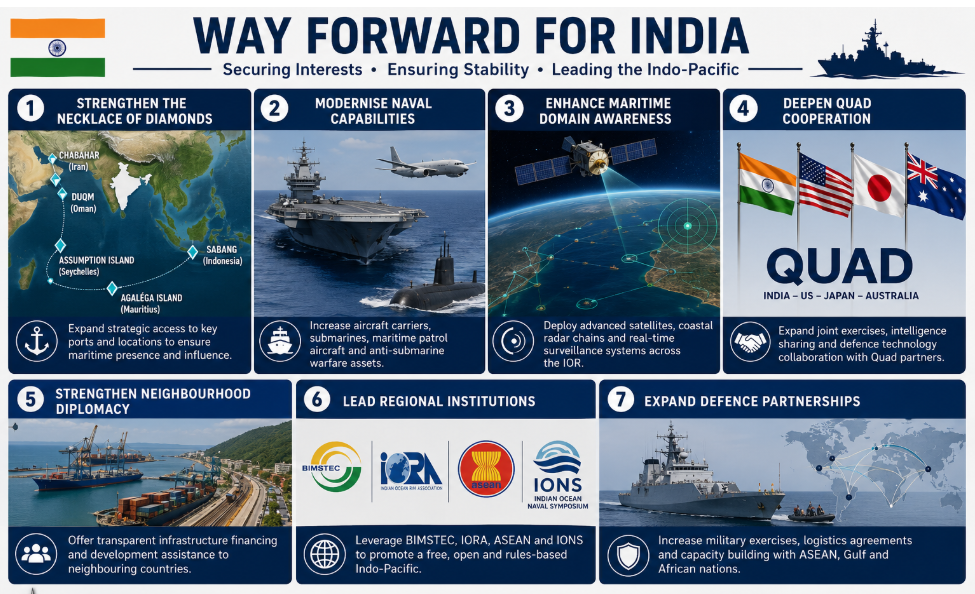
The agreement replaces a previously proposed India-backed project and is seen as an extension to China’s “String of Pearls” framework in India’s neighbourhood.
- Mongla, Bangladesh's second-largest seaport after Chittagong, is 188 km from Kolkata and lies close to the sensitive Sunderbans.
- Beyond the port, Bangladesh has also agreed to cooperate with China on the management and conservation of the Teesta River project (close to India's highly vulnerable Siliguri Corridor).
Implications for India
- Strategic encirclement: Chinese presence around India increases the risk of maritime and geopolitical encirclement.
- Two-front security threat: Close China–Pakistan cooperation on the western border and China-Bangladesh cooperation on the eastern border.
- Surveillance risks: Dual-use ports can facilitate intelligence gathering and monitoring of Indian military activities.
- Trade vulnerability and Energy security: Chinese influence over strategic ports and chokepoints could disrupt India's maritime trade and threaten India's oil and energy supply routes.
- Sovereignty concerns: Greater Chinese military footprint in the IOR and North-Eastern Region constrains India's strategic autonomy.
About String of Pearls Framework
|