


The Prime Minister will flag off India's first green hydrogen-powered train on July 17, 2026, from Jind, Haryana as a significant transition towards green and zero-emission transport.
- Green Hydrogen: A zero-emission fuel created by splitting water into hydrogen and oxygen using renewable electricity, such as solar or wind.
- "Hydrogen for Heritage" Project: A 2023 Indian Railways initiative to deploy 35 hydrogen trains on ecologically sensitive and scenic routes (costing ₹80 crores per train and ₹70 crores per route).
Significance for India
- Green Transport: Enables zero-emission rail transport and a clean alternative for non-electrified routes by replacing diesel engines.
- Climate Action: Supports India’s Net Zero 2070 and rail decarbonization by 2030.
- Hydrogen Economy: Boosts the National Green Hydrogen Mission of 2023.
- Energy Security: Reduces fossil fuel imports and promotes indigenous hydrogen technology to achieve goal of energy independence by 2047.
Challenges of Hydrogen Fuel
- High Costs Technology: Green hydrogen and fuel cell technologies remain expensive.
- Hydrogen Storage: Requires storage at very high pressure or cryogenic temperatures, increasing costs and safety requirements.
- Infrastructure: Limited hydrogen production, transportation and refuelling facilities in India.
- Energy Efficiency: Converting electricity into hydrogen and back into electricity leads to energy losses compared to direct railway electrification.
- Safety Concerns: Hydrogen is highly flammable and requires specialised storage, handling and monitoring systems.
Working of Hydrogen Train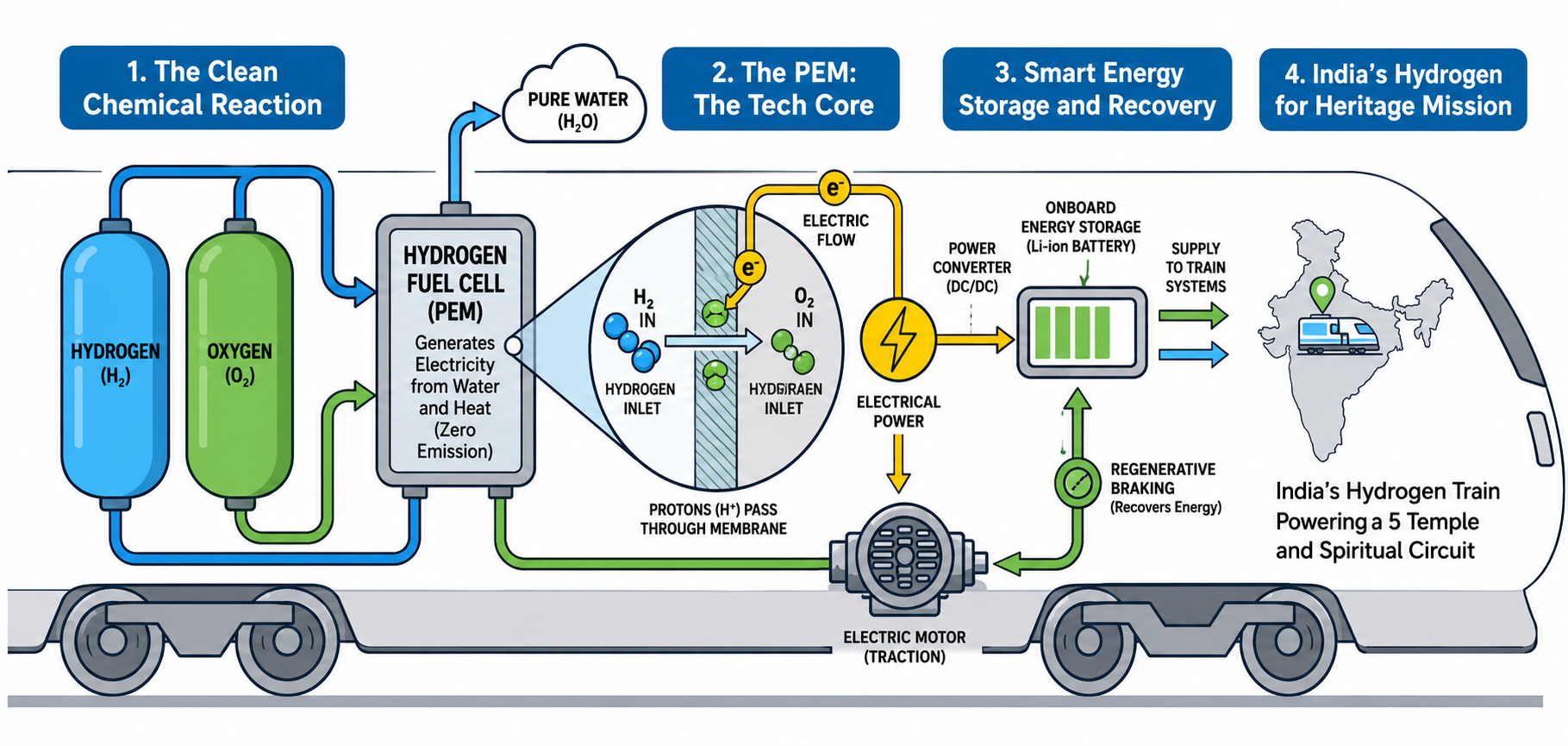
|

