
NITI Aayog Releases Roadmap for Building India a Leading Bioeconomy Powerhouse by 2035 | Current Affairs | Vision IAS

Upgrade to Premium Today

Start Now
MENU
Home
Quick Links

High-quality MCQs and Mains Answer Writing to sharpen skills and reinforce learning every day.

Watch explainer and thematic concept-building videos under initiatives like Deep Dive, Master Classes, etc., on important UPSC topics.

A short, intensive, and exam-focused programme, insights from the Economic Survey, Union Budget, and UPSC current affairs.

ESC

In Summary

  • India's Bio Economy is projected to reach $691 billion by 2035 and $2.6 trillion by 2047, creating over 30 million jobs.
  • Key recommendations include shifting to Flagship Missions, establishing a cross-ministerial governance structure, and creating a ₹50,000-crore BioEconomy Growth Fund.
  • Strengthening the talent pipeline through experiential learning and re-entry pathways for diaspora scientists is also crucial.

In Summary

As per the roadmap, India can scale its Bio Economy to $691 billion by 2035and $2.6 trillion by 2047 creating over 30 million high-value jobs.

Status of India’s Bioeconomy

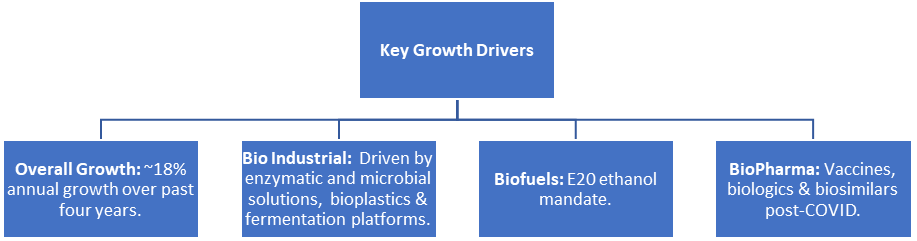
  • Status: Expanded sixteen-fold from $10 billion (2014) to $195.3 billion (2025) contributing 4.8% to national GDP.
    • It already employs over 3.3 million professionals and supports ~12,000 startups. 
Key Recommendations

  • Shifting from fragmented to Flagship Missions: E.g. GeneIndia (gene and cell therapy); AgriBio 2.0 (quality assured bioinputs); BioX Foundry (industrial biotech innovations); One Health Grid (AI-assisted disease detection), etc. 
  • Cross-Ministerial Governance Structure: E.g. through an Empowered Committee on National BioMissions; National BioData Council; BioEconomy Investment & Policy Forum; Dedicated Bio-IP Accelerated Pathway. 
  • Financing: Creation of a ₹50,000-crore BioEconomy Growth Fund (2026–2035) to deploy blended finance, catalytic equity and infrastructure support. 
  • Regulation: Differentiated approval pathways for frontier modalities like cell and gene therapies, synthetic biology, modernization of CDSCO (Central Drugs Standard Control Organisation), etc. 
  • Strengthening Talent Pipeline: Experiential and Immersion-based learning, Re-entry pathways for diaspora scientists, and a vibrant entrepreneurship ecosystem. 

Global Best Practices

  • European Union: Strategic Framework (2025) positions bioeconomy as driver of industrial competitiveness and sustainability. 
  • China: 14th Five-Year Plan for Bioeconomy Development (2021–2025) identifies biotechnology and biomanufacturing as strategic sectors. 
  • Australia: Links strong research capability to commercialization.
Watch Video News Today

Explore Related Content

Discover more articles, videos, and terms related to this topic

RELATED TERMS

3

Catalytic Equity

Investment in companies, often startups or early-stage ventures, that has the potential to significantly stimulate further investment or growth in a sector. This type of investment aims to 'catalyze' broader economic activity.

Blended finance

A financing approach that combines public and private capital to achieve development goals. It uses concessional public funds to de-risk investments and attract private capital, thereby scaling up impact and mobilizing resources for projects that might not otherwise receive funding.

CDSCO

Central Drugs Standard Control Organisation, the national regulatory body for pharmaceuticals and medical devices in India. It is responsible for granting market authorization for drugs and ensuring their quality, safety, and efficacy.

Title is required. Maximum 500 characters.

Search Notes

Filter Notes

Loading your notes...
Searching your notes...
Loading more notes...
You've reached the end of your notes

No notes yet

Create your first note to get started.

No notes found

Try adjusting your search criteria or clear the search.

Saving...
Saved

Please select a subject.

Referenced Articles

linked

No references added yet
