


National Handloom Day is celebrated annually on 7 August, commemorating the launch of the Swadeshi Movement in 1905.
- Swadeshi movement championed the boycott of foreign goods in favour of indigenous manufacturing, establishing self-reliance (Atmanirbharta) as a tool of national sovereignty.
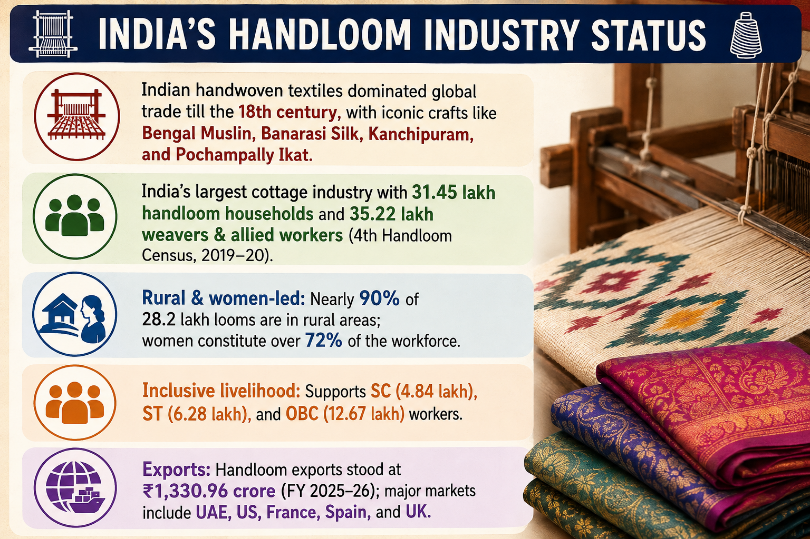
India’s Handloom Industry
- Government Initiatives
- Programmes: National Handloom Development Programme (NHDP), Small Cluster Development Programme (SCDP), and Mega Cluster Development Programme for strengthening weaver welfare, infrastructure, productivity, and market linkages.
- Policy Push (Union Budget 2026-27): Introduced National Fibre Scheme, Textile Expansion & Employment Scheme, National Handloom & Handicraft Programme, and Mahatma Gandhi Gram Swaraj Initiative to boost self-reliance, modernization, and global competitiveness.
- Finance & Welfare: Handloom Marketing Assistance, Weaver MUDRA Scheme, PMJJBY/PMSBY insurance, and education scholarships for weavers' children.
- Quality & Market Access: Handloom Mark, India Handloom Brand, GI protection, Handlooms Act, 1985, GeM/Indiahandmade portal, and GST cut to 5% on selected handloom products.
- Importance: Handlooms promote a sustainable, low-carbon circular economy while enhancing Brand India through globally valued Handmade in India products.
- Challenges to Handloom Sector
- Powerloom imitation & counterfeiting undermine genuine handloom products and Brand India.
- Low incomes,wage disparities, and limited access to affordable credit affect weaver livelihoods.
- Traditional looms, high raw material costs, and low productivity reduce competitiveness.
- Weak direct market access keeps many weavers dependent on middlemen.
India's handloom sector’s momentum lies in technology-led modernization, global market branding via traceability tools like blockchain, and direct digital market integration to boost artisan incomes.


