


The findings were part of ‘State of the Global Climate 2025’ report, released by World Meteorological Organization (WMO) on World Meteorological Day (23 March, theme-Observing Today, Protecting Tomorrow).
It included Earth’s energy imbalance (EEI) as one of the key climate indicators for the first.
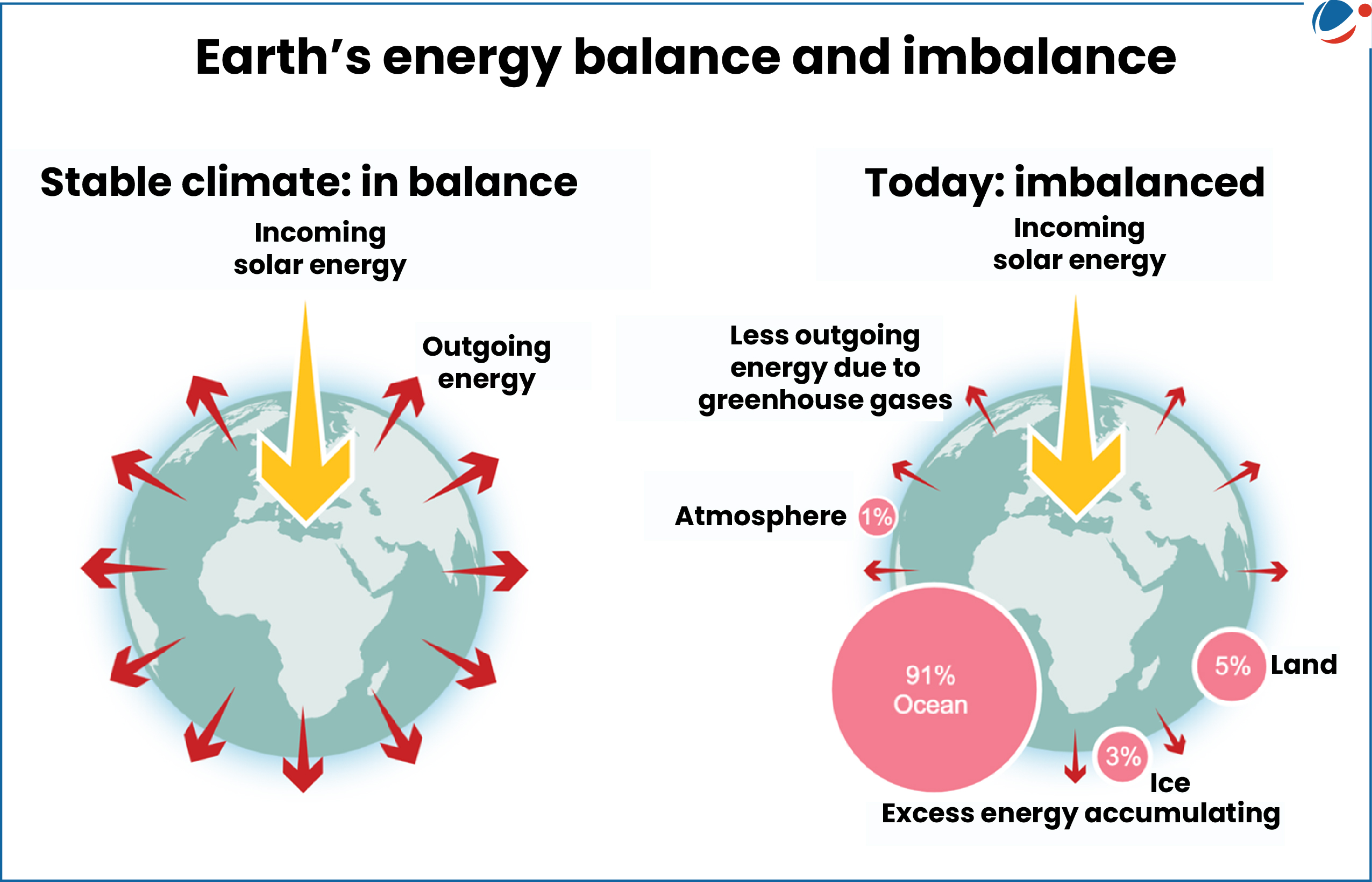
About EEI
- It is the difference between amount of energy the Earth receives from the Sun (incoming solar radiation minus reflected solar radiation) and amount of energy the Earth radiates back into space (outgoing long-wave radiation). (see infographic)
o "Positive" EEI: Earth is gaining energy and heating "Negative" EEI: Earth is losing energy and cooling
- EEI measures rate of the heat accumulation by anthropogenic GHG emissions in climate system and provides a comprehensive picture of warming.
- Reasons for increase in EEI: Rising concentrations of GHG; reductions in aerosol emissions; increases in trace gases and water vapour (decreases outgoing long-wave radiation); decreased reflection by clouds and sea ice.
Other Key findings of the report
|



