


The Bill, initially referred to a Select Committee, has been introduced to amend the Insolvency and Bankruptcy Code 2016.
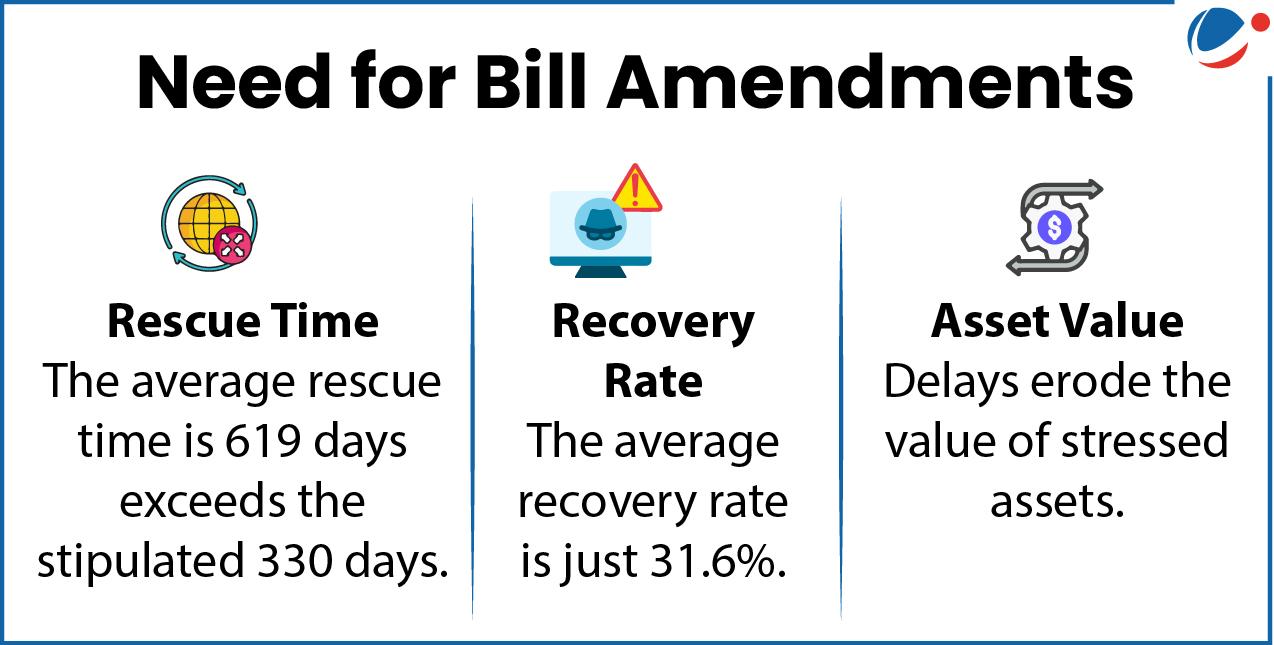
- The Amendment seeks to reduce delays, maximise value for all stakeholders, and introduce new provisions that follow global best practices for resolving insolvency.
- New Creditor-Initiated Insolvency Resolution Process (CIIRP): This replaces the largely underutilised “fast-track” process with an out-of-court initiation model.
Key Highlights of the Bill
- Group Insolvency Framework: Introduces a "voluntary group insolvency framework" to facilitate joint resolution of stressed entities within a domestic corporate group, recognizing their interconnected nature.
- Cross-Border Insolvency Framework: Proposes a basic structure for cross-border insolvency enabling easier access for creditors to overseas assets of stressed companies and aligning with international best practices.
- Clean Slate Principle Reinforcement: Explicitly reinforces the "clean-slate principle," stating that once a resolution plan is approved, claims against the corporate debtor are extinguished (unless specified otherwise).
- Strict timelines for National Company Law Tribunal (NCLT):
- NCLT to admit Corporate Insolvency Resolution Process (CIRP) cases within 14 days with proof of default enough to admit a case.
- NCLAT to dispose of appeals in 3 months.
- Other:
- Sets a timeline of 180 days for completion of liquidation, extendable up to 90 days.
- No Automatic Appointment of Resolution Professional.
- Enhanced Role of Committee of Creditors (CoC)



