


According to a report, over two-thirds of seaborne energy trade depends on a few key chokepoints. E.g. Strait of Hormuz, Strait of Malacca etc.
- These chokepoints are shaping conflict escalation, energy prices and global financial stability outside the battlefield.
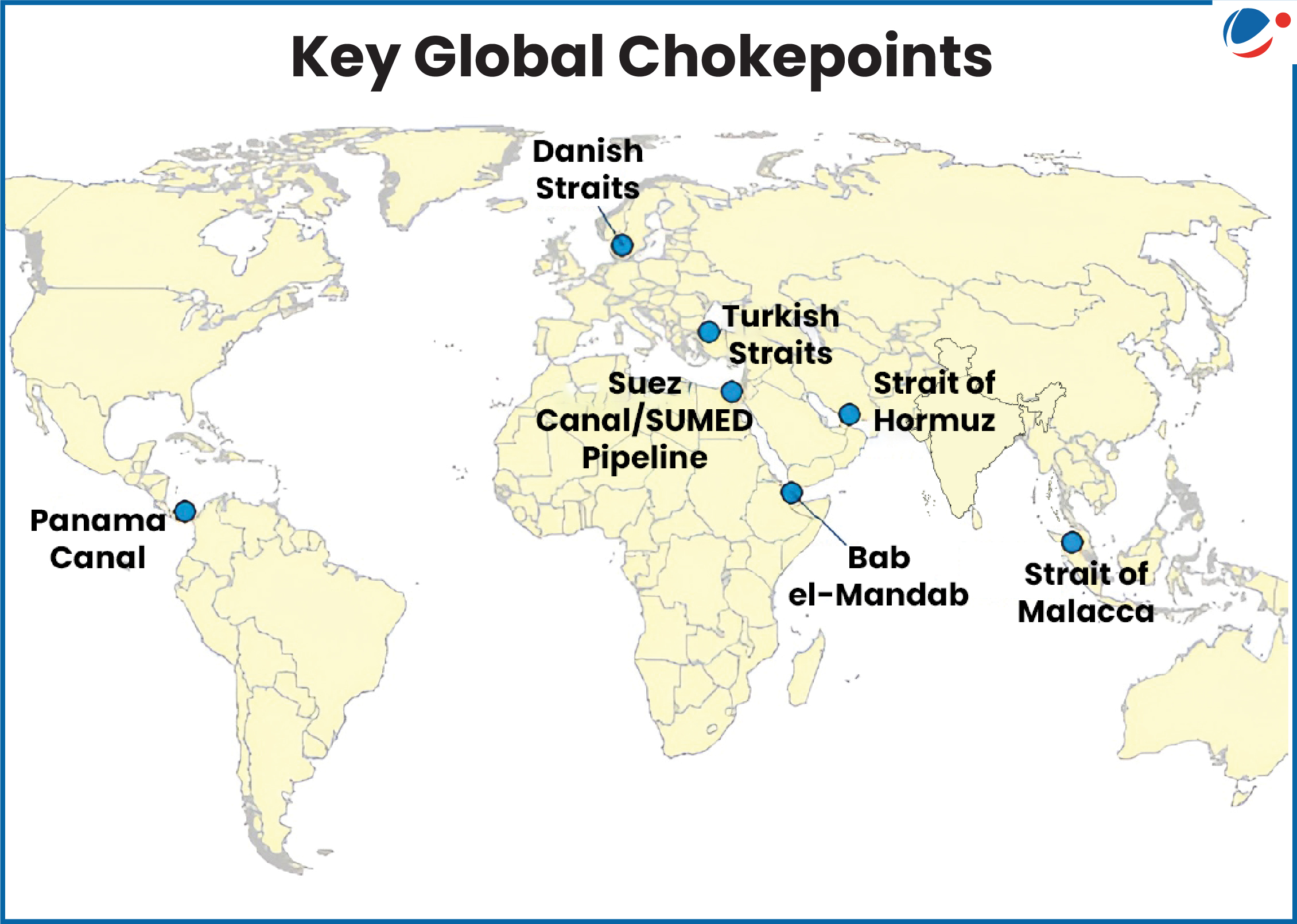
What are Chokepoints?
- Chokepoints are narrow, strategically important maritime passages crucial for global trade.
Significance of chokepoints
- Trade and Energy Arteries: Chokepoints are critical for international maritime trade of oil and gas and other commodities (e.g. fertilizers), acting as potential bottlenecks for global supply chains.
- Economic Impact: Disruptions at chokepoints inflate freight costs, extend transit times, and raise insurance premiums, directly fueling global inflation and disrupting import-dependent economies.
- Geopolitical Flashpoints: Strategic significance makes them vulnerable to military blockades, regional conflicts, and piracy, influencing diplomacy and naval strategies worldwide.
- Climate Change Risks: Environmental shifts are creating new bottlenecks. E.g. Drought in Panama Canal disrupting global supply chains.
- Industrial and Digital risks: Chokepoints now include concentrated industrial and digital systems.
- E.g. rare mineral processing chains rely on concentrated refining capacity of China
- E.g. More than 90% of Europe-Asia subsea cable capacity runs through the Red Sea cable corridor, making it a chokepoint for digital services.
Potential Solutions for India
|

