


Locally-led climate adaptation represents a shift away from traditional, top-down climate strategies toward a devolving decision-making to the lowest appropriate level.
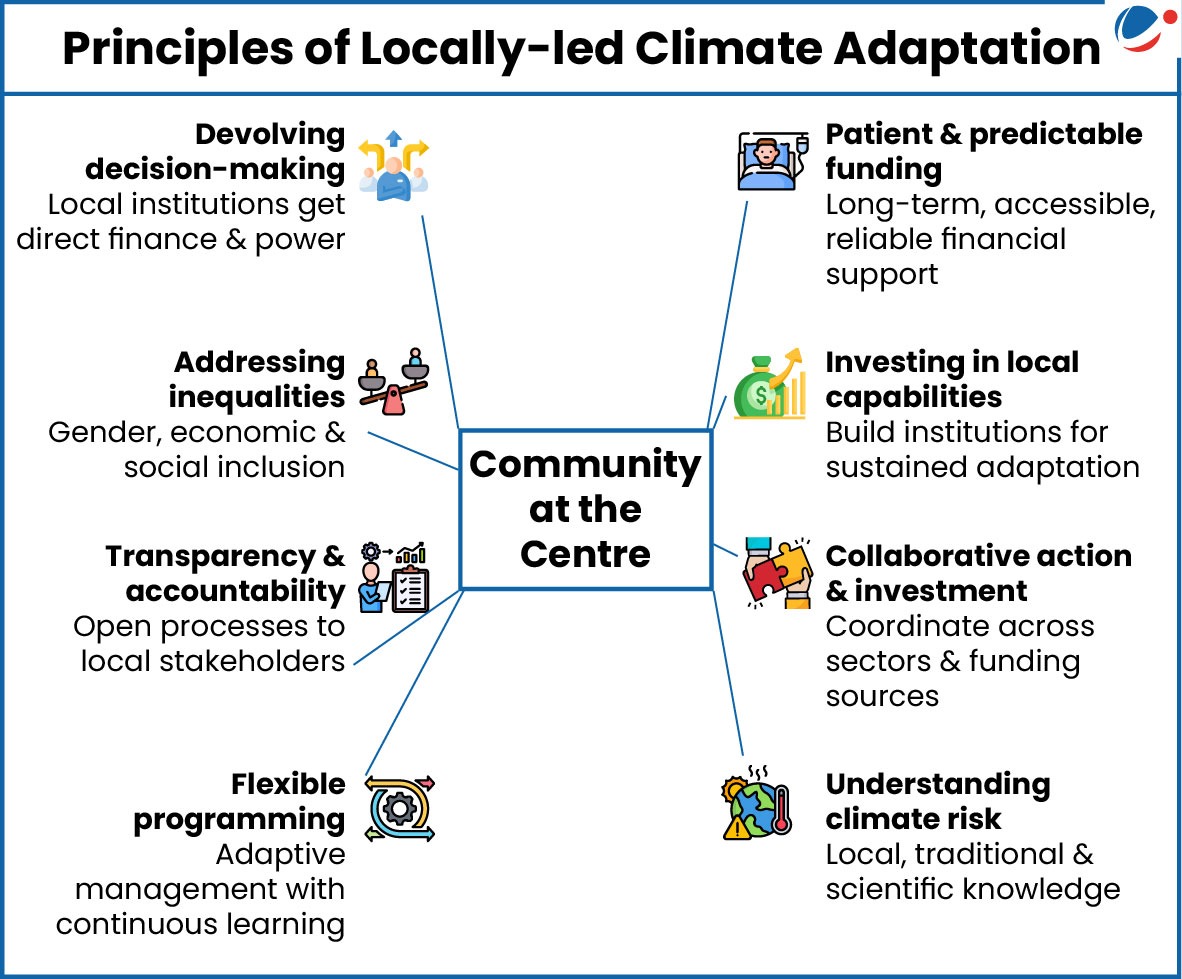
- This approach ensures that local institutions and frontline communities have direct access to finance and authority over how adaptation actions are prioritized, designed, implemented, and evaluated.
Why locally-led adaptation is needed in India?
- Frontline Vulnerability: India is the Ninth most climate vulnerable country, facing 430 extreme weather events (1995-2024), causing $170 billion losses and impacting the local community most.
- Financing Gap: Developing countries face an annual adaptation shortfall of $310 billion (UNEP Adaptation Gap Report, 2025).
- Weak Urban Local Bodies (ULBs) Capacity: Limited fiscal autonomy and creditworthiness hinder climate action.
Steps Taken in India
- National and State Frameworks: India's updated NDCs for 2031–2035 put emphasis on climate resilience and adaptation into development strategies.
- National Innovations in Climate Resilient Agriculture: ICAR pilot program focuses on climate-smart agriculture and farmer capacity-building.
- Municipal Green Bonds: Municipal corporations of Ghaziabad, Indore, Vadodara, and Pimpri-Chinchwad have successfully raised climate finance by issuing green bonds.
- Other:
- Dedicated Urban Climate Action Plans by Brihanmumbai and Solapur Municipal Corporations.
- Climate Resilient Villages: E.g. Tamil Nadu’s Climate Resilient Villages (CRV) program adopts a holistic strategy in 11 vulnerable districts, working with local communities.


