


It identifies Cellular-V2X (C-V2X) as the preferred technology, leveraging existing 4G and 5G networks.
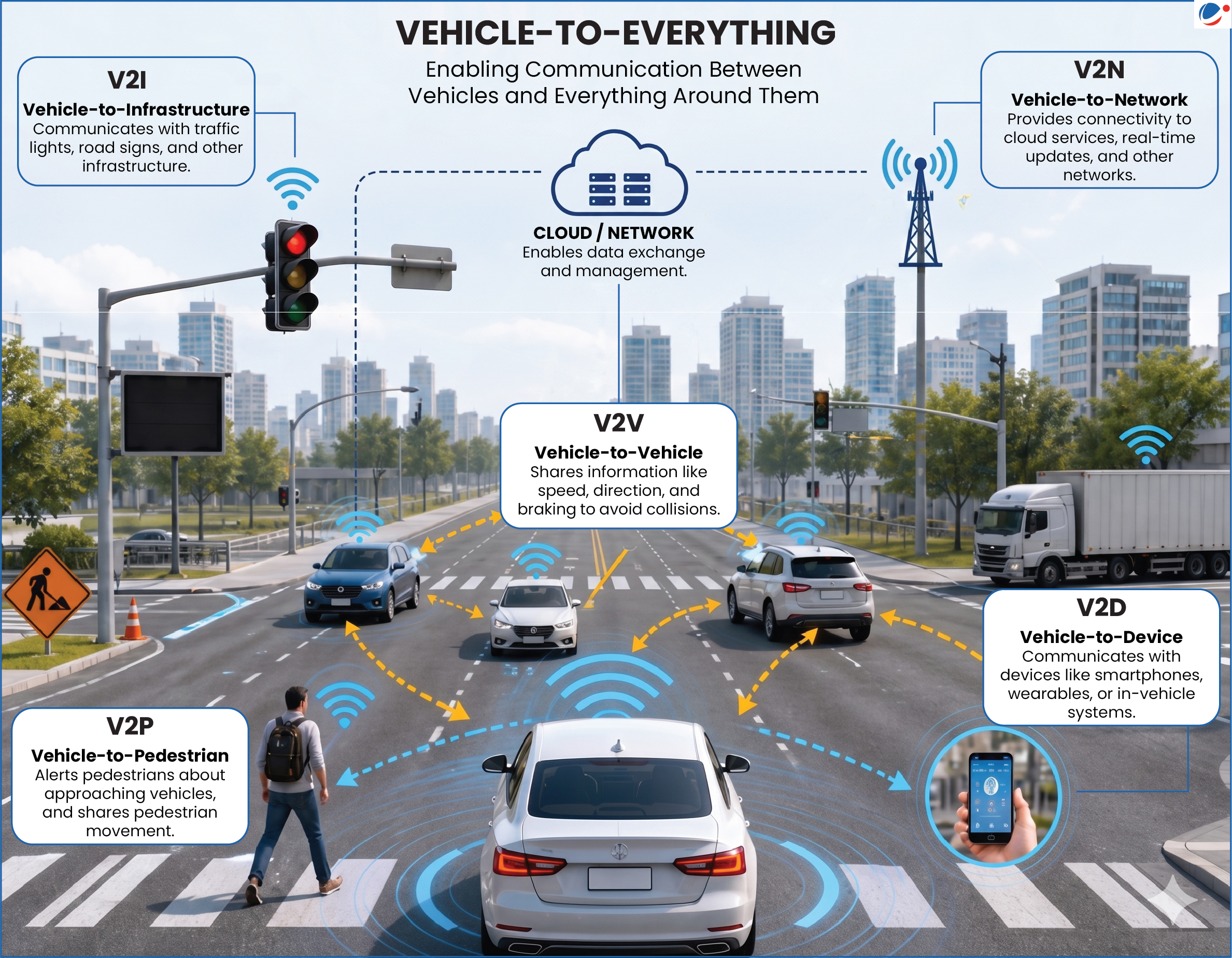
- V2X relies on two main wireless technologies: Dedicated Short-Range Communication (DSRC) and C-V2X.
- DSRC uses Wi-Fi whereas C-V2X is a more comprehensive standard, leveraging cellular networks.
About V2X Communication
- V2X refers to a communication system where a vehicle exchanges real-time information (E.g. position, speed) with other vehicles, infrastructure, pedestrians, and networks using short-range and/ or direct communications.
- It is a core component of Intelligent Transport Systems and connected mobility.
Significance of V2X
- Road Safety: Enables safety applications like collision avoidance, intersection management, and emergency vehicle warning systems, reducing accidents and fatalities.
- SDG 3.6 aims to halve global road traffic deaths and injuries by 2030.
- E.g. Forward Collision Warning System (USA) showed a 9% decrease in rate of forward collision conflicts.
- Traffic Efficiency: Optimizes traffic flow and reduces congestion through smart signal coordination.
- Autonomous Vehicle Support: Enhances decision-making for self-driving systems with external data inputs.
- Environmental Benefits: Lowers fuel consumption and emissions contributing to UN SDGs.
- 5G & Smart City Integration: Enables low-latency communication for connected urban mobility systems.
Challenges of V2X
|


