
Growing vulnerability of Undersea Cables | Current Affairs | Vision IAS

Upgrade to Premium Today

Start Now
MENU
Home
Quick Links

High-quality MCQs and Mains Answer Writing to sharpen skills and reinforce learning every day.

Watch explainer and thematic concept-building videos under initiatives like Deep Dive, Master Classes, etc., on important UPSC topics.

A short, intensive, and exam-focused programme, insights from the Economic Survey, Union Budget, and UPSC current affairs.

ESC

In Summary

  • Iran's proposal to charge undersea cable operators in the Strait of Hormuz highlights global vulnerability of these critical digital infrastructure.
  • Undersea cables, carrying 95-99% of international data, face threats like state-sponsored intervention, gray-zone warfare, espionage, and cyberattacks.
  • Disruptions to these cables pose significant risks to India's financial sector, IT/outsourcing industry, and national security.

In Summary

Recent proposal by Iranian state media to impose charges on undersea cable operators in the Strait of Hormuz highlights the growing vulnerability of global undersea cables. 

Undersea Cables
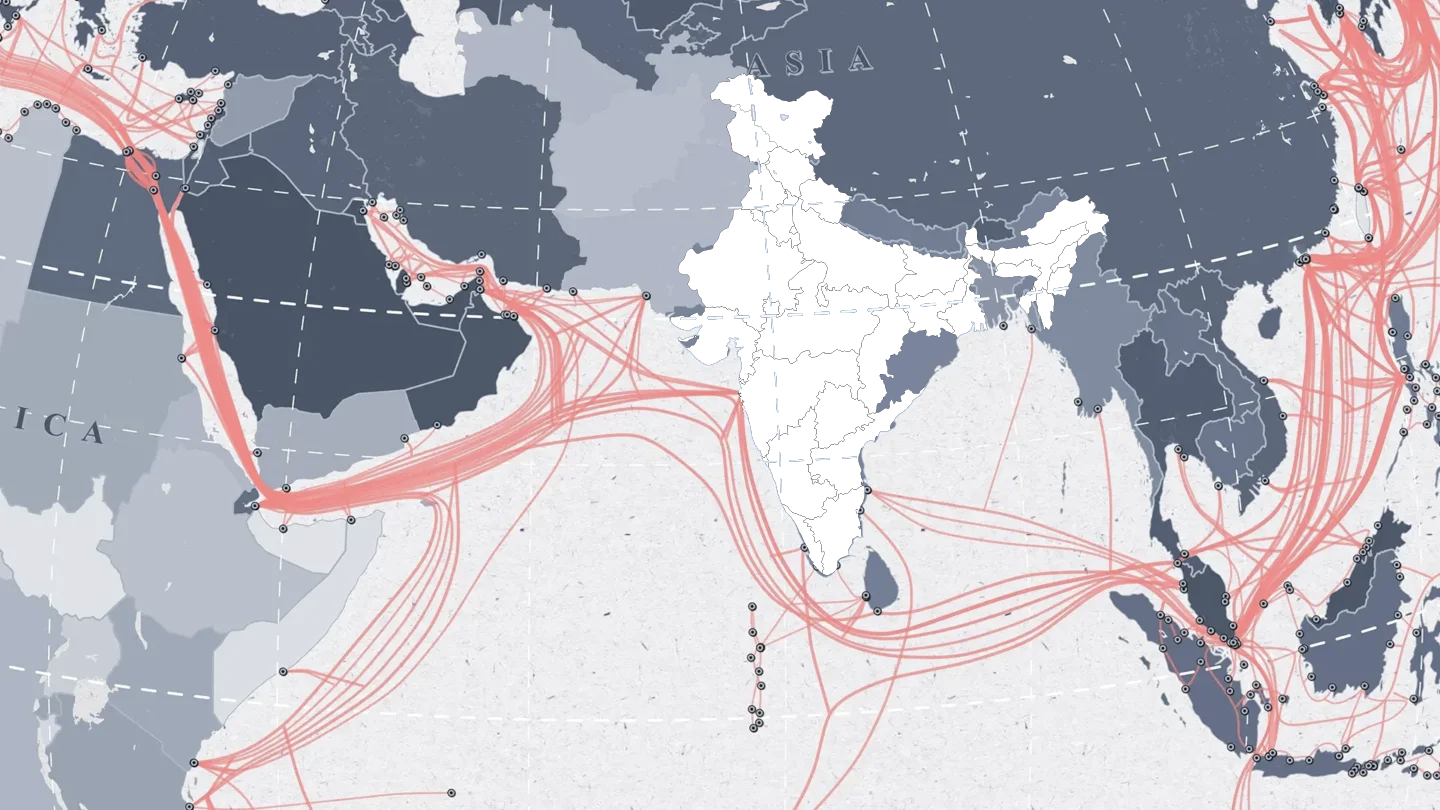
  • Undersea, or submarine, cables are fibre optic lines laid on the ocean floor to carry global data and serve as the backbone of modern digital connectivity. 
  • These "invisible highways" transmit between 95% and 99% of all international data traffic.
  • United Nations General. Assembly (UNGA) in 2010 had described Submarine cable as “critical communication infrastructure”.
  • Subsea cables carry a much larger bandwidth and are more efficient, cost-effective, and reliable than satellites.
  • Narrow maritime corridors such as the Red Sea, Strait of Hormuz, where multiple undersea cables converge, are often referred to as “digital chokepoints.”

Threats to the Undersea Cables Network

  • State-sponsored Intervention: The IRGC proposed licensing fees and annual "protection" payments from tech giants (Meta, Amazon, Microsoft).
  • Gray-zone warfare: Increasingly weaponised in hybrid conflict. 
  • Espionage & Cyber Threats: State-sponsored wiretapping for intelligence gathering and attacks on network management systems.

Implications for India

  • Financial Sector: E.g., Stock trading and banking systems relying on fast connectivity could face paralysis within minutes.
  • IT and Outsourcing Sector: E.g., India’s IT-BPM industry relies on uninterrupted global connectivity for providing services to international clients.
  • Strategic and National Security Risks: E.g., Military communications and intelligence sharing

Watch Video News Today

Explore Related Content

Discover more articles, videos, and terms related to this topic

RELATED TERMS

3

IT-BPM Industry

Information Technology - Business Process Management industry, referring to companies providing IT services and business process outsourcing, heavily reliant on global connectivity.

IRGC

Islamic Revolutionary Guard Corps (IRGC) is Iran's most powerful armed force, established after the 1979 Islamic Revolution to protect the country's Islamic system. It possesses land, air, and sea capabilities, oversees strategic weapons, and controls the Basij Resistance Force, operating independently of the regular military and reporting directly to the Supreme Leader.

Gray-zone warfare

A form of hybrid conflict that involves using a range of unconventional tactics, often below the threshold of traditional armed conflict, to achieve strategic objectives.

Title is required. Maximum 500 characters.

Search Notes

Filter Notes

Loading your notes...
Searching your notes...
Loading more notes...
You've reached the end of your notes

No notes yet

Create your first note to get started.

No notes found

Try adjusting your search criteria or clear the search.

Saving...
Saved

Please select a subject.

Referenced Articles

linked

No references added yet