


India accounts for over 70 percent of global jaggery production. This makes it the world’s largest jaggery producer.
About Jaggery
- Recognized as a superfood, a natural, nutrient-rich alternative to refined sugar.
- Jaggery is produced from concentrated sugarcane juice without chemical refining. It therefore retains essential minerals and micronutrients.
- Minerals: Like calcium, magnesium, potassium, phosphorus, sodium, iron, zinc, copper, and manganese.
- Benefits: Sustains Energy, Aids in Treating Anaemia, Strengthens Immunity, Treats Throat and Lung Infections, Supports Digestion etc.
- Production: Uttar Pradesh contributed 48.5 percent of total production, followed by Maharashtra (24.1 percent) and Karnataka (10.5 percent).
Tags:
Article Sources
1 sourceWorld Health Organization declares Ebola outbreaks in Congo and Uganda a Public Health Emergency of International Concern.
About Ebola Virus
- Ebola virus disease (EVD) is a rare but severe illness in humans.
- Zoonotic Transmission: Meaning it is transmitted to people from wild animals (such as fruit bats, porcupines and non-human primates) and then spreads in the human population.
- Transmission Medium: Contact with the blood, secretions, organs or other bodily fluids of infected person.
Government shifts silver imports to the “restricted” category and imposes a 15% import duty to curb rising imports.
About Silver
- It is a relatively soft, shiny metal.
- Applications: Highest electrical and thermal conductivity makes it indispensable for electronics, circuit boards, connectors, batteries, and automotive systems.
- Silver's antibacterial properties are used in wound dressings, medical-device coatings, catheters, surgical instruments, water purification systems, and pharmaceutical compounds.
- Natural Abundance: Silver occurs in ores such as argentite and chlorargyrite (horn silver).
- Leading producer: Mexico.
Tags:
Supreme Court has directed Jharkhand to notify the ecologically significant Saranda Forest as a wildlife sanctuary amid concerns over mining, elephant habitats, and conservation of sal forest landscape.
About Saranda Forest
- It is the largest Sal forest in Asia located in Jharkhand.
- Sal Tree is a moist deciduous tree.
- Saranda means ‘the land of seven hundred hills’.
- Fauna: It is home to endangered species of flying lizards and elephants.
- Flora: Sal, Kusum, mushroom, Mahua etc.
- Nearly 80% of the human population in the region belongs to Ho, Munda, Oraon and some primitive tribes.
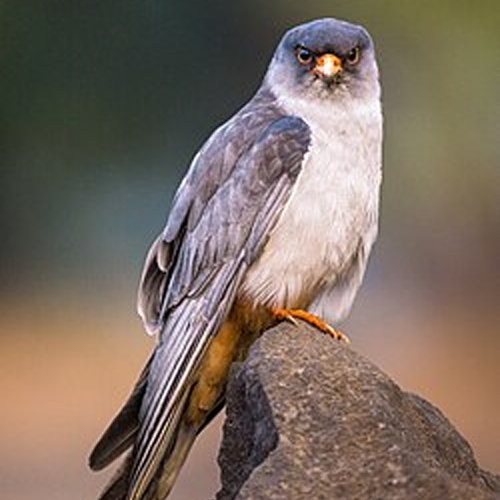
Union Environment Minister highlighted the return migration of satellite-tagged Amur Falcon, showcasing successful community-led conservation efforts in Manipur.
Characteristics
- It is locally known as 'Kahuaipuina' in Manipur.
- Migratory raptor: Make voyage from breeding grounds in Russia and China (Far-East Asia) to southern Africa via India.
- 22,000 km journey (longest sea crossing of any raptor)
- Passes through Manipur and Nagaland.
- Feeds on dragonflies that follow a similar migration path over Arabian Sea.
- Conservation status:
- IUCN: Least concern
- WPA, 1972: Schedule I
Tags:


