


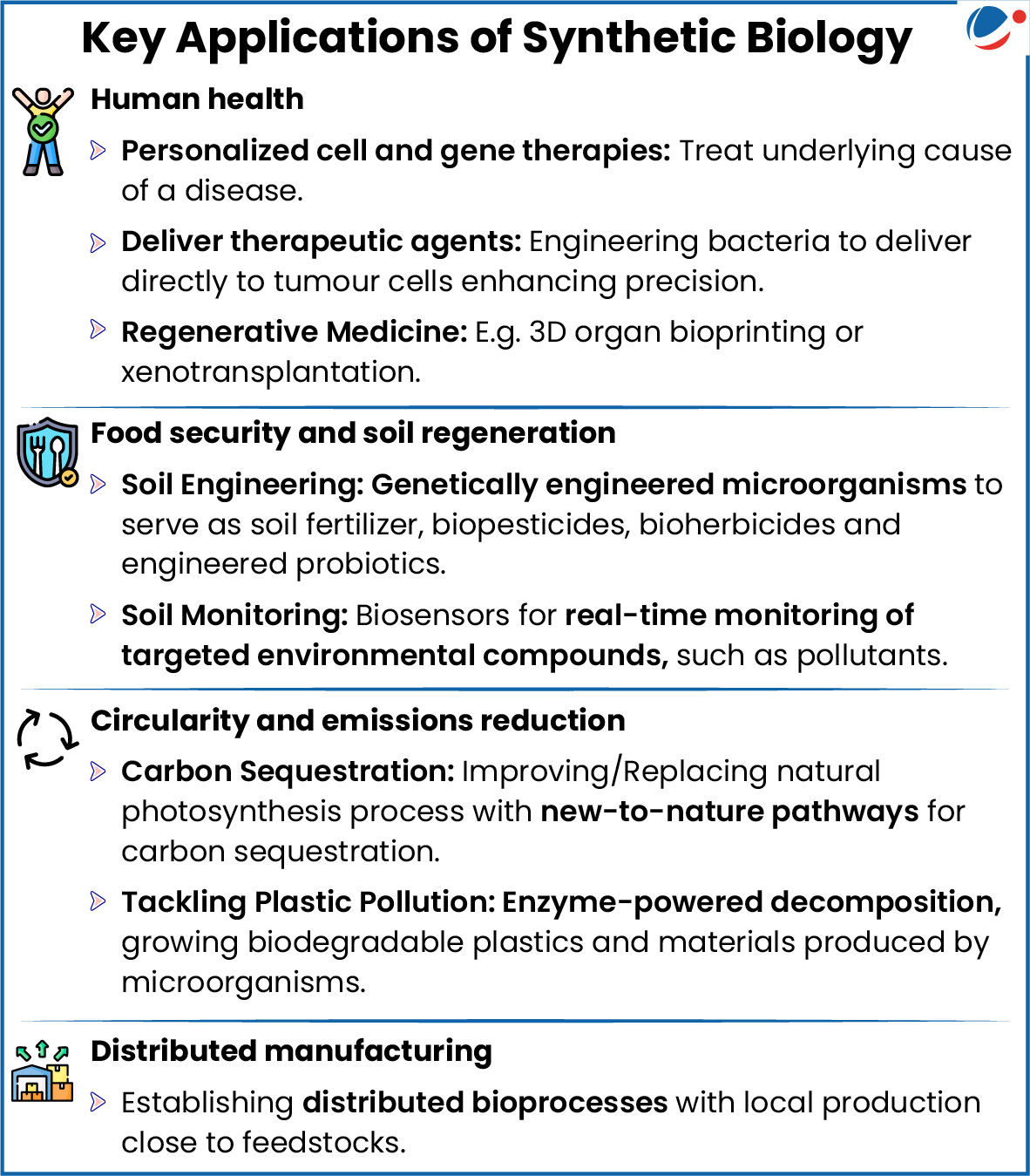
Understanding of genes, cells, along with advances in AI have caused engineering cells and organisms on a genome-wide scale with desired properties.
About Synthetic Biology
- Meaning: Involves redesigning organisms for useful purposes by engineering them to have new abilities.
- E.g. harnessing microorganisms for bioremediation to clean pollutants, modifying rice to produce beta-carotene for preventing Vitamin A deficiency, etc.
- Comparison with Genome Editing:
- In synthetic biology, scientists typically stitch together long stretches of DNA (already found in an organism or entirely novel) and insert them into an organism's genome.
- In genome editing, scientists typically use tools to make smaller changes (delete or add small stretches of DNA) to organism's own DNA.
Challenges and Concerns Associated with Synthetic Biology
- Affordability Personalized therapies could be particularly expensive.
- Biosafety: Potential unintended risks of releasing genetically engineered microorganisms into environment.
- Biosecurity Risks: Empower nefarious actors to develop bioweapons (e.g. by accelerating development of toxins).
- Cyberbiosecurity: Due to growing interaction between biology and automation.
- Ethical challenges: Issues regarding engineering life, equity and distribution of risk, benefits, and access, etc.

