Health Ministry Releases "Health Dynamics of India (Infrastructure and Human Resources) 2022-23" | Current Affairs | Vision IAS
MENU
Home

Periodically curated articles and updates on national and international developments relevant for UPSC Civil Services Examination.

Quick Links

High-quality MCQs and Mains Answer Writing to sharpen skills and reinforce learning every day.

Watch explainer and thematic concept-building videos under initiatives like Deep Dive, Master Classes, etc., on important UPSC topics.

ESC

Previously known as the Rural Health Statistics, the report provides comprehensive annual data on health infrastructure and human resources. 

Key finding

  • There are 714 district hospitals, and 362 medical colleges in India. 
  • Rural 
    • Rise in health facilities: Between 2005 to 2023, number of SCs, PHCs, and CHCs, has increased. 
    • More PHCs in rural areas: Around 32,000 PHCs are functioning around the country of which around 25000 PHCs are in rural areas. 
    • Shortage of doctors: Between 2005 to 2023, availability of doctors and medical officers in PHCs has increased from around 20,000 (2005) to around 32,000 (2023). 
      • However, vacancy has also more than doubled in the same period. 
    • Infrastructure gap: Most of the SCs in Andhra Pradesh, Bihar, Karnataka, Rajasthan, Uttar Pradesh among others are running in rented buildings. 
  • Urban
    • Inter-State disparity in availability of services: There is a shortfall of around 36% of U-PHCs (Urban PHCs) as per the urban population norms
      • However, U-PHCs exist above the required normas in Andhra Pradesh, Himachal Pradesh, Andaman & Nicobar Island, Chandigarh and Delhi.
    • Infrastructure gap: Most of the U-PHCs in Andhra Pradesh, Bihar, Karnatak, Uttar Pradesh, Madhya Praadesh, among others are functioning in rented buildings. 
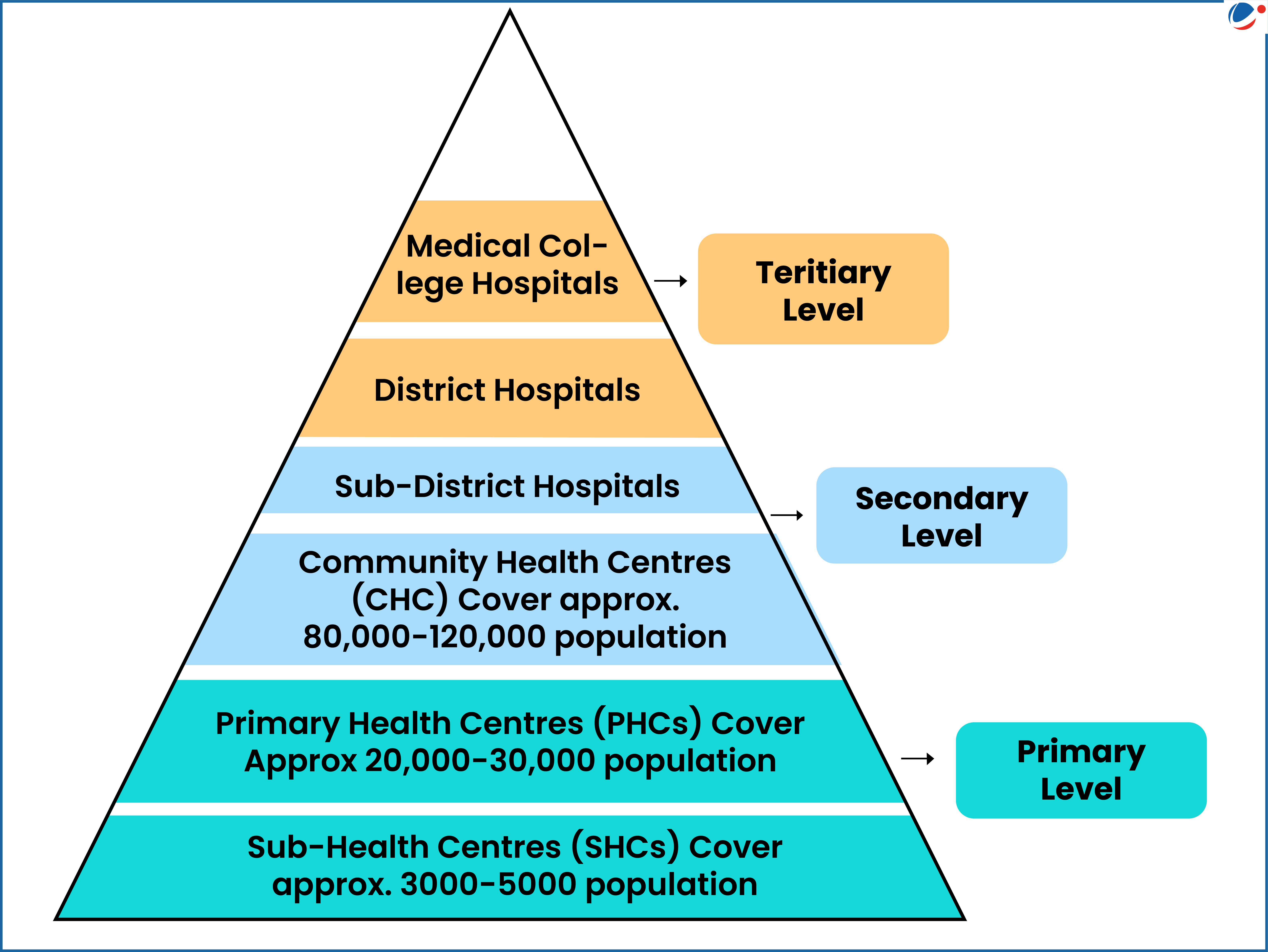
An infographic image showing structure of India’s Public healthcare system at Primary, Secondary, and Tertiary levels. Primary level shows Sub-Health Centres and Primary Health Centres. Secondary level includes Community Health Centres and Sub-District Hospitals. Tertiary level includes District Hospitals and Medical College Hospitals.

About India’s Public healthcare system

  • “Public Health and Hospitals” is a state subject and the primary responsibility of strengthening the public healthcare system lies with the respective State Governments. 
  • India’s Public healthcare system encompasses a three-tiered system. 
  • Doctor-population ratio in country stands at 1:834 (includes both allopathy and AYUSH doctors). 
Watch Video News Today

Explore Related Content

Discover more articles, videos, and terms related to this topic

RELATED VIDEOS

2
News Today (Sep 11, 2024)

News Today (Sep 11, 2024)

YouTube HD
Transformation of Family Structures in India

Transformation of Family Structures in India

YouTube HD
Title is required. Maximum 500 characters.

Search Notes

Filter Notes

Loading your notes...
Searching your notes...
Loading more notes...
You've reached the end of your notes

No notes yet

Create your first note to get started.

No notes found

Try adjusting your search criteria or clear the search.

Saving...
Saved

Please select a subject.

Referenced Articles

linked

No references added yet

Subscribe for Premium Features