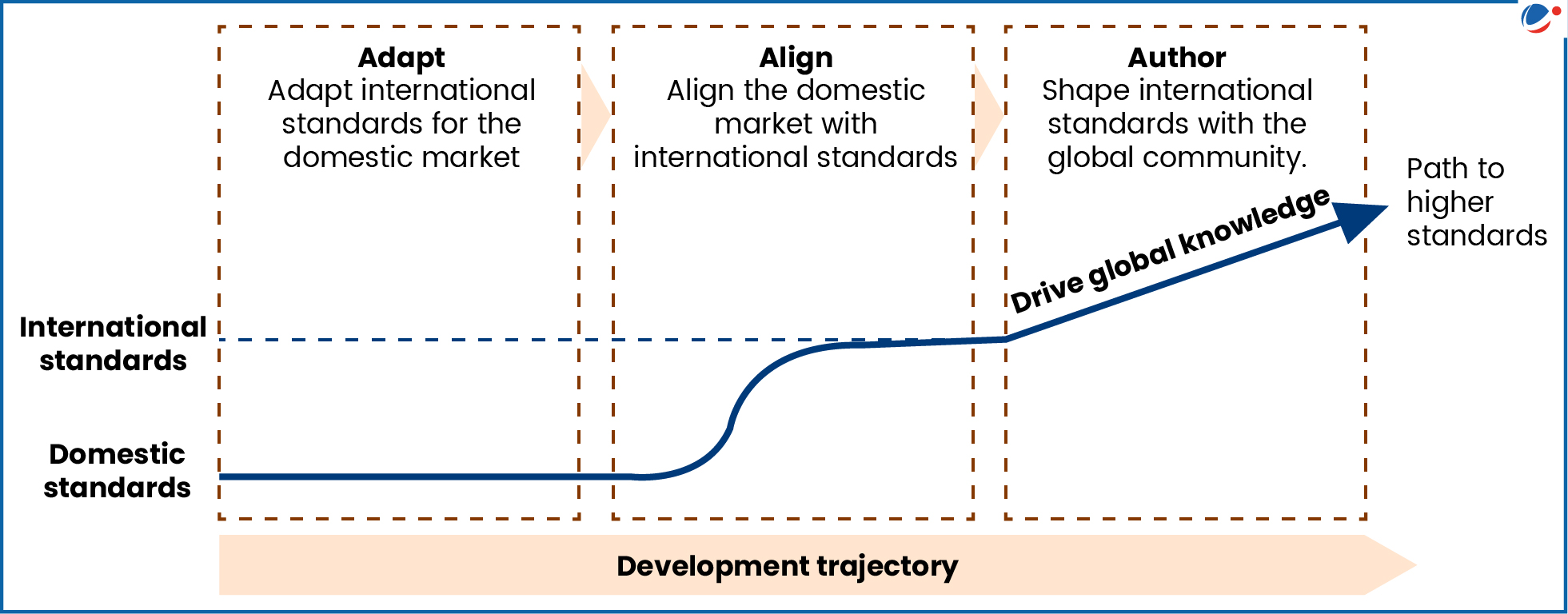
It highlights how a growing web of international standards is reshaping global economy, benefiting wealthy nations and large multinational companies that set them while leaving many developing countries on the sidelines.
- Standards areshared rules for common use underpinning consistency, compatibility, and quality in systems, processes, and products.
Importance of standards
- Economic Development: Standards boost trade by reducing transaction costs and enabling interoperability, drive innovation, and help in industries to scale.
- National Security: Enhances national competitiveness and protect against technological, financial and environmental risks.
- Social development: Improves education and healthcare through quality standards, ensuring efficacy and affordability.
- For instance, standards like childbirth checklists for hospitals reduced maternal deaths by nearly 47% in India.
- Governance: Clear standards-based recruitment and procurement can combat corruption and organizational mismanagement.
Challenges from Standards
- Weapons in Trade Wars: These form the basis for non-tariff measures such pesticide specifications or labelling requirements and now affect 90% of global trade, up from just 15% in the late 1990s.
- Low representation of developing countries: On average, developing countries sit on less than one-third of the technical committees that determine global standards at ISO.