
One- time gene therapy can sharply lower bad cholesterol for at least a year: Study | Current Affairs | Vision IAS

Upgrade to Premium Today

Start Now
MENU
Home
Quick Links

High-quality MCQs and Mains Answer Writing to sharpen skills and reinforce learning every day.

Watch explainer and thematic concept-building videos under initiatives like Deep Dive, Master Classes, etc., on important UPSC topics.

A short, intensive, and exam-focused programme, insights from the Economic Survey, Union Budget, and UPSC current affairs.

ESC

In Summary

  • VERVE-102, an in vivo base editing therapy, reduced LDL cholesterol by up to 62% in patients with inherited high cholesterol.
  • It uses mRNA encoding an adenine base editor and a guide RNA targeting the PCSK9 gene, which regulates blood cholesterol.
  • Gene therapy, a technique using genes to treat diseases, can involve adding healthy gene copies or replacing defective ones.

In Summary

The experimental therapy called VERVE-102 reduced harmful LDL (low-density lipoprotein) cholesterol by up to 62% in patients with inherited high cholesterol and early heart disease.

About VERVE-102

  • It is an investigational in vivo base editing medicine.
    • Base editing is a form of genome editing that can directly convert a single DNA base (C or A) to another base (T or G).
  • VERVE-102 consists of a messenger RNA which encodes an adenine base editor and a guide RNA (gRNA) targeting the PCSK9 (Proprotein Convertase Subtilisin/Kexin type 9) gene.
    • PCSK9 is a liver secretory enzyme that regulates blood cholesterol.
    • mRNA is a genetic molecule that contains instructions or recipe that directs cells to make a protein using its natural machinery.

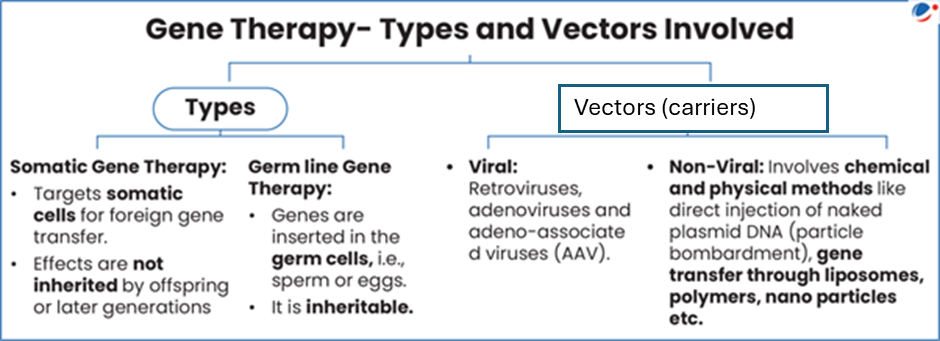
What is Gene Therapy?

  • It is a technique that uses a gene(s) to treat, prevent or cure a disease or medical disorder.
  • It works by adding new copies of a gene that is broken, or by replacing a defective or missing gene in a patient’s cells with a healthy version of that gene.
  • Applications: Both inherited genetic diseases (e.g., hemophilia and sickle cell disease) and acquired disorders (e.g., leukemia) have been treated with gene therapy.
Watch Video News Today

Explore Related Content

Discover more articles, videos, and terms related to this topic

RELATED TERMS

3

Gene Therapy

A therapeutic approach that involves correcting a gene defect by introducing new genes into a person's cells and tissues. It is used to treat diseases caused by genetic mutations, as exemplified by Otarmeni, which aims to replace a defective OTOF gene.

PCSK9 gene

A gene that encodes the PCSK9 protein, which plays a crucial role in regulating cholesterol levels by targeting LDL receptors for degradation in the liver. Inhibiting PCSK9 can lower LDL cholesterol.

Guide RNA (gRNA)

A key component in CRISPR-based gene editing systems (including base editing), which directs the editing machinery to a specific target sequence in the DNA or RNA.

Title is required. Maximum 500 characters.

Search Notes

Filter Notes

Loading your notes...
Searching your notes...
Loading more notes...
You've reached the end of your notes

No notes yet

Create your first note to get started.

No notes found

Try adjusting your search criteria or clear the search.

Saving...
Saved

Please select a subject.

Referenced Articles

linked

No references added yet