


It explores how environmental rule of law acts as both a catalyst and a framework for achieving just transition.
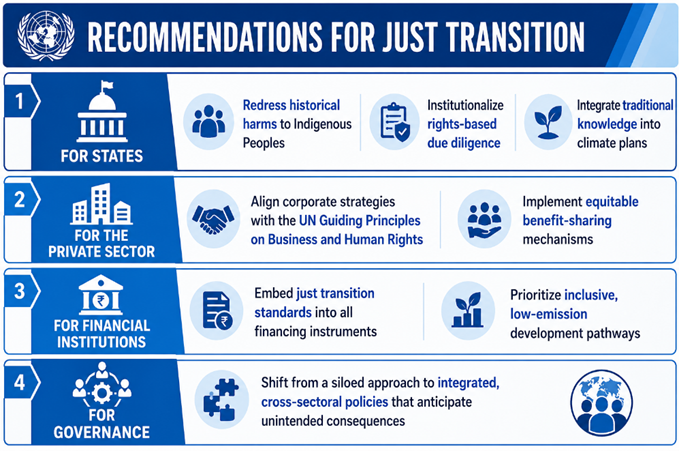
- Just Transition refers to a fair, inclusive and rights-based transformation towards environmentally and socially sustainable and resilient economies and societies that respects environmental rule of law and ensures no one is left behind in addressing environmental challenges across all sectors.
Role of Environmental Rule of Law in Just Transition
- Laws and Institutions: To balance environmental protection with social safeguards e.g. Forest Rights Act (FRA), 2006 protecting tribals from encroachment.
- Rights-based approach: Protecting and supporting environmental human rights defenders (EHRDs), such as the right to a clean and healthy environment.
- Meaningful participation: Involving marginalized groups in decision-making (e.g., Colombia's Terra Initiative: Indigenous-led solar projects).
- Accountability and Integrity: Esp. in managing just transition finance e.g. EU Just Transition Fund providing retraining to displaced coal workers.
- Coordinated Mandates: e.g. Jharkhand’s cross-sectoral Task Force on Sustainable Just Transition including 17 different state departments.
- Responsive Dispute Resolution: e.g. in Orissa Mining Corporation Ltd (2013), case Supreme court banned mining in Niyamgiri hills to protect indigenous Dongoria Kondhs.
- Context-Specific Strategies: Tailoring transition policies to unique national and regional realities e.g. Banning Meghalaya’s Rat hole mining due to safety concerns.




