


It became the first-ever Ramsar Site in Arunachal Pradesh.
About Glaw Lake
- Location: Arunachal Pradesh's Lohit district, within Kamlang Tiger Reserve and Wildlife Sanctuary in the Eastern Himalayas (a biodiversity hotspot).
- Type: Freshwater lake.
- Kamlang River lies to the north of the Lake.
- It is designated as an Important Bird and Biodiversity Area (IBA).
- Ecological and cultural significance:
- Supports four species of big cats: Tiger, Leopard, Clouded leopard, and Snow leopard.
- Habitat and wintering grounds: For the white-bellied heron (critically endangered).
- Other key Species: Great Hornbill, Hoolock gibbon, Asian Golden Cat, Asiatic Black Bear, Barking Deer etc.
- Sacred cultural site: For the local Mishmi community.
What is the Ramsar Convention?
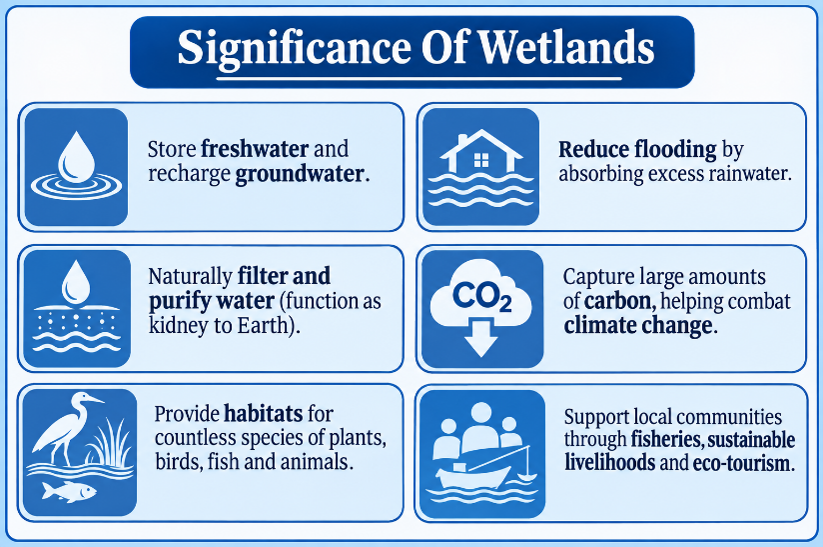
- It is an intergovernmental treaty that provides the framework for the conservation and wise use of wetlands and their resources.
- Wise use of wetlands is defined as “the maintenance of their ecological character, achieved through the implementation of ecosystem approaches, within the context of sustainable development”.
- Genesis: Adopted Ramsar, Iran in 1971 (came into force in 1975).
- Ramsar sites: Suitable wetlands are designated for the list of Wetlands of International Importance (Ramsar List).
- India has Asia’s highest and world’s third-highest (after United Kingdom and Mexico) number of Ramsar Sites.
- Membership: 172 contracting parties. (India ratified in 1982)


