


Why in the News?
Lucknow has been designated a "Creative City of Gastronomy" by UNESCO, becoming 2nd Indian city after Hyderabad.
More on news
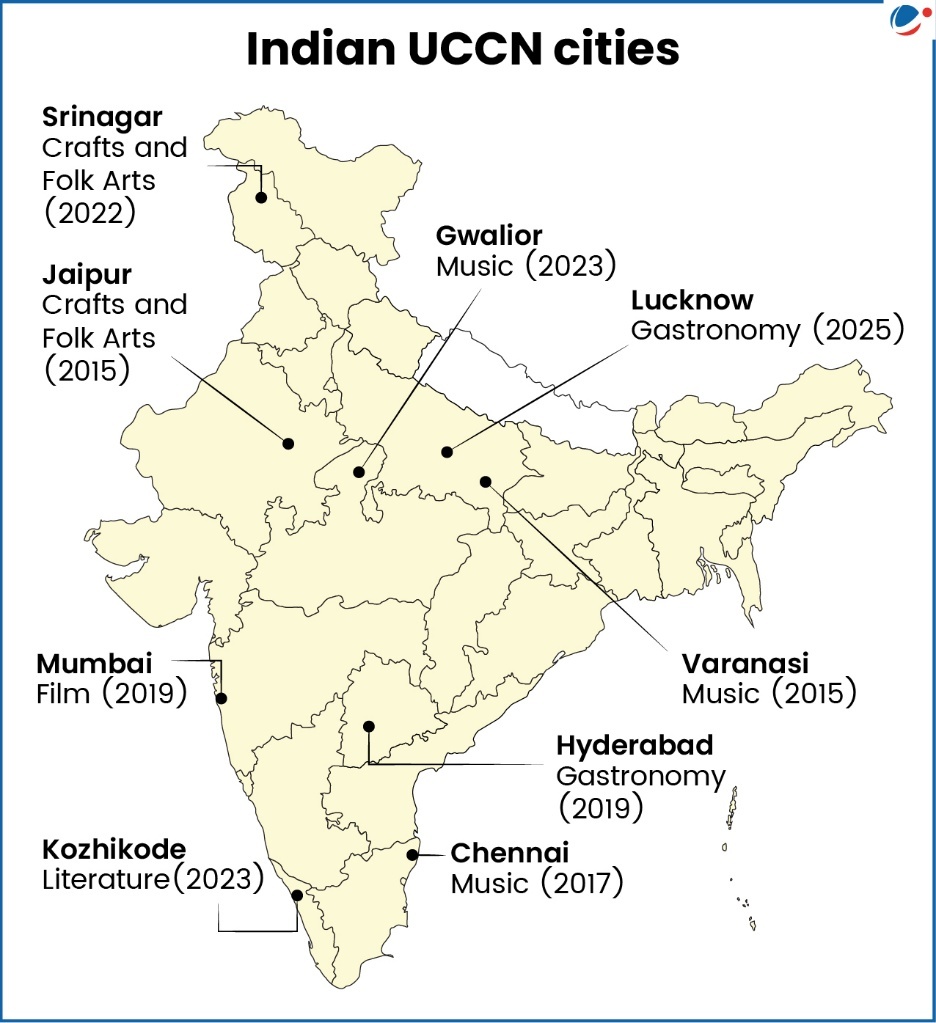
- Nawab Asaf-ud-daulah's decision to relocate the Awadh's capital to Lucknow in 1775 elevated the city to its esteemed status.
- It was nicknamed "Shiraz-i-Hind" and "The Constantinople of the East" for being a hub of poetry, music, and fine arts.
- It is also known as the 'The Golden City of India' for its refinement and epicurean excellence.
- Under the royal patronage, Bawarchis and rakabdars in Nawabs' kitchens mastered the slow-cooked Dum Pukht technique and a range that included kebabs, kormas, biryanis, sheermal, and shahi tukda.
- Other key features of Lucknow:
- Architectural Synthesis: The city's identity is rooted in its unique fusion of Mughal and Awadhi architectural traditions.
- Tangible Assets: Bara Imambara, Chota Imambara, Rumi Darwaza, Bhul Bhulaiya, etc.
- Nawabi Features: Use of fish motif (especially on gates), chhattars, baradari (twelve-door pavilion), and lakhauri bricks.
- Intangible Assets: Lucknowi cuisine (a combination of Mughlai and Awadhi customs), Urdu poetry and ghazals, traditional dance like Kathak, and the traditional craft of Chikankari embroidery.
About UNESCO Creative Cities Network (UCCN)
|
Conclusion
UNESCO designation is an opportunity to promote culinary heritage, boost training, market access for local vendors and small food entrepreneurs, and develop food-led tourism circuits.

