


- It is joint military exercise between Indian and Uzbekistan Army, conducted every year.
- Cotton farmers in North India may shift to paddy, maize, and guar due to severe PBW infestation.
- About PBW (Pectinophora gossypiella)
- The disease is common in cotton crops.
- PBW larvae burrow into developing fruits (bolls) of cotton plants, and damage affects both the weight and quality of harvested bolls.
- Issue:
- Pink bollworms have developed resistance to genetically modified pest-resistant Bt cotton over time.
- Management Strategies
- Adoption of highly productive short-duration hybrids that would escape PBW.
- Crop rotation to break the lifecycle of PBW.
- PB Knot technology disrupts the mating prospects of pests.
- The flow of Jiadhal River is being disrupted due to climate change.
- About Jiadhal River
- It is a north-bank tributary of Brahmaputra.
- Originates in lower Himalayan ranges in Arunachal Pradesh.
- Flows through Assam and meets Brahmaputra near Majuli Island.
- It is example of flashy river and produces floods with sudden, high discharge over short time interval and with high sediment load and debris.
- It frequently changes its course during flash floods.
Article Sources
1 source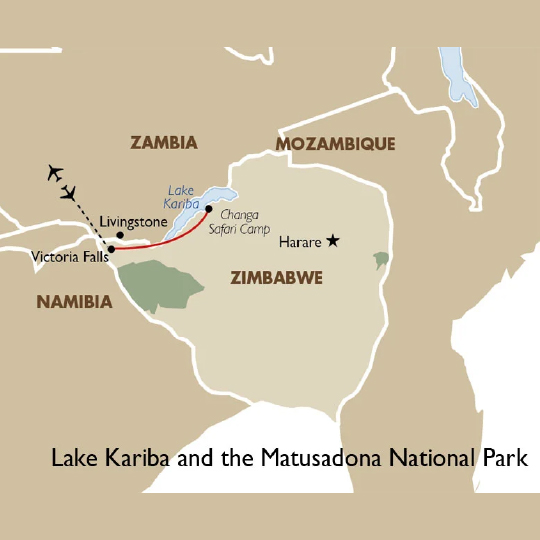
- Water levels have dropped to 13% of its capacity in Lake Kariba, due El Nino induced drought.
- El Niño is a climate pattern characterized by unusual warming of surface waters in eastern tropical Pacific Ocean.
- About Lake Kariba
- It provides electric power to both Zambia and Zimbabwe.
- It lies between Zambia and Zimbabwe.
- It was formed by damming Zambezi River in 1955.
Tags:
- Gray slender Loris rescued in North Goa.
- About Gray Slender Loris (Loris lydekkerianus)
- Geographic Range: Found in India and Sri Lanka.
- Habitats: Tropical rainforests, scrub forests, semi-evergreen forests, swamps.
- Characteristics
- Nocturnal animal.
- Lean and lanky appearance, with longer and slender limbs, larger ears, pointed snout and eyes circled with black or dark brown.
- Slow movers and foragers, they nest near large insect colonies for easy meals.
- They are Viviparous (producing living young instead of eggs).
- Threat: Habitat Loss, Electrocution on power lines etc.
- Conservation Status
- IUCN: Near Threatened.
- Nigeria became first country in world to introduce Men5CV vaccine, recommended by WHO.
- It offers protection against five strains of meningococcus bacteria in a single shot.
- Meningococcal ACWY Vaccine is the one available in India.
- About Meningitis
- It is inflammation of surrounding tissues of brain and spinal cord.
- Caused by bacteria, viruses, fungi and parasites.
- Mostly transmitted from person to person.
- Although it affects all ages, young children are most at risk.
- Symptoms are neck stiffness, fever, confusion, headaches, nausea.
Tags:
- World Chagas Disease Day was observed by the World Health Organisation on April 14.
- About Chagas Disease
- Life-threatening illness caused by protozoan parasite Trypanosoma cruzi.
- Found mainly in Latin American countries, where it is mostly vector-borne.
- Transmitted by triatomine bug (vector-borne), and orally (food-borne), during pregnancy or birth (congenital), through blood/blood products, or organ transplantation.
- Often called “silent disease” because of no symptoms either during acute or chronic phases of infection until damage is too advanced to be reversed.
- The disease is clinically curable if treatment is initiated at an early stage.
Tags:
- Assam celebrates Rongali Bihu.
- About Rongali/Bohag Bihu
- Celebrated in middle of April, it marks the beginning of Assamese New Year and onset of spring.
- There are 3 Bihu festivals in Assam. Other two- Kati Bihu and Magh Bihu are celebrated in October and January, respectively.
- It is a 7 day festival, where first day is called Goru Bihu followed by Manuh Bihu, Guxai Bihu etc.
- Similar festival in other states - Baisakhi (Punjab), Puthandu (Tamil Nadu), Vishu (Kerala), and Pohela Baisakh (West Bengal).
