


Why in the News?
Somnath Swabhiman Parv commemorates 1,000 years since the first attack by Mahmud of Ghazni on the Somnath Temple in 1026.
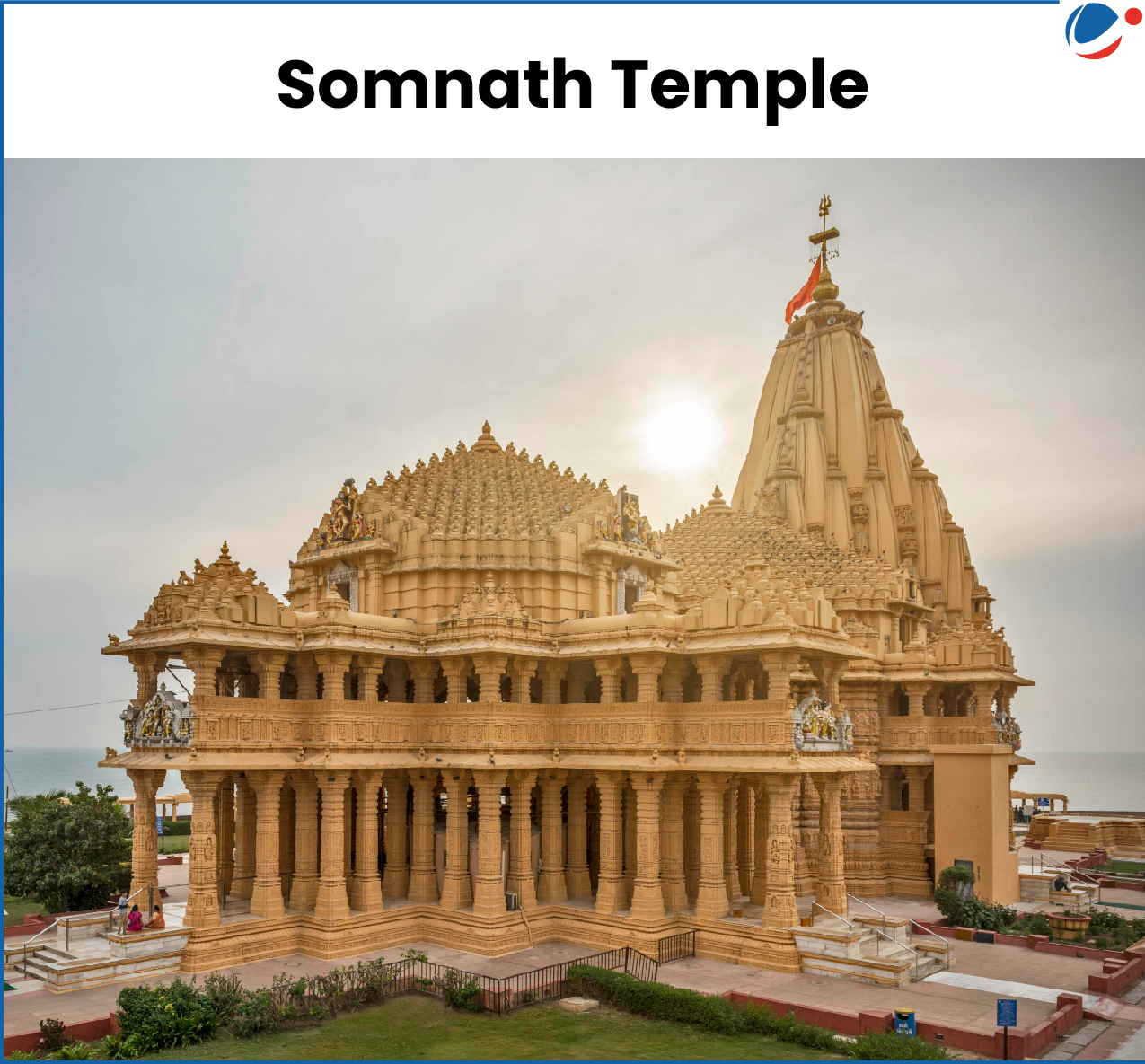
About Somnath Temple
- Location: Prabhas Patan near Veraval in Gujarat
- The site of Somnath has been a pilgrimage site from ancient times on account of being a Triveni sangam (the confluence of three rivers — Kapila, Hiran and Sarasvati).
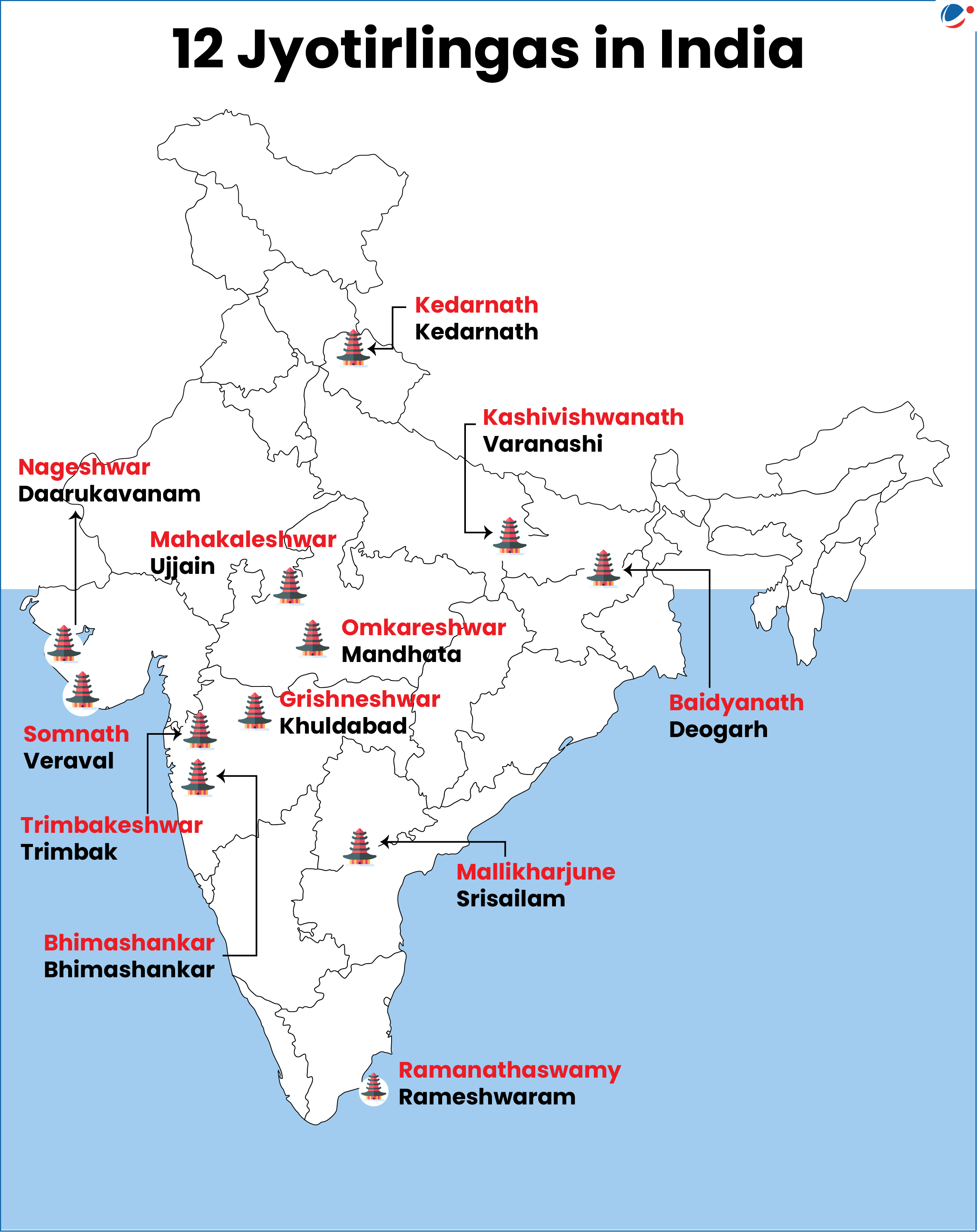
- Jyotirlinga: Revered as the first among the 12 Aadi Jyotirlingas of Lord Shiva.
- Architecture:
- The present temple is a Maru-Gurjara architecture (also called Chalukya or Solanki style) temple.
- It has a "Kailash Mahameru Prasad" form which comprises: the Garbhagriha (sanctum sanctorum), Sabhamandap (assembly hall) and Nrityamandap (dance hall).
- The temple is crowned by a 150-foot Shikhar, with a 10-tonne Kalash at its summit.
- Description of Somnath Temple:
- Ancient times: Kalidasa (Raghuvamsa) mentions Somnath-Prabhasa as a revered Shiva pilgrimage site in 5th century.
- Medieval times:
- Al-Biruni (Kitab-al-Hind) praised Somnath Temple in 11th century.
- Amir Khusrou (Khazain-ul-Futuh) recorded the destruction of the Somnath temple by Alauddin Khilji's army in 13th century.
- Attacks on Somnath: In 1026, during the reign of Bhima I, the Turkic Muslim ruler Mahmud of Ghazni raided and plundered the Somnath temple, breaking its jyotirlinga.
- The temple was again destroyed in 1297, 1394, and finally in 1706 under Mughal ruler Aurangzeb.
- The temple was looted as many as 17 times.
- Reconstruction: Initiated in post-independence by Sardar Vallabhbhai Patel, the first Deputy Prime Minister of India in 1947.
- Pran Pratisthan/Inauguration was done by President Rajendra Prasad on 11 May, 1951.
- Earlier, Ahilyabai Holkar rebuilt the Somnath temple in the 18th century (around 1783).
About Maru-Gurjara Architecture (Solanki style)
|

