


China’s population declined for the fourth consecutive year. Its population dropped by 3.39 million to 1.405 billion, while the total number of births dropped to 7.92 million in 2025.
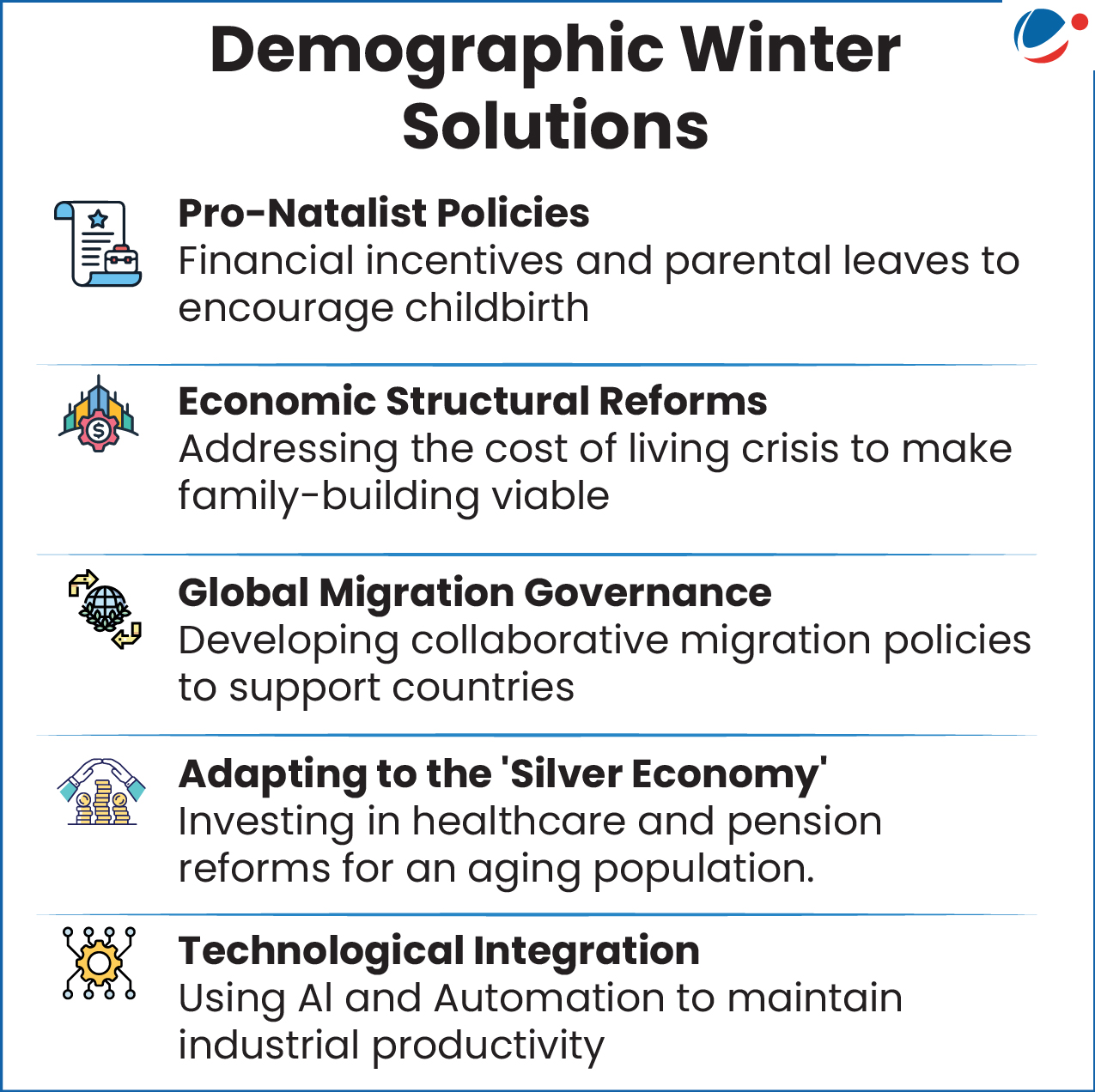
- This phenomenon called the “Demographic Winter” is no longer restricted to developed nations but is increasingly becoming a global reality with profound implications for the 21st century economy and social structure.
What is Demographic Winter?
- Meaning: It describes a demographic phase characterized by a persistent and structural decline in population growth.
- Key indicators include:
- Birth Rates below the Replacement rate of fertility (2.1).
- Inverted Population Pyramid (shrinking, aging population with a narrow base of young people and a wider top of older adults).
Reasons for Demographic Winter
- Delayed Milestones: Career aspirations and economic pressures are leading individuals to delay marriage and parenthood.
- Urbanization: Urban living spaces are smaller and more expensive, further discouraging large families.
- Societal & Cultural Shifts: Increasing female participation in the workforce and a shift toward smaller family norms
- Access to Family Planning: Individuals have more control over family size.
- Legacy Policies: E.g., One Child Policy in China.
The Supreme Court recently observed that menstrual health in schools is integral to Right to Life.
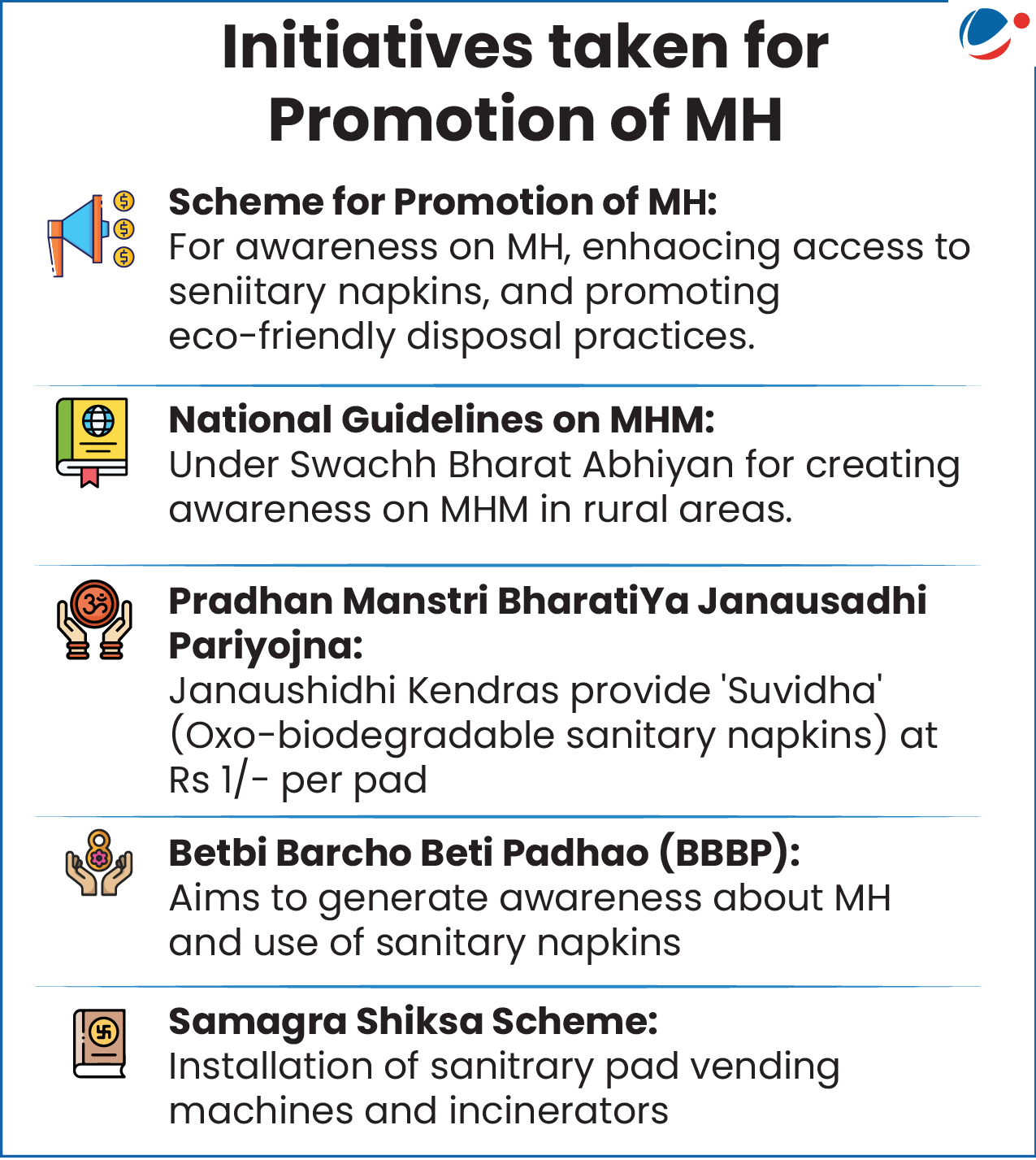
- The Court also directed the pan-India implementation of the Union's national policy, 'Menstrual Hygiene (MH) Policy for School-going Girls' in schools for adolescent girl children from Classes 6-12.
Key Highlights of the judgment
- Menstrual Health as a fundamental right: Right to life under Article 21 of the Constitution includes the right to menstrual health.
- Link to Article 14 (Right to Equality): Inaccessibility of MH measures strip away the right to participate on equal terms in schools.
- Dignity of a girl child: Dignity must translate into living conditions free from humiliation, stigma, and exclusion.
- Structural discrimination: Inaccessibility of sanitary products affects fundamental right to education under Article 21A and Right to Education (RTE) Act.
- Mandatory institutional measures: All schools must provide sensitization of male teachers and students, gender-segregated toilets, free sanitary napkins (preferably through vending machines), and dedicated MHM corners.

