


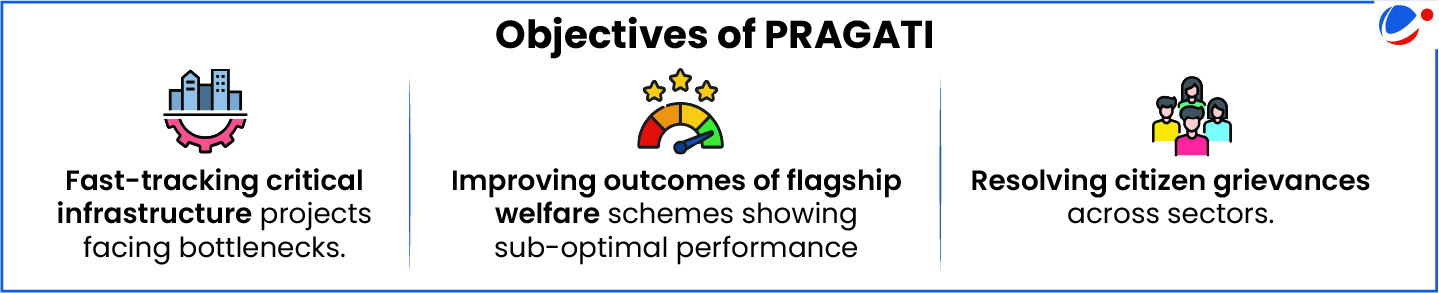
Launched in 2015, PRAGATI (Pro-Active Governance and Timely Implementation) integrates accountability, transparency and timely decision-making into the administrative process.
Key Features of PRAGATI
- About: Multi-purpose and multi-modal platform offering comprehensive, technology-enabled governance mechanism spanning all tiers of government.
- Team India Spirit: PRAGATI review meetings are Chaired by Prime Minister having direct engagement with state and central ministries.
- Hosts Key Governance Tools: Like PM Gati Shakti, PARIVESH and PM Reference Portal.
- Global Recognition: An external study by Oxford University’s Saïd Business School, termed PRAGATI a global benchmark and a “single source of truth” for real-time project monitoring.
Key Transformative Role Played by PRAGATI
- Exemplified Cooperative Federalism: It offered Centre and States to work as a team with ministries and departments looking beyond silos to solve problems.
- Since its inception, around 500 Secretaries of Government of India and Chief Secretaries of States have participated in PRAGATI meetings.
- High Project Resolution Rate: Around 94% issues identified across various projects been resolved resulting in reducing time delays, cost overruns and coordination failures.
- Unlocking Long-Pending Projects: Notable Examples include Jammu–Udhampur–Srinagar–Baramulla rail link (approved in 1994 was commissioned in 2025); Navi Mumbai International Airport and Bogibeel rail-cum-road bridge over the Brahmaputra, etc.
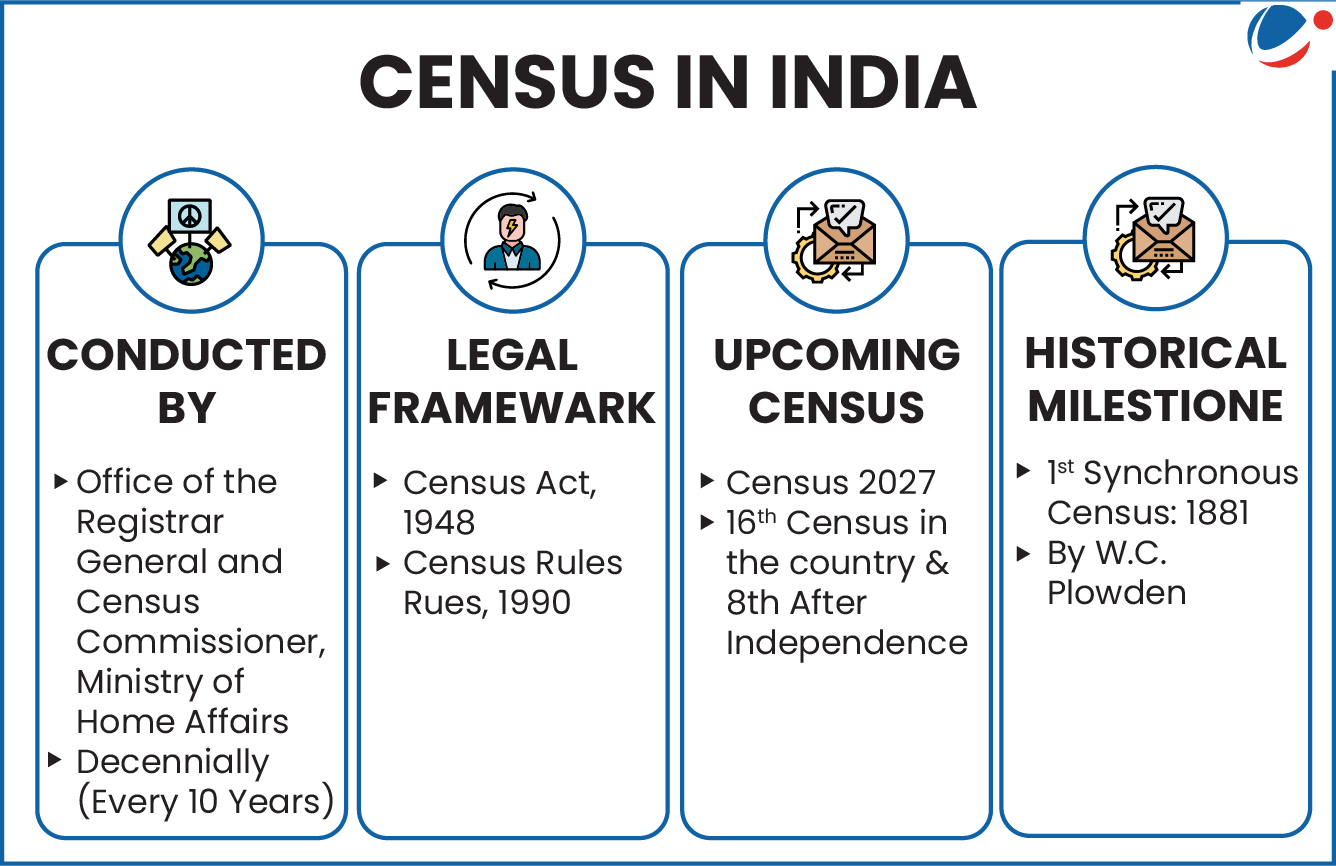
House listing operations (first phase of Census) will be conducted between April and September 2026 across all States and Union Territories.
- Population Enumeration (second phase of Census) is scheduled for February 2027.
- For the Union Territory of Ladakh and snow-bound non-synchronous areas of the Union Territory of Jammu & Kashmir and states of Himachal Pradesh and Uttarakhand, the population enumeration will be conducted in September 2026.
Key Features in the 16th Census (2027):
- India’s First Digital Census: Enumerators will primarily use mobile apps for data collection.
- Historic Caste Enumeration: This Census will include the first nationwide caste enumeration in independent India (last done in 1931) for all communities (beyond just Scheduled Castes and Scheduled Tribes).
- Digital Features:
- Self-Enumeration Portal: A secure platform where citizens can independently complete questionnaires;
- Census Management and Monitoring System (CMMS): Digital portal allowing supervisors and district officers to track enumeration progress.
- Houselisting Block (HLB) Creator: A satellite-based web mapping application that enables Charge Officers to create precise digital enumeration blocks.
- Census as a Service (CaaS): Provides ministries with a clean, machine-readable and queryable database to facilitate evidence-based policy planning.
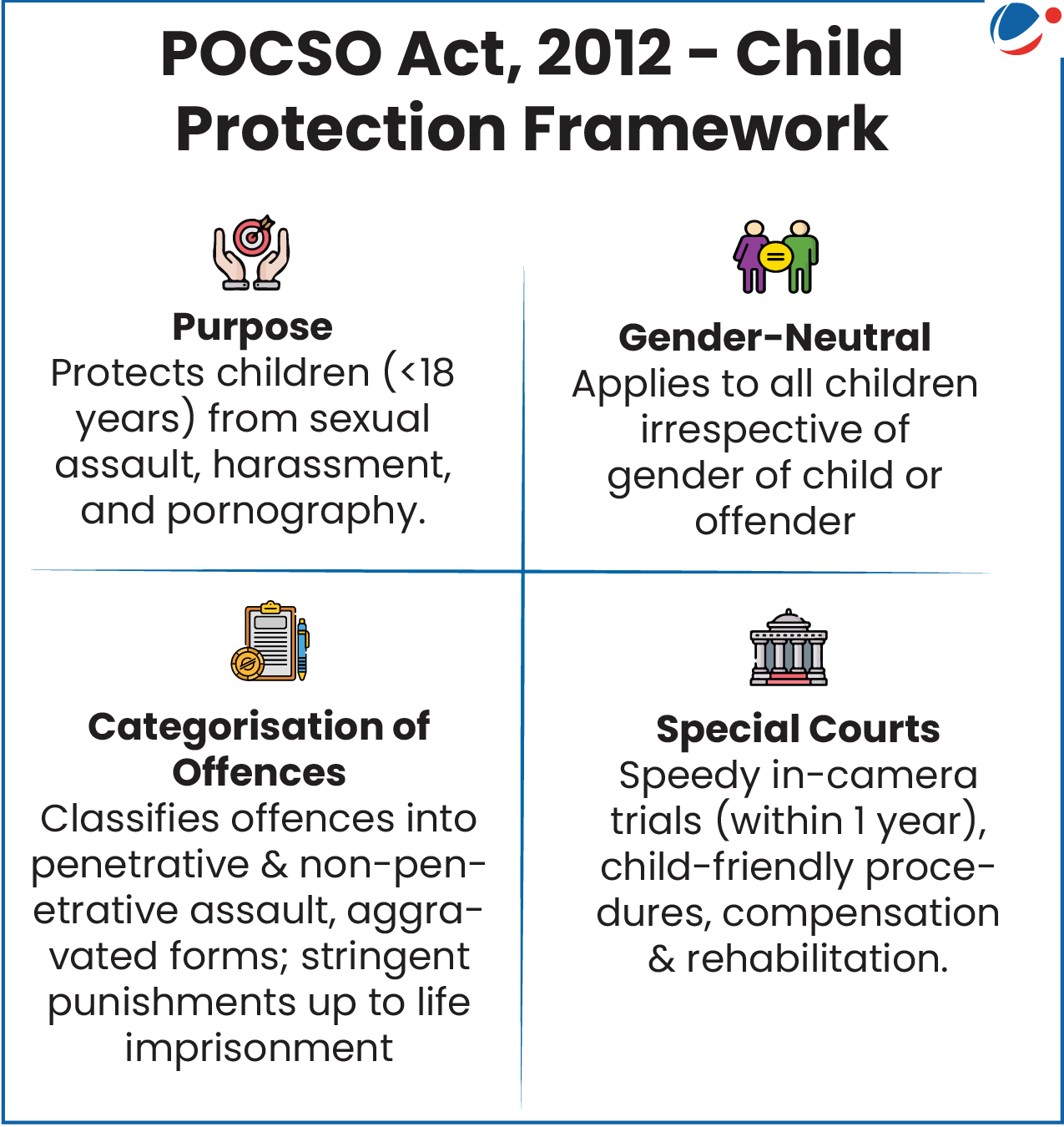
Supreme Court highlighted the misuse of the Protection of Children from Sexual Offences (POCSO) Act in consensual adolescent relationships, and has urged the Centre to consider a “Romeo–Juliet clause” to balance child protection with personal liberty.
Key Highlights of Judgement
- Misuse of Law: Court highlighted the instances where the age of the victim is misrepresented to make the incident fall under the stringent provisions of POCSO and where law has been used by families in opposition to relationships between young people.
- Introducing Romeo–Juliet Clause: To exempt genuine consensual adolescent relationships, where age difference between parties between parties is minimal, from the harsh application of POCSO.
- Ignoring consensual nature of relationship can lead to wrongful imprisonment.
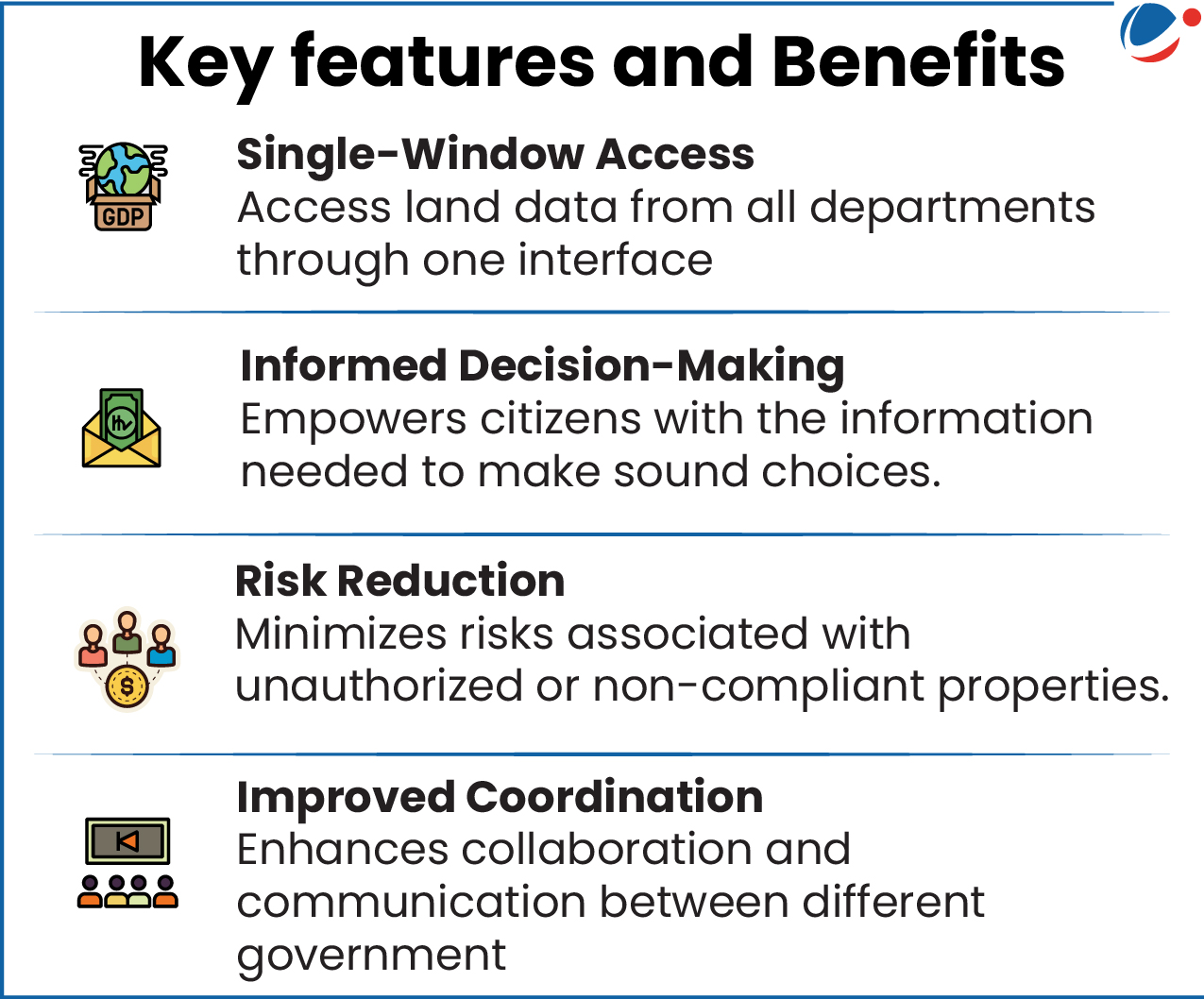
Land Stack & Glossary of Revenue Terms (GoRT) launched under Digital India Land Record Modernisation Programme (DILRMP).
About Land Stack
- It is an integrated GIS-based digital platform for land and property records, inspired by global best practices from countries such as Singapore, the UK, and Finland.
The Ministry of Women and Child Development launched PANKHUDI Portal.
About PANKHUDI Portal
- It is an integrated Corporate Social Responsibility (CSR) and partnership facilitation single-window digital platform.
- It brings together individuals, Non-Resident Indians (NRIs), Non-Governmental Organisations (NGOs), corporate entities, and government agencies.
- The portal streamlines and unifies voluntary and institutional contributions across key thematic areas including nutrition, health, Early Childhood Care and Education (ECCE), child welfare, etc.
- Aim: Strengthening coordination, transparency, and structured stakeholder participation in initiatives for women and child development.
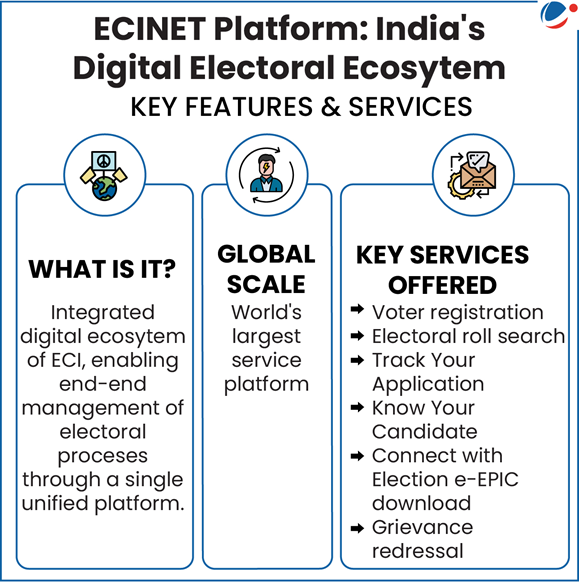
Election Commission of India (ECI) launched ECINET Digital Platform at International Conference on Democracy and Election Management (IICDEM) 2026.
- Its beta version was successfully piloted during 2025 Bihar Assembly Elections.


