


Canadian PM in his speech at World Economic Forum in 2026 outlined a new agenda for the world i.e. -“Third Path” amid US-China rivalry and fading Rule based world order.
About Third path or Carney doctrine:
- The third path or Carney doctrine is based upon “Value-Based Realism”, “co-operation of middle powers” against hegemons and a policy of “variable geometry”.
- Value-Based Realism defends core principles such as sovereignty, territorial integrity, and human rights while recognizing incremental progress, diverging national interests, and partners having value differentials.
- Crucially, values-based realism rests on building domestic strength.
- Policy of “variable geometry” involves forming different coalitions for different issues, based on values and interests.
- E.g. Schengen Area, G7 Grouping, Quad Formation etc.
- This third path framework is relevant for other middle powers, including and particularly India.
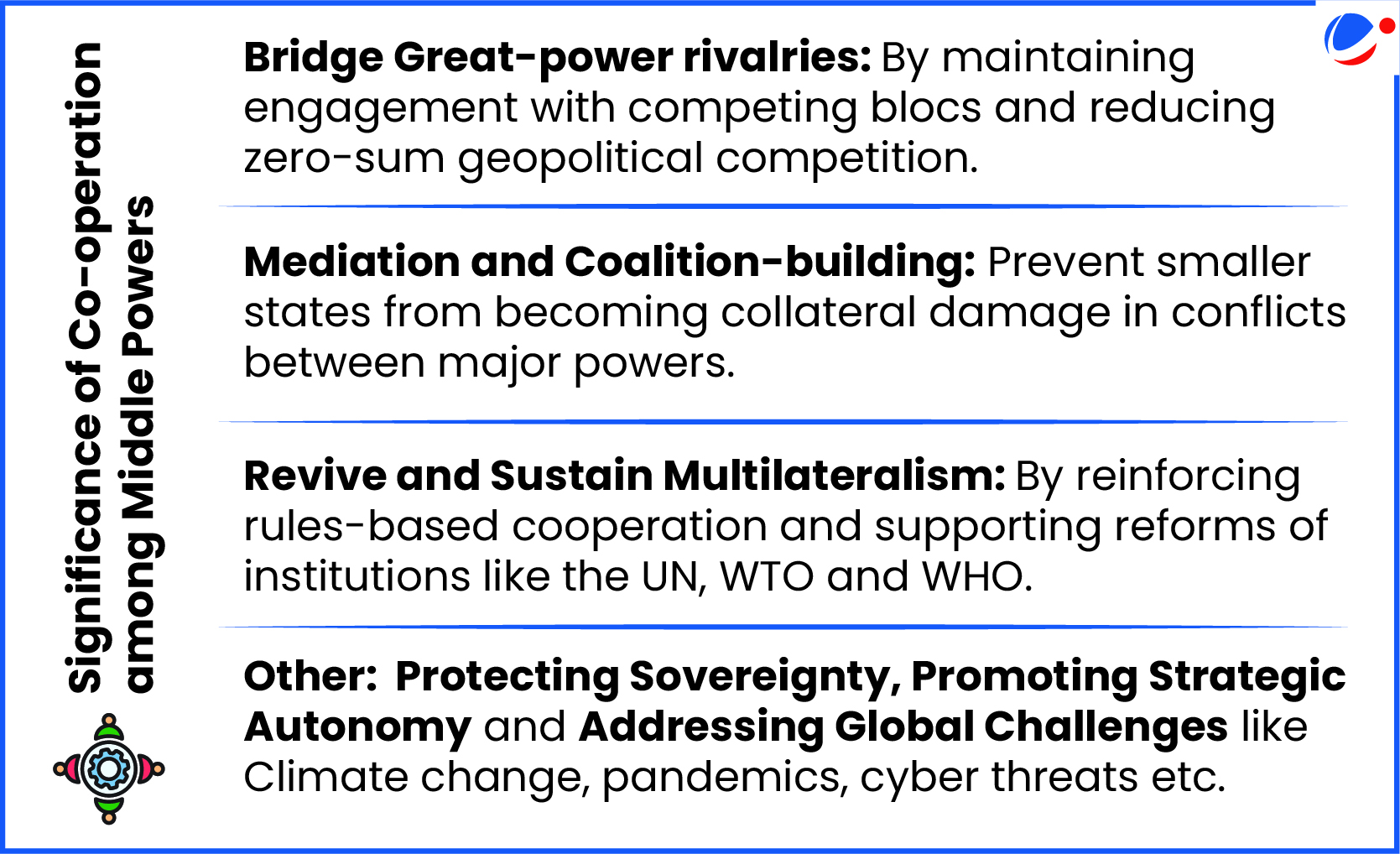
What are middle powers?
- Great powers are often defined as countries with a permanent seat on UNSC (i.e.China, France, Russia, United Kingdom and United States). These countries exert economic, political and military dominance over the world.
- Middle powers are states below great powers that do not dominate the international system but possess significant diplomatic, economic, technological or normative influence.
- Examples include India, Canada, Australia, Japan, South Korea, Indonesia, Brazil, and several EU states.
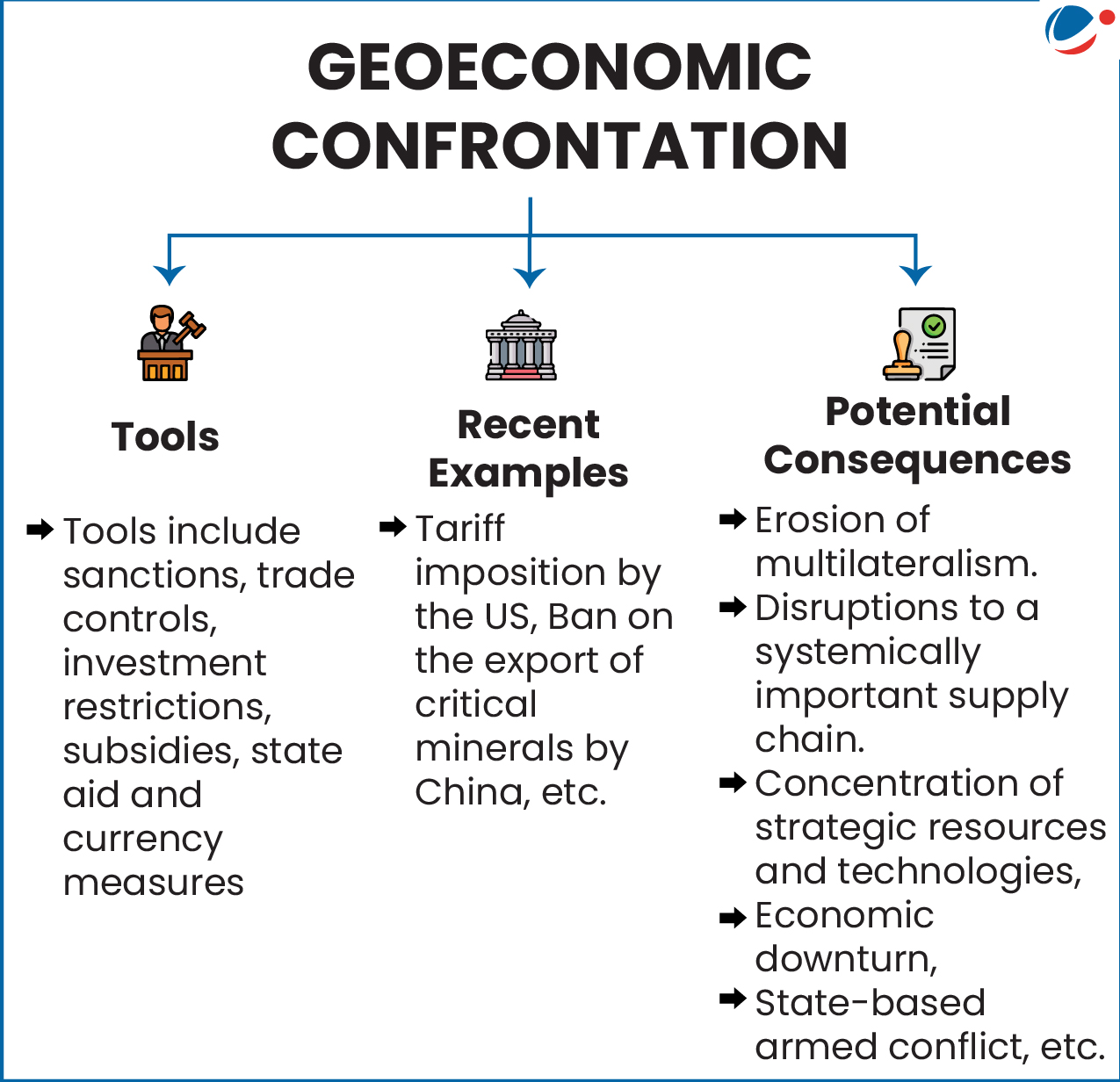
Released by the World Economic Forum (WEF), the report identifies geoeconomic confrontation as the most significant global risk.
Key Highlights of the Report
- In the current and immediate term (2026) and the short-to-medium term (up to 2028), the report highlights major risks such as geoeconomic confrontation, state-based armed conflicts, extreme weather events, rising societal polarisation, etc.
- In the long term (up to 2036), the most significant risks identified include extreme weather events, biodiversity loss and ecosystem collapse, etc.
- Major Risk faced by India: Cyber insecurity, Inequality (wealth, income), Insufficient public services and social protections (incl. education, infrastructure, pensions), etc.
What is Geoeconomic Confrontation?
- Refers to strategic use of economic instruments by global or regional powers to reshape cross-border economic relations by restricting trade, technology, services, capital, or knowledge flows aimed at promoting self-reliance, constraining geopolitical rivals, and consolidating spheres of influence.
- Actions Recommended: Economic inducements that foster mutual gains should be prioritized, Reinforce existing multilateral institutions, Invest in local resilience, etc.
India has joined the Pax Silica initiative by becoming a signatory to the Pax Silica Declaration.
- India also signed a Joint Statement on the "India-U.S. AI Opportunity Partnership” as a bilateral addendum to the Declaration.
About Pax Silica
- It is an U.S. led initiative to build a secure, resilient, innovation-driven technology ecosystem
- The program covers the full technology supply chain, spanning:
- Semiconductors and AI infrastructure
- Critical minerals and energy inputs
- Advanced manufacturing and high-end hardware
- Compute and data logistics
- Objectives:
- Reduce coercive dependencies.
- Protect sensitive technologies and build trusted digital infrastructure.
- Members: Japan, South Korea, Singapore, United Kingdom, Israel, etc.
IPOI is a non-treaty-based voluntary arrangement that promotes cooperation for a free and open Indo-Pacific and the rules-based regional order.
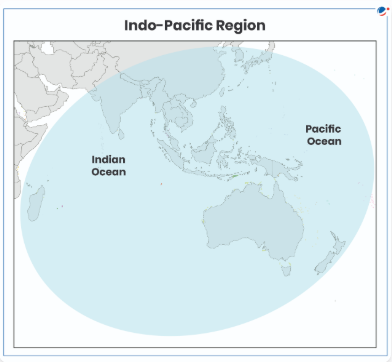
- Indo-Pacific is as an interconnected space between the Indian and the Pacific Ocean, joined together by its main trading channel, the Malacca strait.
- It is home to more than half of the world's population, and nearly 2/3rds of the global economy.
About Indo-Pacific Oceans Initiative (IPOI)
- Genesis: IPOI was launched by India at the East Asia Summit in 2019, held in Bangkok (Thailand).
- Background: It builds upon the “Security and Growth for All in the Region” (SAGAR) initiative announced by India in 2015.
- SAGAR encourages countries to cooperate and synergise efforts towards a safe, secure, and stable maritime domain.
- 7 pillars of IPO: It includes Maritime Security; Maritime Ecology, Capacity Building and Resource Sharing; Disaster Risk Reduction and Management, etc.
Key Significance of IPOI
- Countering China's assertiveness: E.g., In 2020, India and Vietnam agreed to enhance their bilateral cooperation in line with IPOI.
- Convergences with other global initiatives: E.g., AIIPOIP (Australia-India Indo-Pacific Oceans Initiative Partnership), AOIP (ASEAN Outlook for the Indo-Pacific), IPEF, etc.
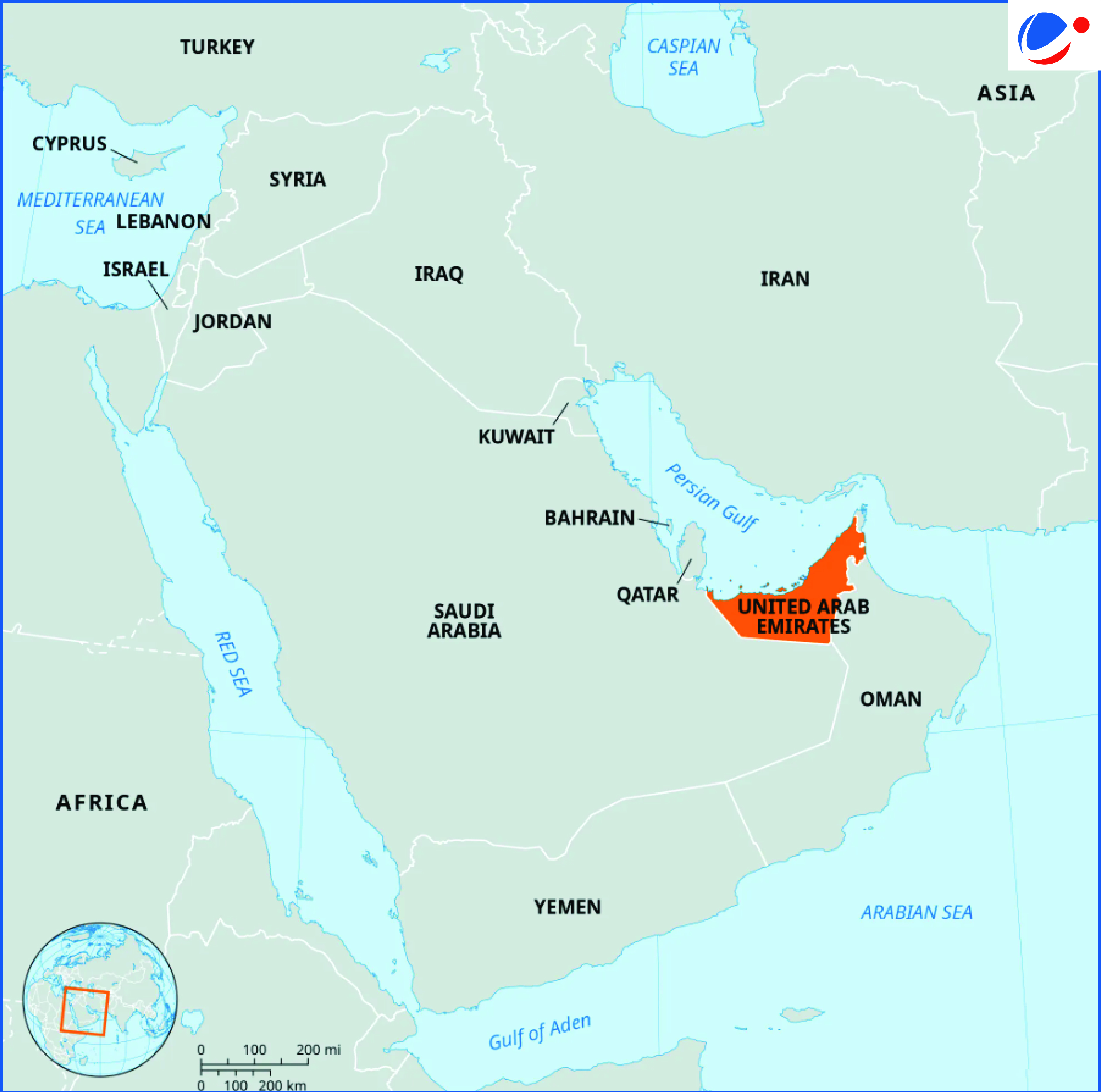
Key Outcomes of Visit:
- Strategic Announcements:
- Trade Target: Agreed to double bilateral trade to over US$ 200 billion by 2032.
- Both countries will promote new markets through initiatives like Bharat Mart, Virtual Trade Corridor and Bharat-Africa Setu.
- Civil Nuclear Cooperation: Explore partnerships in advanced nuclear technologies, including Small Modular Reactors (SMRs) and nuclear safety, following enactment of the SHANTI Act 2025.
- Establishment of Digital/ Data Embassies: A Digital/Data embassy is an offshore centre where a nation-state stores its critical digital data, to ensure digital continuity and sovereignty against cyberattacks, natural disasters, or geopolitical conflicts.
- AI & Tech: Collaboration for a supercomputing cluster under AI India Mission.
- Trade Target: Agreed to double bilateral trade to over US$ 200 billion by 2032.
- Key Agreements / MoUs / LoIs:
- Strategic Defence Partnership: Aims to establish framework for deepened defence cooperation across technology, training and cyber domains.
- Energy Supply: SPA (Sales & Purchase Agreement) for 0.5 MTPA LNG supply from ADNOC Gas to HPCL for 10 years.
Key aspects of India- UAE Relations
|
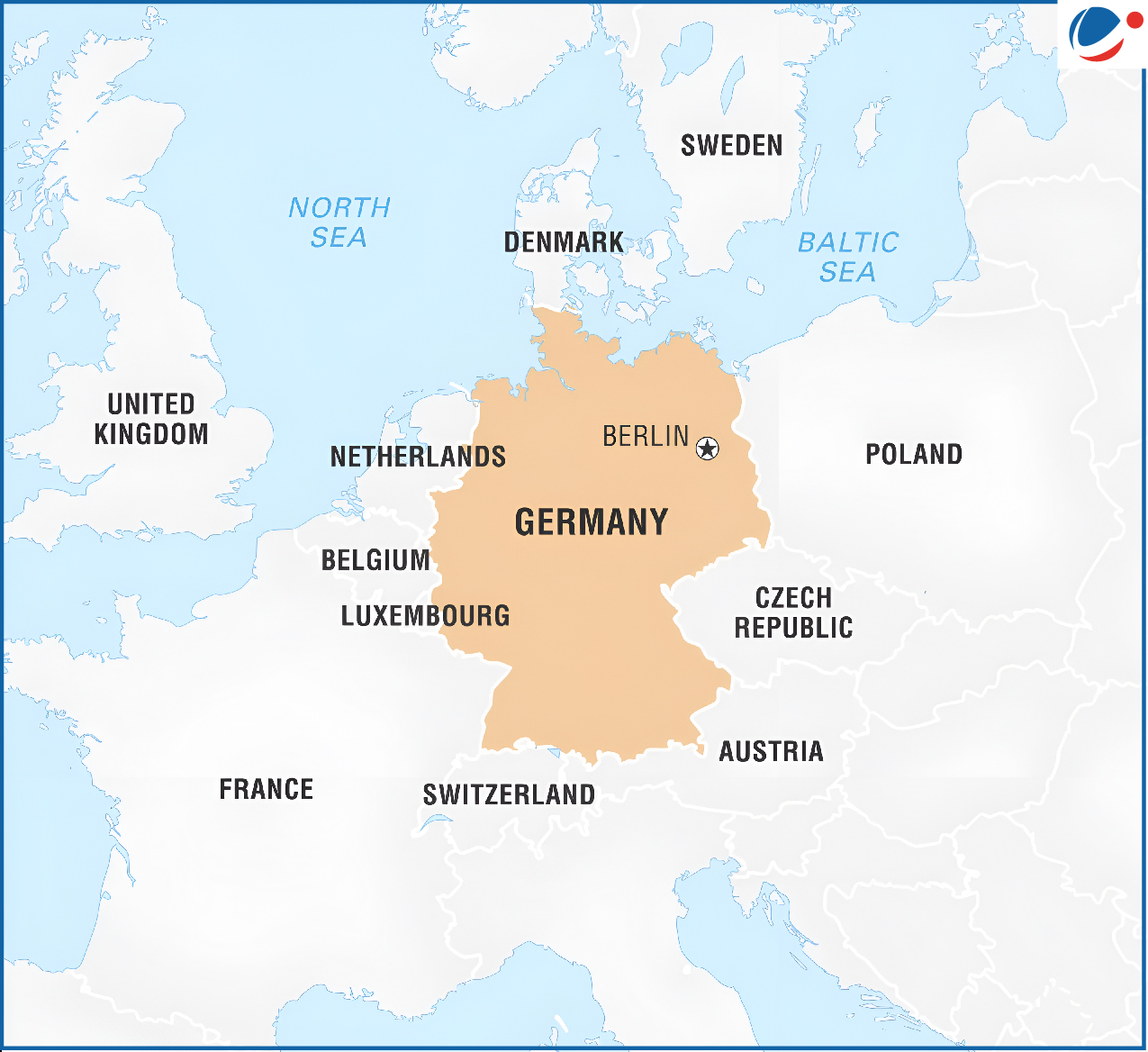
The agreements were signed during the visit of the German Chancellor.
- The visit coincided with a milestone phase in bilateral ties, as India and Germany celebrated 25 years of their Strategic Partnership in 2025 and marking 75 years of diplomatic relations in 2026.
Key outcomes
- Defence and Security: Signed Joint Declaration of Intent to develop a Defence Industrial Cooperation Roadmap was signed, emphasizing technology partnerships, co-development, and co-production of defence platforms.
- Germany’s expressed intent to participate in Indian Naval Exercise MILAN of, Indian Ocean Naval Symposium, Air Combat Exercise Tarang Shakti etc.
- Track 1.5 Foreign Policy and Security Dialogue was also established
- Track 1.5 Diplomacy occurs when government representatives and non-governmental experts engage in dialogue in less formal ways
- Trade and economy: To ensure supply chain resilience, agreements were signed focusing on the Semiconductor, Critical Minerals, etc.
- Visa and Mobility: Germany announced a visa-free transit facility for Indian passport holders.
- Other:
- Announced a new bilateral Indo-Pacific consultation mechanism.
- Education and skilling- Indo-German Comprehensive Roadmap on Higher Education was adopted.
Other Key aspects of Indo- German Relations
|
India has formally objected to China’s infrastructure projects in the Shaksgam Valley.
About Shaksgam Valley
- Strategically located territory in Ladakh, north of the Karakoram watershed and an integral part of India.
- Illegal cession: Pakistan occupied since 1947, unlawfully ceded to China under the 1963 China–Pakistan Boundary Agreement.
- Also known as the Trans-Karakoram Tract, lying along both sides of the Shaksgam River.
- Geography: Bounded by the Kun Lun Mountains and Karakoram range; it lies adjacent to the Siachen Glacier.
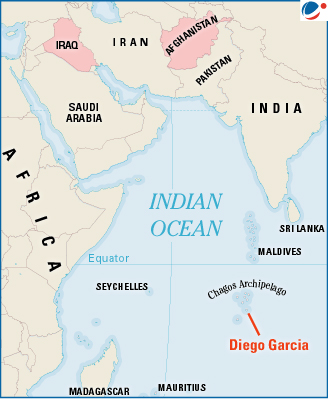
US President Trump has criticised the potential return of Diego Garcia by the UK to Mauritius which hosts a vital US military base.
About Diego Garcia
- Location: Diego Garcia is a coral atoll in the central Indian Ocean, part of the Chagos Archipelago.
- History: The Chagos Archipelago was administered by the United Kingdom as the British Indian Ocean Territory (BIOT) from 1965.
- In May 2025, the United Kingdom and the Republic of Mauritius signed an agreement under which Mauritius is recognised as sovereign over the entire Chagos Archipelago, including Diego Garcia (with UK having a 99 years lease of Diego Garcia)
- Military use: Diego Garcia hosts a joint UK–US military facility.
The Minister of External Affairs participated in India’s first-ever engagement in the Weimar Triangle.
About Weimar Triangle
- It is a regional alliance of France, Germany, and Poland set up in 1991 in the German city of Weimar.
- Initially formed as a key forum for supporting German-Polish reconciliation.
- Aim: To promote European integration, political dialogue, security cooperation, etc.




