


Why in the News?
This year marks 200th birth anniversary of Mahatma Jyotiba Phule.
Brief about the Life of Jyotiba Phule
- Born: April 11, 1827, in Maharashtra (in or near Pune/Satara district) into a Mali (gardener) family, which belonged to Shudra varna.
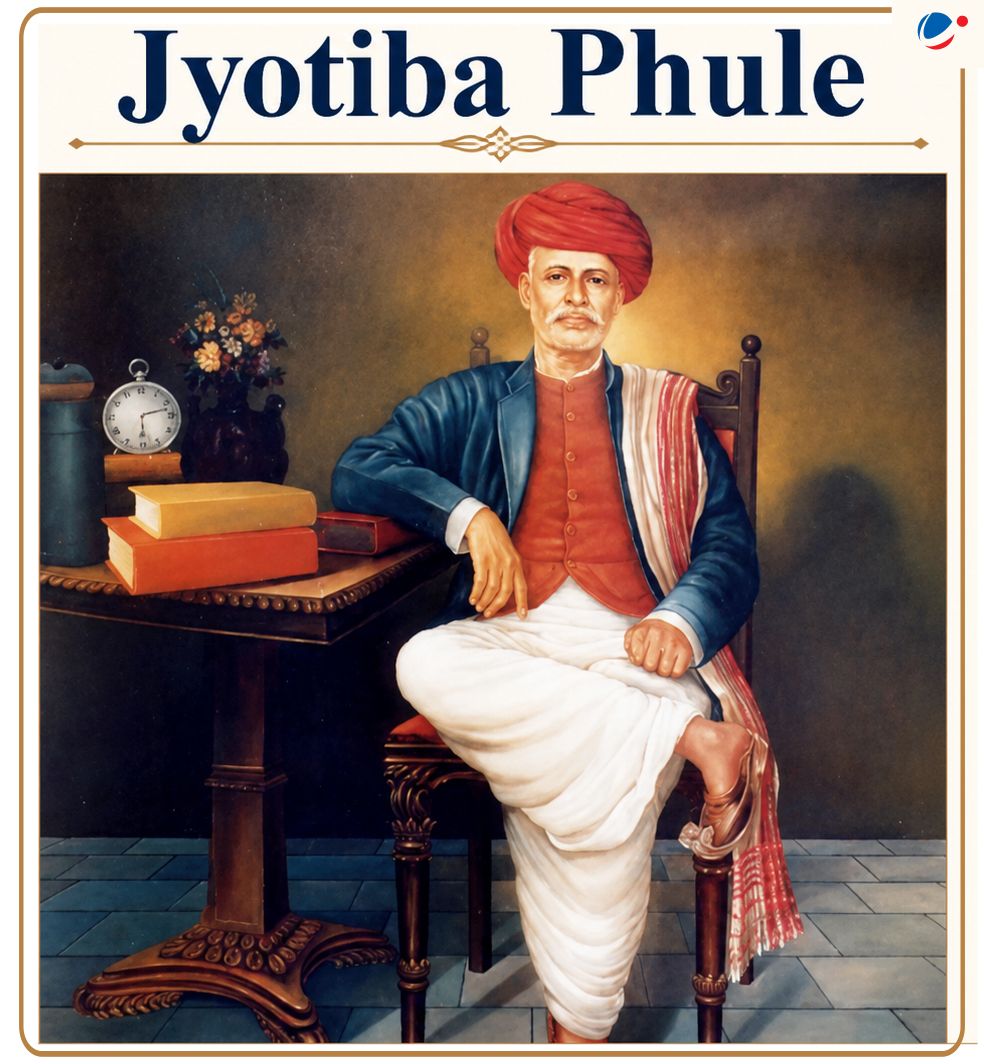
- Education: He initially dropped out of a Marathi school to work on his family's farm but was later admitted to the Scottish Mission High School in Pune in 1841, completing his secondary education in 1847.
- He was deeply inspired by Thomas Paine's book Rights of Man.
- Title:
- Mahatma (Great Soul) in 1888 by the people for the upliftment of the oppressed.
- Father of Indian Social Revolution
- Guru by Dr. B.R. Ambedkar.
- Publications:
- Gulamgiri (1873): Provided a historical account of the slavery and exploitation of lower castes.
- Shetkaryacha Aasud (1883): The "Cultivator's Whip-cord" analyzed the systemic exploitation of peasants.
- Brahmananche Kasab (1869): Exposed the exploitative practices of Brahmin priests.
- Sarvajanik Satyadharma Pustak (1891): Outlining his philosophical statement on a "True Religion for All".
- Other: Tritiya Ratna (1855), Satsar Vol I & II (1885), Ishara (1885).
Key contributions
- Educational Reforms:
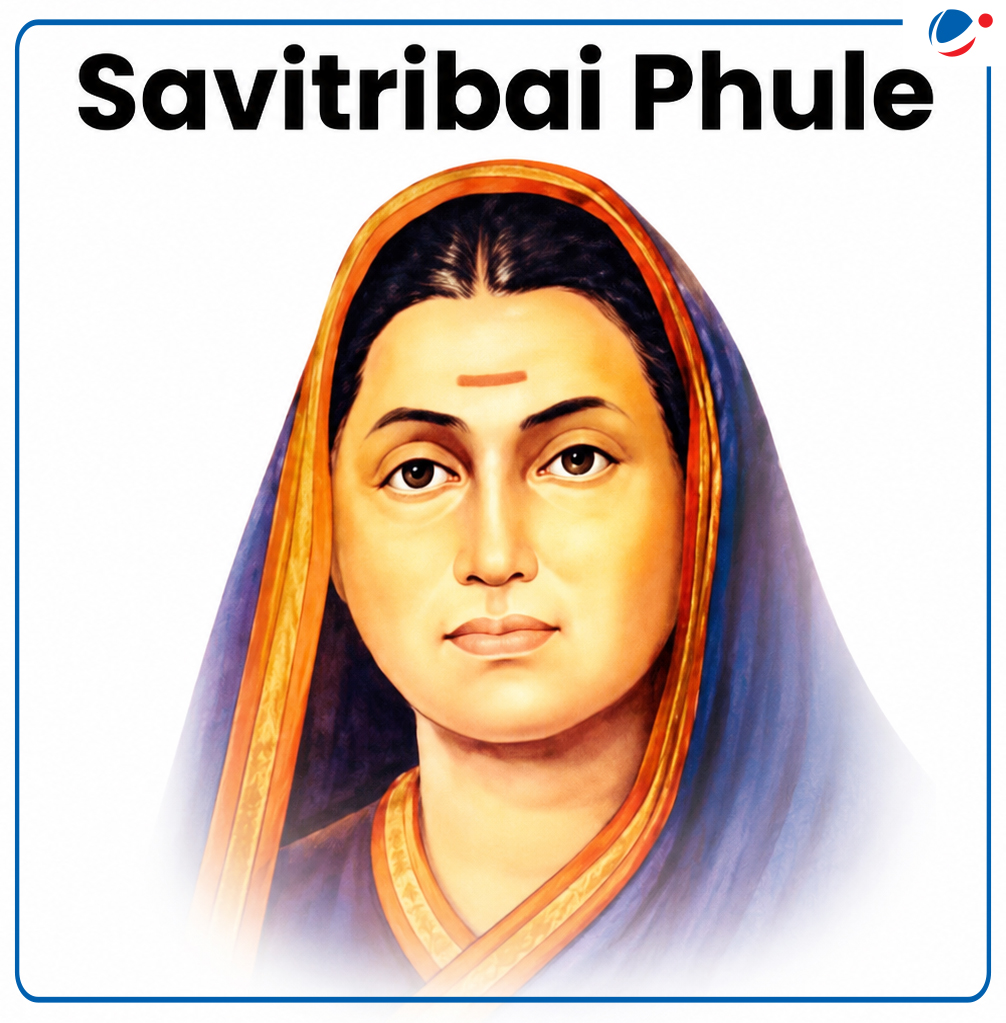
- Schools: In 1848, he opened first school for lower-caste boys and girls in Pune, where Savitribai Phule served as the first Indian woman teacher.
- They subsequently opened multiple schools for girls, as well as a night school for adult peasants and workers in 1852.
- Hunter Commission (1882): Jyotiba submitted a memorandum advocating for free and compulsory primary education for all and government to prioritize primary education for the masses over higher education.
- Utilitarian Curriculum: Advocated for practical knowledge over bookish learning, suggesting that the curriculum include agriculture, health, ethics, and grammar, with a clear distinction between rural and urban syllabi.
- Focus on Teachers: Demanded that primary teachers be trained, well-paid, and drawn from lower castes to provide them with employment opportunities.
- Schools: In 1848, he opened first school for lower-caste boys and girls in Pune, where Savitribai Phule served as the first Indian woman teacher.
- Social reforms:
- Satyashodhak Samaj (Society of Truth Seekers): Founded on September 24, 1873, to organize lower castes against the Brahminical social order and promote social equality.
- Satyashodhak marriage practice: Conducted without Brahmin priests and dowry.
- Women's Rights: Supported the widow remarriage movement in 1860 and established a Home for the prevention of infanticide in 1863 to protect children of widows and rape victims.
- He and Savitribai adopted Yashwant Rao, the son of a Brahmin widow.
- Eradication of Untouchability: They opened their personal water well to untouchables in 1868.
- Political reforms:
- Poona Municipality: Served it as a member from 1876 to 1882, fighting for the cause of the oppressed.
- Indian National Congress: Advised lower castes to stay away from INC, warning that it primarily represented the interests of elite high castes and did not truly represent the masses.
- Attitude towards Colonial Government
- Initially: Phule welcomed British rule because it ended the tyranny of the Peshwa regime and introduced the principle of equality before the law, opening up educational and occupational opportunities for lower castes.
- Later: Criticized government for neglect of primary education, exploitative taxation and anti-peasant policies.
- Religious and Philosophical reforms:
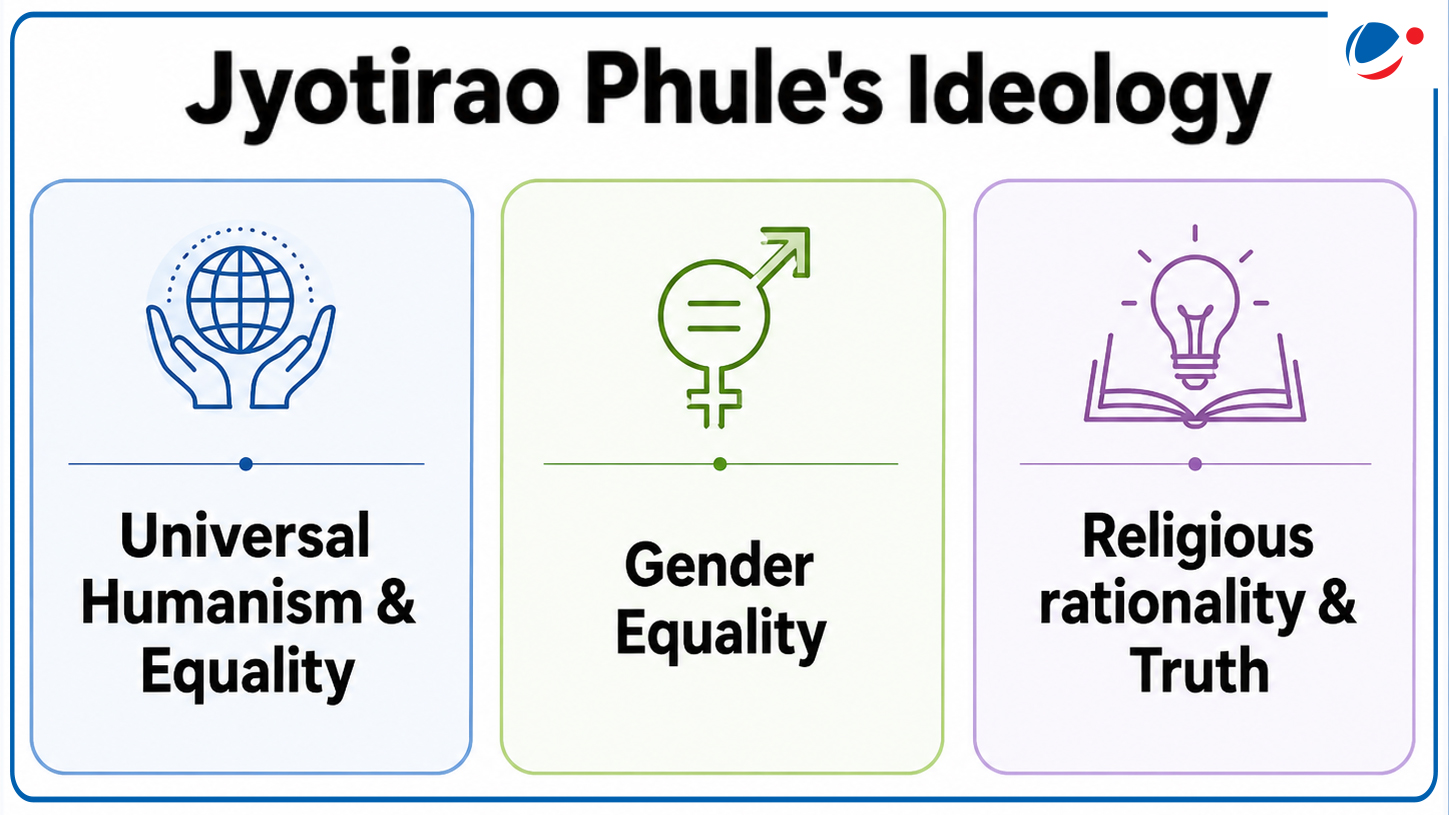
- Critique of Varna System: Challenged the divine origin of the Varna system and argued that Brahmins were Aryan conquerors who subjugated indigenous Shudras and Atishudras.
- He rejected Idolatry, ritualism, fatalism, and the need for a priestly intermediary between God and devotees.
- Advocated Sarvajanik Satya Dharma (Public True Religion): As universal religion based on truth-seeking, liberty, and equality to replace traditional Hinduism.
- Tritiya Ratna: Education was viewed as the "third eye" that enabled the masses to think critically, exercise independent reasoning, and dismantle the oppressive ideologies of Brahminism.
- Economic Reforms
- Drain of Wealth: Phule highlighted drain of wealth from the peasant/rural economy to the urban/Brahmin domain.
- Proposed Solutions: Demanded construction of bunds, tanks, and dams for irrigation, schemes for soil conservation and animal breeding, introduction of modern farming techniques, and reduction in tax burden on farmers.
 Savitribai Phule
|
Conclusion
Mahatma Jyotirao Phule was a visionary and the "Father of the Indian Social Revolution," whose pragmatic yet profoundly philosophical approach laid the foundation for the Backward Class Movement in India. Recognizing education as the ultimate harbinger of social justice, his framework deeply inspired future leaders like Dr. B.R. Ambedkar, who considered Phule his Guru.

