


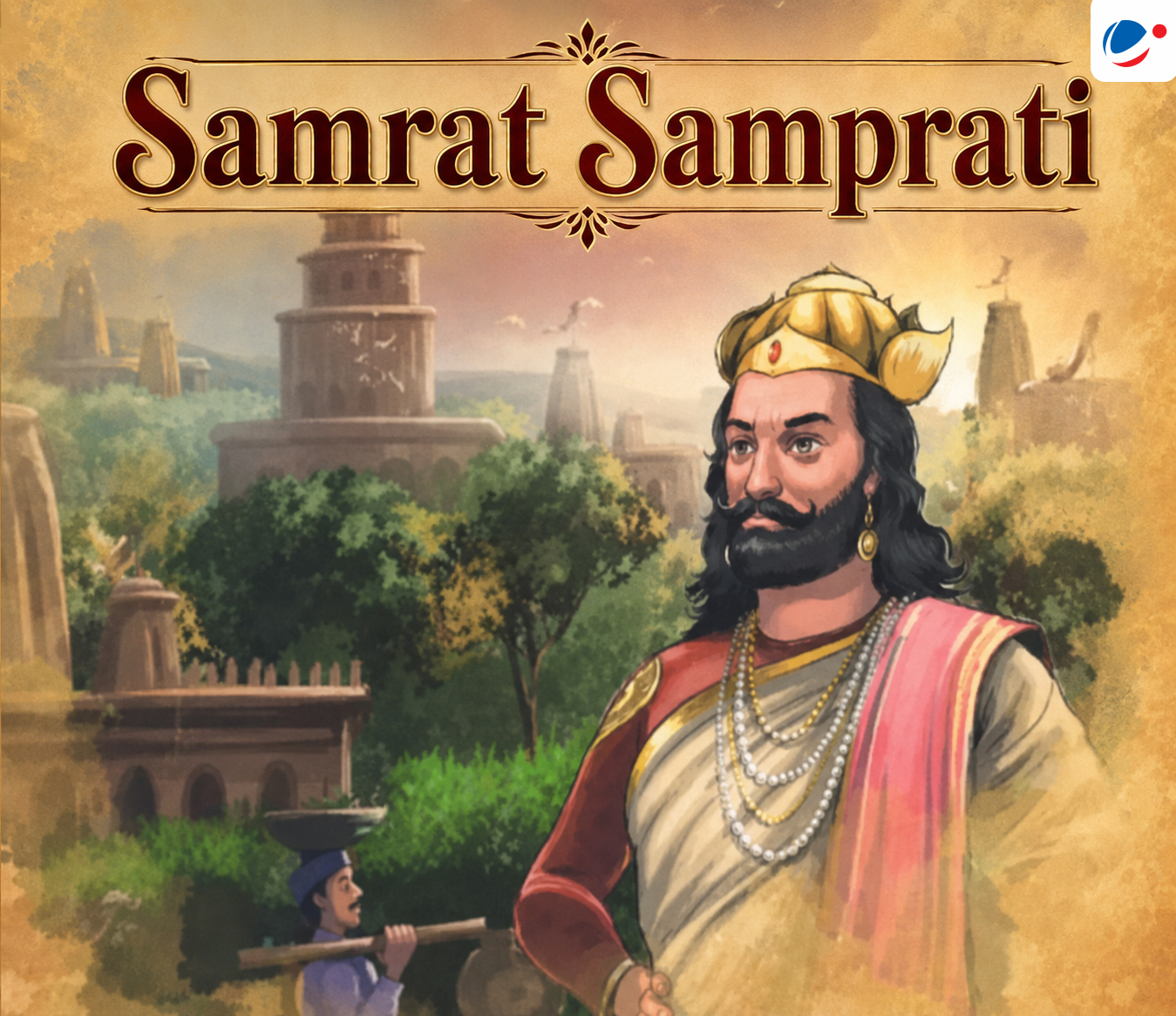
The PM inaugurated the Samrat Samprati Museum in Koba, Gandhinagar, Gujarat on Mahavir Jayanti.
About Samrat Samprati
- A Mauryan emperor and the grandson of Emperor Ashok, born to father Kunal and mother Kanchanmala.
- Known as Indrapalit, Sangat and Vigatashok; his life is described in Jain scripture like ‘Sampratikatha’, ‘Parishistaparva’, and ‘Prabhavakcharita’.
- Pivotal role in spreading Jainism (also referred to as ‘Jain Ashoka’) and the principle of ahimsa (non-violence) across the subcontinent.
- He is known to have built and repaired many Jain temples.
Article Sources
1 sourceThe foundation stone was laid for India's first Petroglyph Conservation Park on the banks of the Indus River in Ladakh.
- The park aims to serve as a dedicated conservation space for centuries-old rock carvings (petroglyphs) that are increasingly under threat due to unregulated tourism, rapid infrastructure development, and a lack of awareness.
About Petroglyphs
- Petroglyphs are prehistoric images, symbols, or carvings etched, pecked, or engraved directly onto rock surfaces.
- These are “open-air museums” and “civilisations carved on stone,” and represent a continuous record of human history from the Palaeolithic Age to later historic periods.
- These carvings depict ancient trade routes, migration patterns, belief systems, and ecological histories.
- Major Petroglyphs in India: Bhimbetka (Madhya Pradesh), Ratnagiri (Maharashtra), Gawilgarh hills (Odisha), etc.
Tags:
Recently, Researchers from Nagaland University, identified traditional herbal formulation used by the Konyak tribe for its anti-cancer potential.
- It is a five-plant polyherbal formulation including-
- Persicaria maculosa Gray (Redshank/Lady’s Thumb)
- Acorus calamus L. (Sweet Flag)
- Erythrina variegata L. (Tiger’s Claw/Indian Coral Tree)
- Stereospermum chelonoides (L.f.) DC. (Padri Tree)
- Oroxylum indicum (L.) Kurz (Indian Trumpet Flower)
- Its bioactive compounds can effectively target VEGFR2, a key protein responsible for tumour blood vessel growth.
About Konyak Tribe
- Tribe of Mongoloid origin, predominantly found in Nagaland.
- Largest of all Naga tribes
- Key festival: Aoleang Monyu
- Governed by powerful hereditary chiefs called 'Anghs'
- Their language belongs to the Tibeto-Burman family.
- They are known as headhunters of North East India.

