


Why in News?
Prime Minister addressed the closing ceremony of the Second WHO Global Summit on Traditional Medicine.
More on News
- The Summit is being jointly organized by the World Health Organization (WHO) and the Ministry of Ayush, Government of India.
- The Delhi Declaration on Traditional Medicine with the Theme - "Restoring Balance: The Science and Practice of Health and Well-being" was adopted in the closing ceremony of the Summit.
- The Declaration focuses on integrating traditional medicine into primary health care, strengthening regulation and safety standards, investing in research, and building interoperable data systems to track outcomes.
- Key Developments at the Summit:
- Launch of Traditional Medicine Global Library: Ensures equitable global access to scientific data, policy resources and validated knowledge.
- WHO South-East Asia Regional Office (SEARO) building inaugurated in New Delhi.
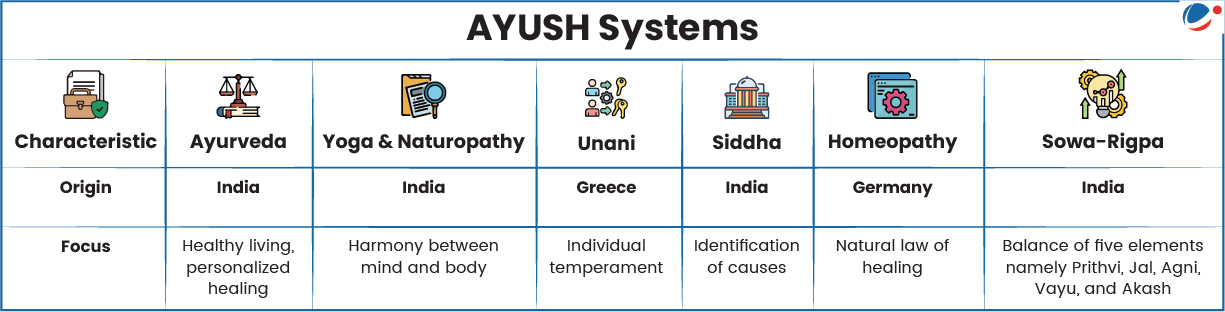
Significance of Traditional Medicines (TM)
- Primary Healthcare: Estimates suggest up to 80% of the world's population relies on TM for primary needs.
- Vasudhaiva Kutumbakam: This philosophy of "the world is one family" drives the effort to share TM for global harmonious wellness.
- One Health Approach: TM recognizes the interdependence of human, animal, and environmental health.
- Economic Dimension: India's AYUSH sector is valued at $43.4 billion and has expanded nearly eight-fold in the past decade.
- Soft Power: For India, Ayurveda and Yoga serve as significant instruments of cultural diplomacy and soft power on the global stage.
- Aligning with Sustainable Development Goals (SDGs): SDG 3 (Good Health): Making healthcare more equitable and affordable.
- SDG 15 (Life on Land): Recognizing and valuing biodiversity through the demand for medicinal plants
- SDG 17 (Partnerships): Fostering collaboration through the exchange of ancient knowledge.
Challenges in Promoting Traditional Medicine
- Standardization Gap: The lack of uniform global regulatory frameworks for such products leads to quality variations.
- Eg: Indian Ayurvedic products (like Ashwagandha or Triphala) vary widely in active compounds across brands due to differing process of manufacturing.
- Threat to Biodiversity: Over-exploitation of natural resources for herbal medicines threatens ecological balance and the survival of rare medicinal species.
- Eg: Sarpagandha known for medicinal properties is now classified as an endangered species in IUCN Red Data List.
- Scientific Validation: Many remedies lack the rigorous clinical trial data required by the mainstream medical community.
- Eg: Echinacea which is widely used for preventing or treating the common cold. Clinical trials investigating it did not show statistically significant reductions in illness occurrence.
- Intellectual Property Rights (IPR): Current IPR systems favour individual/corporate ownership, which conflicts with the collective, perpetual nature of traditional knowledge.
- Eg: Patent was granted in the United States for the use of turmeric for wound healing (later revoked).
Way Forward
- Scientific Validation: Bringing evidence-based validation to TM to ensure safety and effectiveness for a global audience.
- Sui Generis IPR: Developing a unique IPR system designed specifically to protect collective traditional knowledge.
- Conservation: Implementing both in-situ and ex-situ conservation strategies to protect endangered medicinal plants.
- Inclusive Research: Incorporating ethical frameworks that respect the rights of indigenous people and their self-determination.
Initiatives for Traditional Medicine in India
|
Conclusion
Indian traditional knowledge offers a holistic reminder that true wellness is a journey of nurturing the entire being—mind, body, and spirit—in harmony with nature.
