


Why in the News?
Deepavali was officially inscribed on UNESCO's Representative List of the Intangible Cultural Heritage (ICH) of Humanity.
More on the news
- The inscription was done during the 20th Session of the Intergovernmental Committee, for the Safeguarding of the ICH held at Red Fort in New Delhi (first time that India hosted the session).
- The Intergovernmental Committee advances the objectives of the 2003 Convention for Safeguarding of the ICH and ensures their effective implementation across Member States.
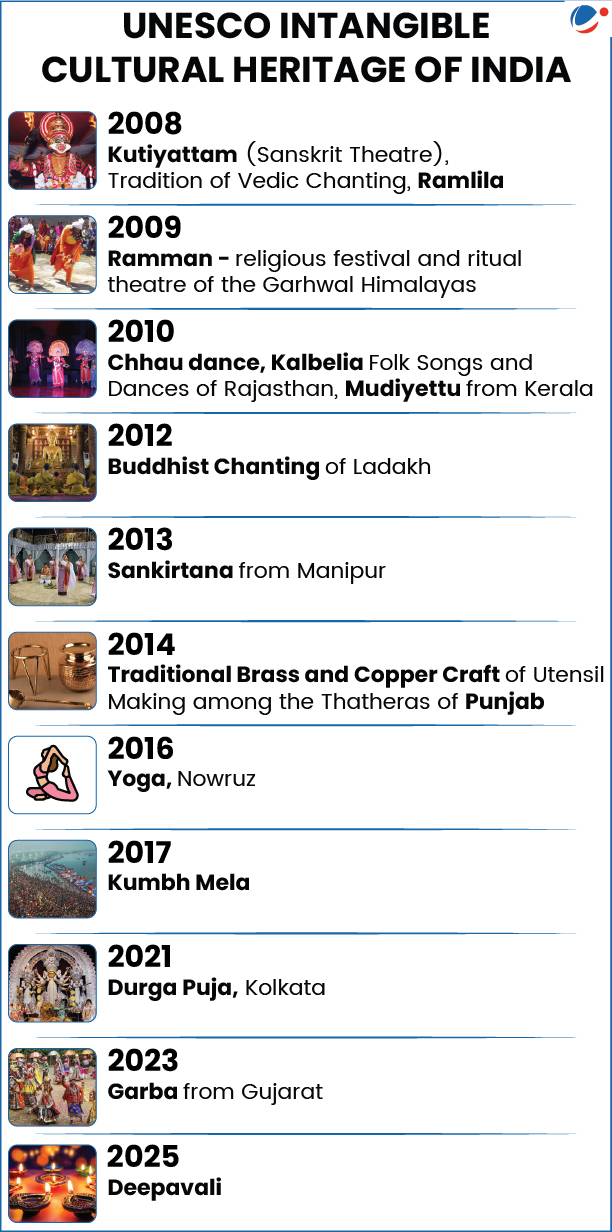
- India now has 16 elements on UNESCO's Intangible Cultural Heritage list (see infographic).
- Other key outcomes of the session:
- New additions to List of ICH in Need of Urgent Safeguarding: Craft of making Đông Hồ Folk woodblock printings (Viet Nam); Mwazindika spiritual dance of Daida community (Kenya); Boreendo, Bhorindo: ancient dying folk musical instrument (Pakistan) etc.
- New inscriptions on Representative List of ICH of Humanity: Joropo, Venezuela; Traditional Saree weaving art of Tangail, Bangladesh; Behzad's style of miniature art, Afghanistan etc.
About Intangible Cultural Heritage (ICH)
- The Convention defines it as practices, representations, expressions, knowledge, skills – as well as the instruments, objects, artefacts and cultural spaces that communities, groups and individuals recognize as part of their cultural heritage.
- Key characteristics:
- Transmitted from generation to generation
- Constantly recreated by communities and groups in response to environment, interaction with nature and history
- Provides with a sense of identity and continuity.
- Promotes respect for cultural diversity and human creativity
- It is manifested in domains like oral traditions and expressions; performing arts; social practices, rituals and festive events; knowledge and practices concerning nature and the universe; traditional craftsmanship.
About Convention for the Safeguarding of the Intangible Cultural Heritage (ICH)
|
India's efforts for preservation of ICH
- Scheme for Safeguarding the Intangible Heritage and Diverse Cultural Traditions of India: Launched by Ministry of Culture as a centralised mechanism to strengthen ongoing but scattered preservation efforts.
- National Inventory of Intangible Cultural Heritage (ICH) List: Sangeet Natak Akademi ensures it timely updation.
- Zonal Cultural Centres (ZCCs): Established by Ministry of Culture to preserve and promote India's folk arts and culture.
- Guru–Shishya Parampara scheme: Provides financial support for all genres of performing arts activities like dramatic groups, theatre groups, music ensembles, children theatre etc.
About Deepavali
- Deepavali, also known as Diwali, is celebrated on Kartik Amaavasya, which typically falls in October or November.
- It includes Dhanteras (buying metalware as a symbol of prosperity); Naraka Chaturdashi (lighting lamps to dispel negativity); sacred Lakshmi-Ganesha Puja; Bhai Dooj (celebrates brother-sister bond).
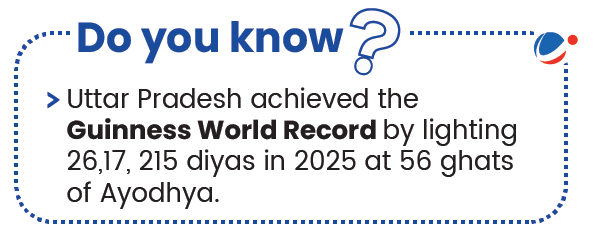
- Fundamental philosophies: Celebration of prosperity, renewal, and abundance for all; victory of light over darkness and good over evil.
- Popular Legends associated with Diwali
- Ramayana: Signifies the return of Lord Rama, Sita, and Lakshmana to Ayodhya after 14 years of exile and their victory over Ravana, celebrated with lamps lighting their path.
- Mahabharata: Marks the return of the Pandavas after their exile.
- King Bali's Return in Maharashtra: Marks the visit of King Bali, symbolising justice and generosity.
- Jainism: Lord Mahavira, the 24th Tirthankar, attained Nirvana on Deepavali at Pavapuri.
- Historical literary references
- 1903 dictionary of Anglo-Indian words and terms compiled by Henry Yule and A.C. Burnell: Lists the word "Dewally" from the accounts of foreign travelers dating back to 1613.
- Al-Biruni (c. 1030 CE, 11th century): In Tarikh al-Hind (History of India) mentions Diwali celebrated on Kartika Amavasya (new moon).
- Niccolò de' Conti (15th century) Venetian merchant in Vijayanagara Empire: Describes "Innumerable oil lamps" in temples and rooftops People in new clothes Singing, dancing, feasting.
- Abul Fazl (Ain-i-Akbari, 1590): Mentions Diwali and compares it with Shab-e-baraat shows Diwali was significant even in Mughal court records.
Conclusion
The inscription of Deepavali on the UNESCO Intangible Cultural Heritage List reflects global recognition of living traditions that embody cultural identity, continuity, and shared values. Also, India's hosting of 20th Session of the Intergovernmental Committee reflects sustained commitment to safeguarding and promoting its rich intangible cultural heritage at the international level.




