


The 11th Conference of the States Parties (COSP-11) to the UN Convention against Corruption concluded with the adoption of Doha Declaration 2025.
- Declaration calls on States to leverage digital technologies, including AI, to strengthen international law enforcement cooperation in cross-border corruption, etc.
- United Nations Office on Drugs and Crime (UNODC) acts as the secretariat of the Conference.
UN Convention against Corruption
- It is the only legally binding universal anti-corruption instrument.
- Adopted in 2003 by the UN General Assembly, New York and enforced in 2005
- Objective: To prevent and combat corruption, promote integrity and accountability, facilitate international cooperation, and recover assets obtained through corruption
- Signatories and Parties: 140 Signatories and 192 Parties (as of September 2025)
- India is a Party to the Convention
Tags:
Article Sources
1 source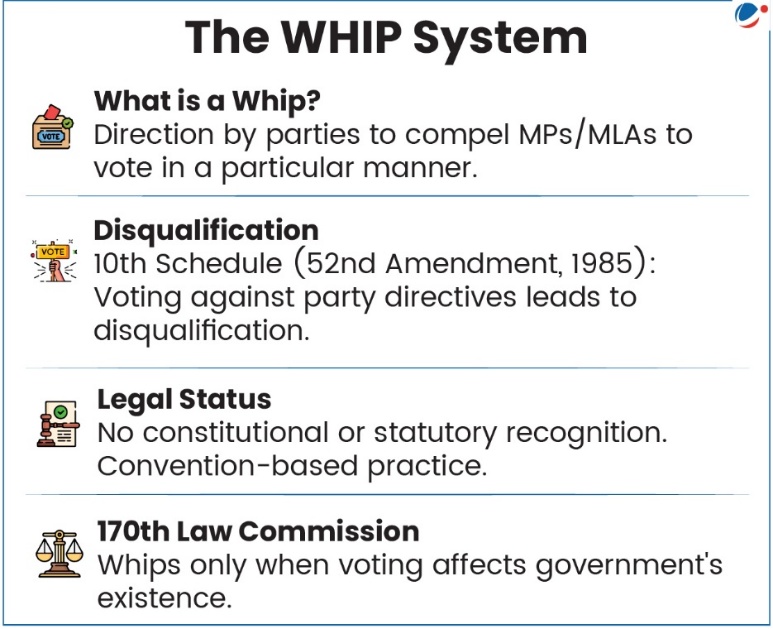
The Bill seeks to allow parliamentarians to take an independent line in voting on Bills and Motions, promoting good lawmaking and freeing MPs from "whip-driven tyranny" under 10th Schedule.
Need of enforcing whip under 10th schedule
- To prevent unprincipled defections: Before 1985, legislators frequently switched parties for personal gain (known as Aaya Ram–Gaya Ram politics).
- This practice of alluring elected representatives with money, political office or other benefits is called “political horse trading.”
- Ensure political stability: Frequent defections can lead to mid-term government collapse without fresh elections, betraying the voters’ mandate.
- Promote party discipline: Parties need to function as cohesive units especially on major legislations (budgets, confidence votes, important bills).
Criticism of Whip
- Weakening of Representative Democracy: Elected representatives cannot exercise their votes according to their own conscience or the sentiments of their electorates.
- Suppression of Dissent: Critics argue this effectively converts elected representatives into “rubber-stamps” of the party leadership, undermining the idea of deliberative debate.
- Undermines the Fundamental Right to Freedom of Speech and Expression guaranteed under Article 19(1)(a).
- Failure to Prevent Instability: Whips have failedto curb defections, horse-trading and government collapses as seen in Maharashtra assembly (2022) for example.
Tags:

