


Why in the News?
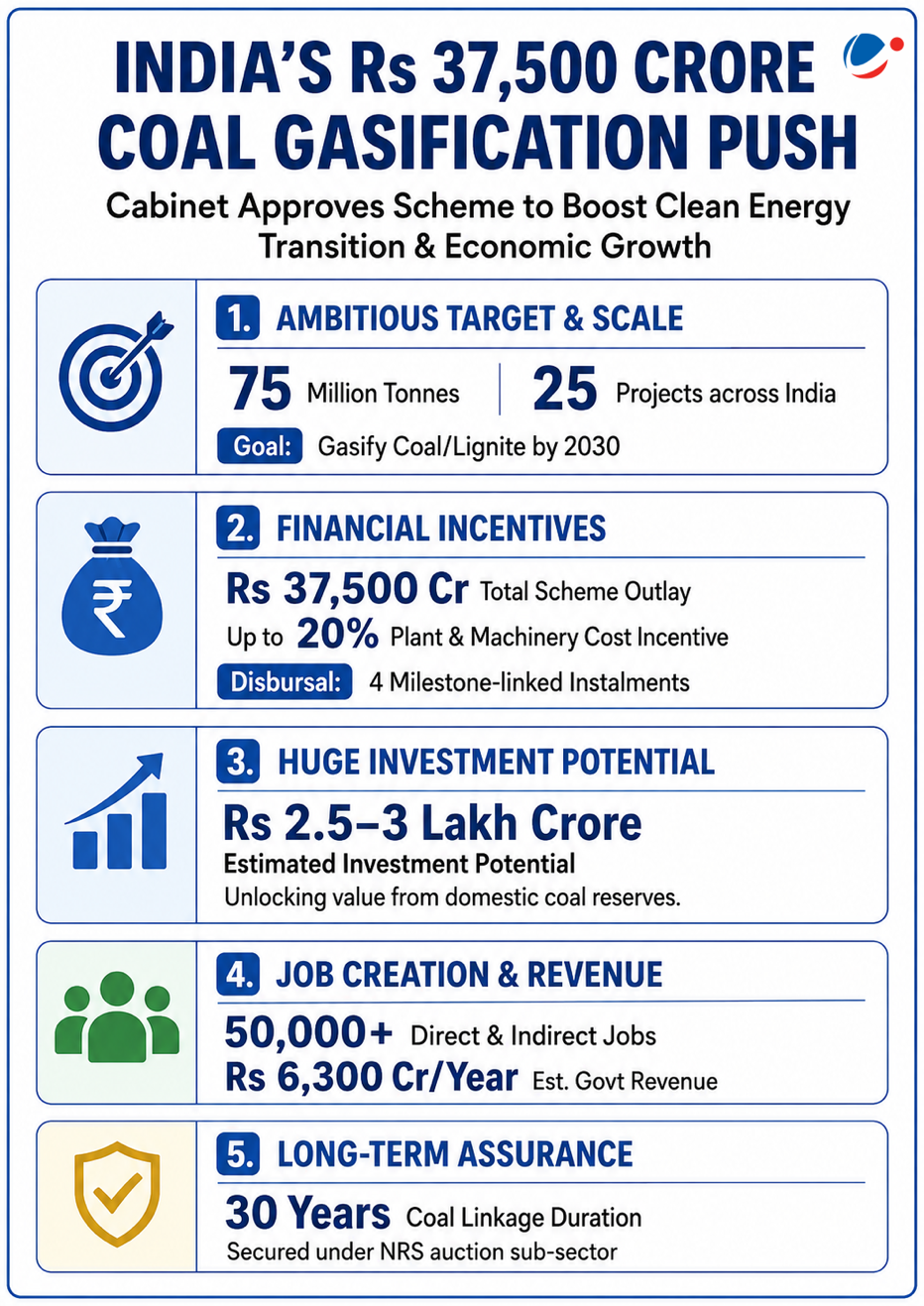
The Union Cabinet approved ₹ 37,500-crore incentive scheme to promote surface coal and lignite gasification projects under Ministry of Coal.
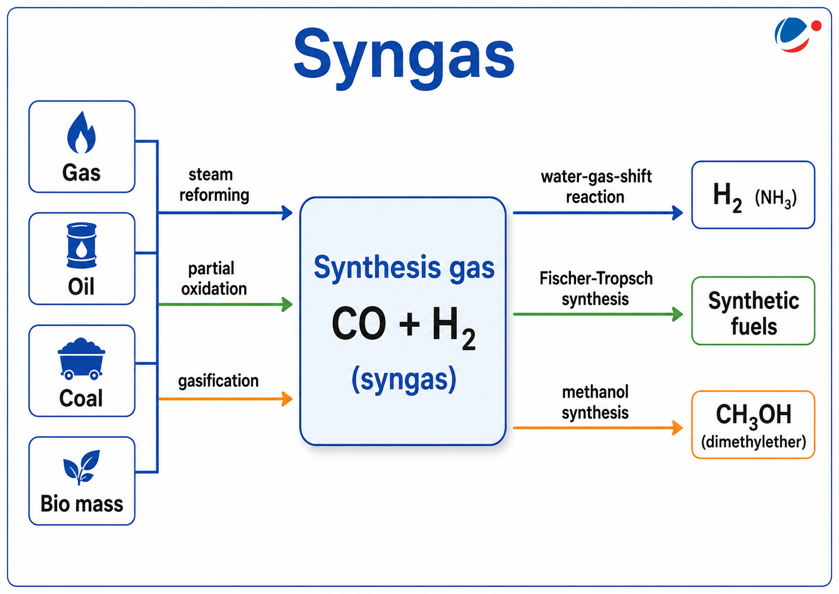 About Coal Gasification
|
Other Key Features of the Scheme
- Investment Caps: Incentives are capped at Rs 5,000 crore for a single project, Rs 9,000 crore for any single product (excluding Urea and Synthetic Natural Gas), and Rs 12,000 crore for a single corporate group across all projects.
- Bidding Process: Selection of beneficiaries will be conducted via a transparent, competitive bidding mechanism.
- Technology Agnostic: The scheme is completely technology-agnostic while actively encouraging the adoption of indigenous gasification technologies.
Significance of the Scheme
- Import Substitution: India heavily relies on imports for over 50% of its LNG, 100% of ammonia, 20% of urea, and 80-90% of methanol.
- This scheme aims to substitute these with domestic coal-derived products, tackling an import bill that stood at Rs 2.77 lakh crore in FY25.
- Strategic Energy Security: By leveraging its coal and lignite reserves, India cushions itself against global supply-chain disruptions, geopolitical shocks, and foreign exchange volatility.
- Raw Material for Steel Sector: Syngas serves as a vital reducing agent in steelmaking (Direct Reduced Iron operations), partially substituting imported inputs like coking coal and natural gas.
- Employment and Revenue: The initiative will create ~ 50,000 direct and indirect jobs across 25 projects in coal-bearing regions. It will also generate ~ ₹ 6,300 crore annually in government revenue, alongside downstream taxes.
- Technological Self-Reliance: The new scheme builds on the National Coal Gasification Mission (2021). It advances India's indigenous surface coal gasification capability by minimizing reliance on foreign engineering and procurement contractors.
Challenges Associated With Coal Gasification
- Capital Costs & Coal Quality: Gasification plants are capital-intensive and require long gestation periods to achieve commercial viability.
- The high ash content (30-45%) in Indian coal renders many global gasifier technologies techno-economically unviable, increasing capital intensity and necessitating costly indigenous innovations.
- Decarbonisation Contradiction: Despite being relatively cleaner than open burning, coal gasification remains a highly carbon-intensive pathway.
- Syngas-based DRI steel production emits more CO2 than conventional blast furnaces.
- Efficacy of Carbon Capture: While the scheme aligns with CCUS (Carbon Capture, Utilisation, and Storage) technologies, current global and domestic CCUS deployments suffer from technological limits, high costs, and underperformance.
- Ecological Constraints: Gasification involves significant water usage, exacerbating water shortages in mining regions. It also produces heavy-metal-laden waste slag, posing severe environmental disposal and groundwater contamination risks.
Way Forward
- Indigenous Technology: Accelerate R&D to refine Pressurized Fluidized Bed Gasification (PFBG), which are engineered to efficiently handle India's high-ash (30-45%) coal without severe slagging or defluidization issues.
- Enhance Financial Viability: Complement the scheme with fiscal enablers; such as tax holidays, import duty exemptions on capital goods, etc.; to attract private investments and mitigate high initial capital costs.
- Decarbonization Efforts: Maximize renewable energy usage and overall energy efficiency measures within gasification plants to lower immediate footprints while preparing for a long-term transition toward green hydrogen.
- CCUS Integration: Prioritise the commercialisation and integration of CCUS technologies within gasification hubs to align with India's 2070 net-zero goals.
- Facilitate Collaborative Frameworks: Encourage Build-Own-Operate (BOO) models for project execution and operationalise regulated coal exchanges to ensure transparent, efficient price discovery and faster technology deployment
Conclusion
India's coal gasification scheme leverages vast reserves to cut imports and boost industrial independence. However, high ash content and carbon emissions pose major challenges. Ultimately, gasification should serve solely as an interim bridge, funding truly sustainable alternatives like green hydrogen and circular recycling ecosystems.



