


Ministry of Statistics & Programme Implementation (MoSPI) released an approach paper to compilation of ISP.
- Unlike Index of Industrial Production (IIP) which tracks manufacturing, there has been no index to capture short-term movements in services sector, creating a data gap in overall economic performance assessment.
Key Features of Proposed ISP
- Proposed Base Year: 2024-25.
- Data Sources: Goods and Services Tax (GST) data, administrative data from sectoral ministries and the Annual Survey of Incorporated Services Sector Enterprises.
- Coverage: Index is exclusively designed to track formal sector, including sub- sectors like wholesale and retail trade, transport, banking, insurance, real estate, communication, etc.
LEADS is the flagship assessment of logistics performance across States and Union Territories released by Department for Promotion of Industry and Internal Trade (DPIIT).
- LEAPS 2025 (Logistics Excellence, Advancement and Performance Shield) awards were also given across 13 categories covering Core Logistics, MSMEs, Startups, Special Categories etc.
About LEADS
- It was conceived on the lines of the Logistics Performance Index (LPI) of World Bank in 2018.
- LEADS 2025 provides a four-tier performance framework (earlier three tier).
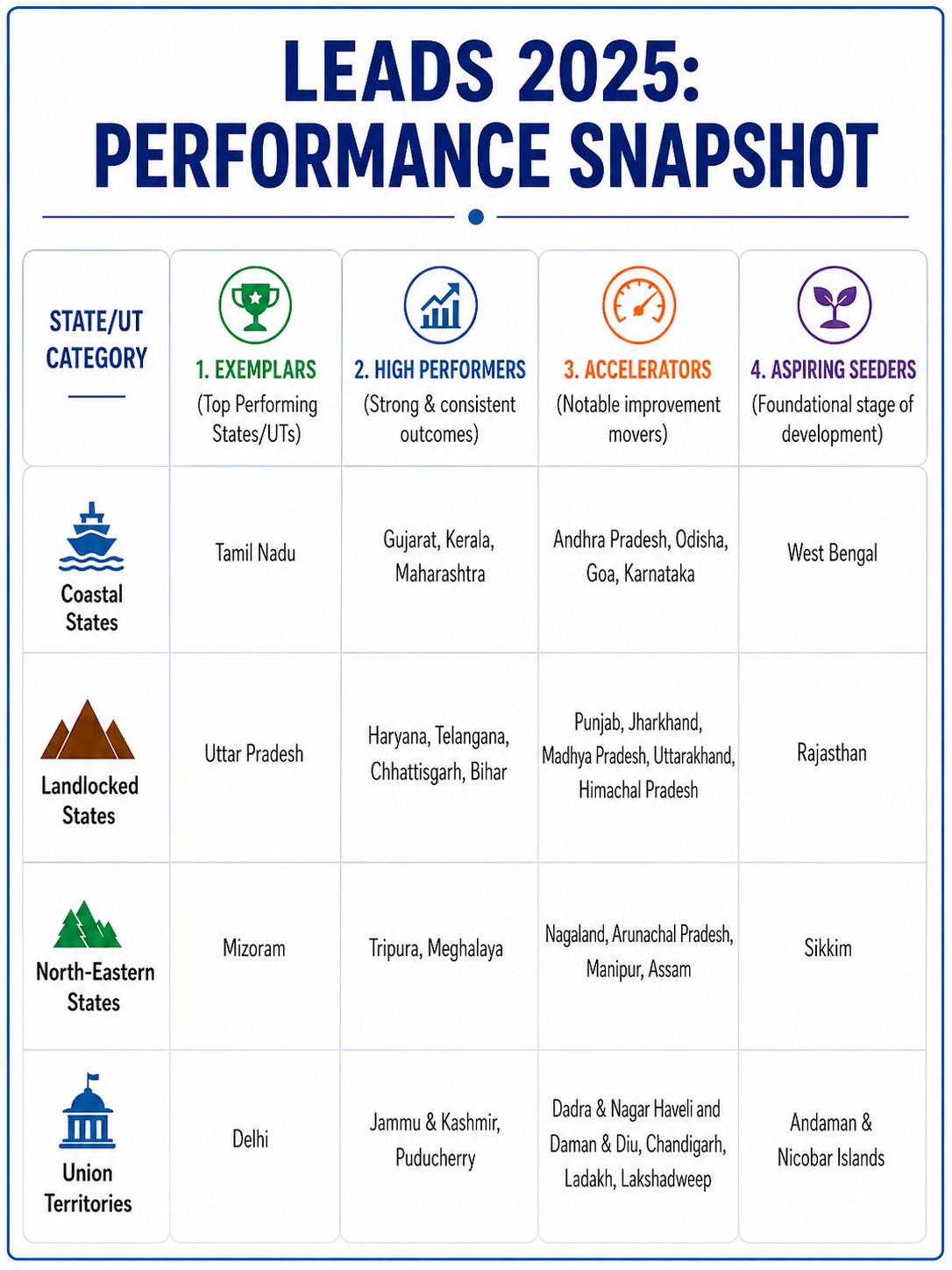
- It uses objective indicators (nearly 59% weightage) like regulatory support and logistics enablers, and perception indicators such as logistics infrastructure, services and sustainable logistics.
About India’s Logistics sector
- Logistics cost: ~8% of GDP (2023 to 2024).
- Key Issues:
- Infrastructure Gaps: Poor road quality, port congestion and weak rail connectivity.
- Skewed share: Over 60% freight movement through roads raises fuel consumption, congestion and transit costs.
- Fragmentation: Dominance of small players leads to operational inefficiencies.
- Others: Regulatory Complexity; Slow Technology Adoption; etc.
Initiatives to strengthen Logistics Sector
|
Article Sources
1 sourceMinistry of MSME is accelerating the digital transformation of India’s smallest businesses through the TEAM Initiative.
About TEAM Initiative
- Type: Central Sector Scheme, launched in 2024.
- Objective: To provide end-to-end e-commerce support to Micro and Small Enterprises (MSEs), enabling them to participate effectively in digital commerce ecosystems through the Open Network for Digital Commerce (ONDC).
- ONDC aimed at promoting open networks for all aspects of exchange of goods and services over digital or electronic networks.
- It is a transformative sub-scheme under the World Bank-supported Raising and Accelerating MSME Performance (RAMP) Programme.
- RAMP Programme launched in 2022 to scale up the implementation capacity and coverage of MSMEs.
- Duration : 3 years from 2024 to 2027
- Implementing Agency: National Small Industries Corporation (NSIC)
Article Sources
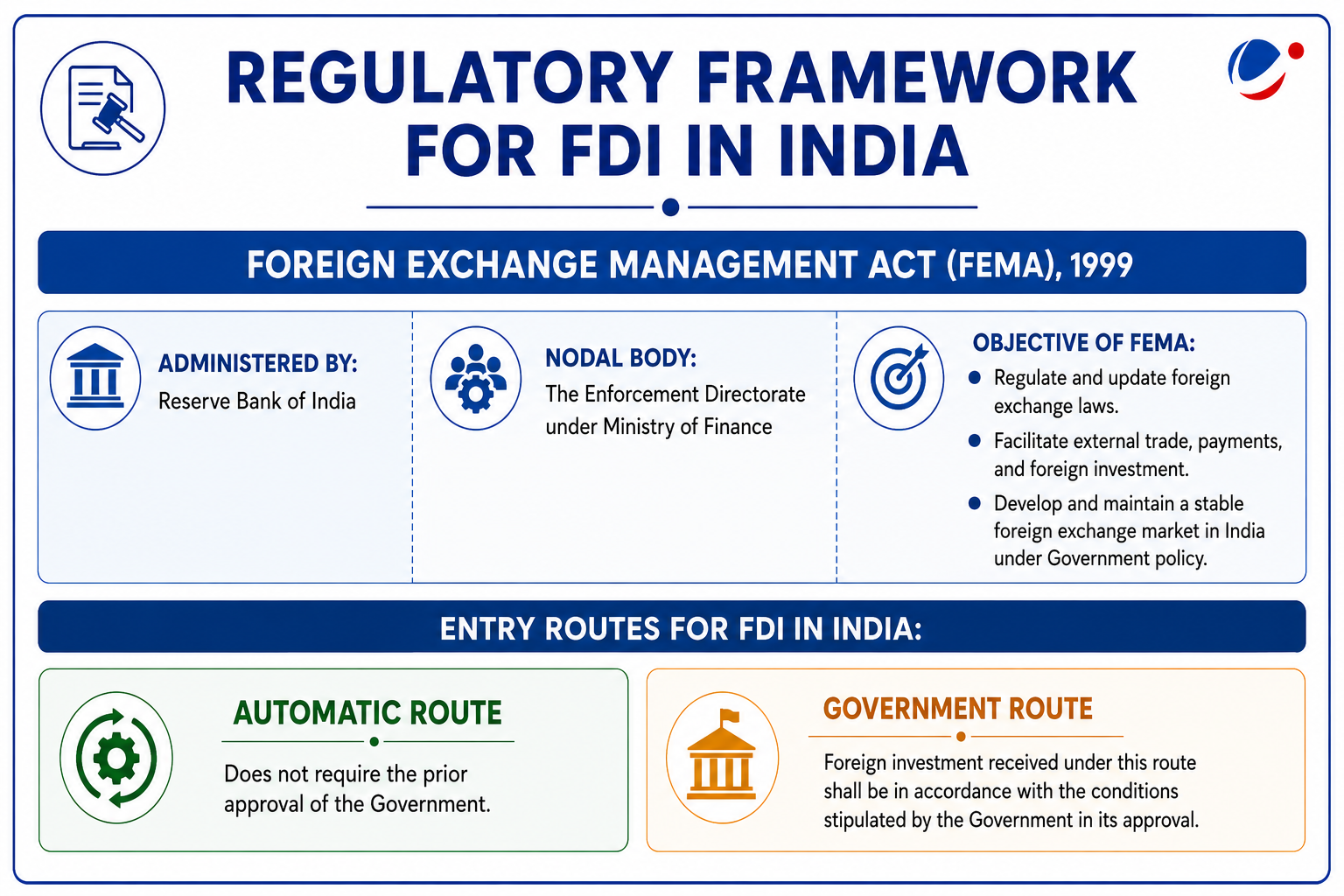
1 sourceFinance Ministry notified FDI easing for foreign firms with up to 10% Chinese stake under FEMA.
- It allows overseas entities having a Chinese shareholding of up to 10% to invest in India under the automatic route.
- In 2020, India had imposed curbs on FDI from nations with which it shares land borders.
Other Change in FDI Rules:
- 100% FDI in Insurance: In private insurance companies and intermediaries, such as brokers, without needing prior government approval (automatic route).
- Foreign investment in the Life Insurance Corporation of India (LIC) remains strictly capped at 20%.
- These changes were officially implemented throughthe Foreign Exchange Management (Second Amendment) Rules, 2026.
- Significance: Enhanced FDI inflows, ease of doing business, etc.
RBI approved its highest-ever surplus transfer of ₹2.86 lakh crore to the Central Government for the Financial Year 2025–26.
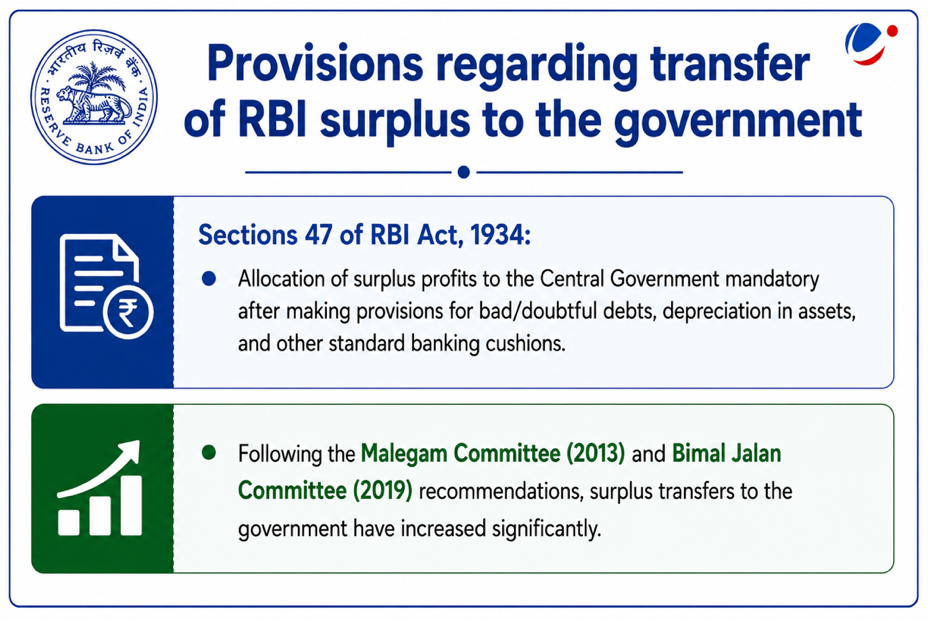
About RBI Surplus
- Surplus implies excess of income over expenditure.
- RBI's Income Source: Interest on holding of rupee securities, liquidity adjustment facility (LAF), marginal standing facility (MSF), loans & advances and foreign sources.
- RBI is not liable to pay income-tax or super-tax on any of its income, profits or gains.
- RBI’s Expenditure: Printing of notes, agency charges which includes commission to banks, primary dealers etc. and employee cost.
- RBI's Income Source: Interest on holding of rupee securities, liquidity adjustment facility (LAF), marginal standing facility (MSF), loans & advances and foreign sources.
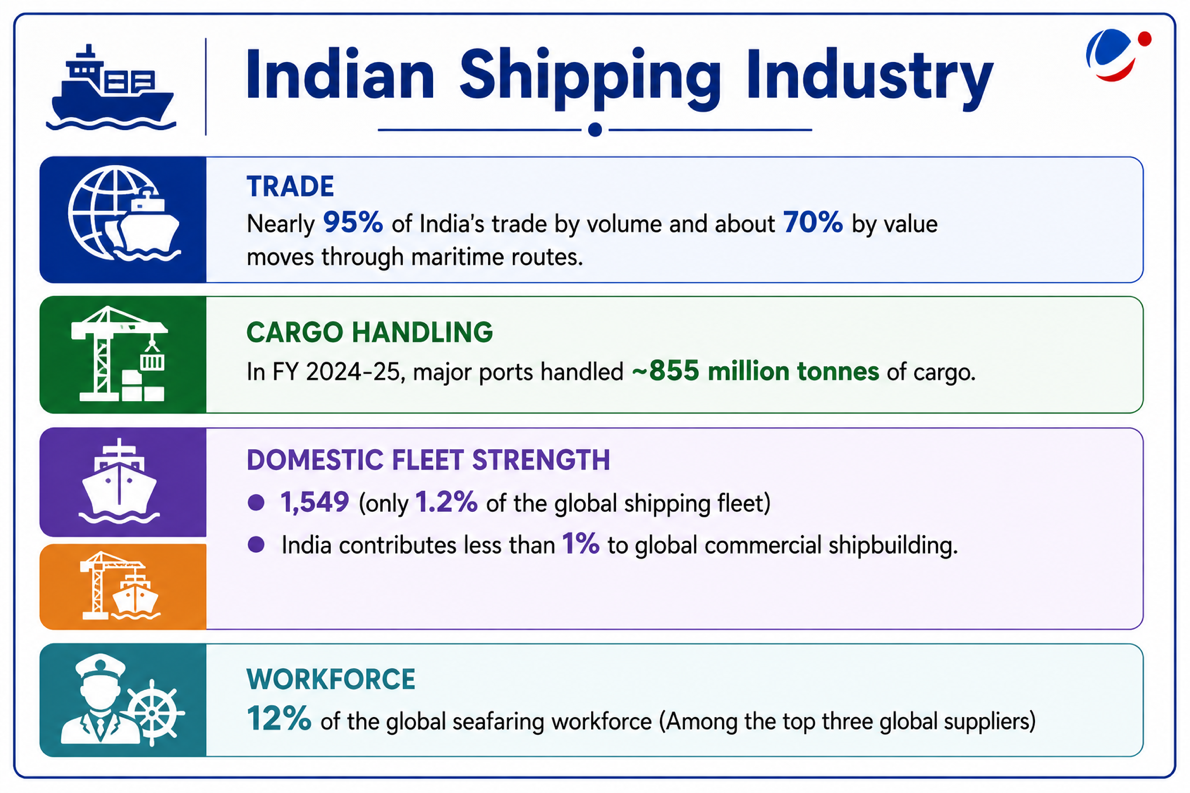
The 'Bharat Maritime Insurance Pool' (BMI Pool) aims to facilitate continuous maritime insurance coverage and insulating India’s maritime trade from global volatility.
What is the BMI Pool?
- It is a government-backed maritime insurance pool with a capacity of $1.5 billion and sovereign guarantee of ₹12,980 crore ($1.4 billion).
- Ministry: Department of Financial Services, Ministry of Finance
- Coverage: Major maritime risks, including Hull and Machinery, Cargo, Protection and Indemnity (P&I) and War risks for-
- Indian flagged or controlled vessels.
- Vessels destined to or starting from India.
- Governance:
- Pool Administrator: General Insurance Corporation of India (GIC Re)
- A Governing Body and an Underwriting Committee to oversee the pool's functions and risk management respectively.
- How BMI Pool Operates:
- Domestic insurers issue policies using the combined capacity of the pool members.
- Combined underwriting capacity of the Pool is ~Rs.950 crore.
- Claims Handling: Up to $100 million (by the Pool own capacity); Exceeding $100 million (triggers sovereign guarantee as a contingent safety net of last resort)
- Domestic insurers issue policies using the combined capacity of the pool members.
Need for the BMI Pool
- Addressing Geopolitical Volatility: Rising global volatility and Middle East tensions have drastically increased maritime risks.
- E.g., disruptions in Red Sea, Strait of Hormuz etc. have increased insurance premiums
- Mitigating Impact of Sanctions: Sanctions can abruptly cut off foreign re/insurance support, disrupting shipping operations and critical trade flows.
- Others: Develop Domestic Expertise in underwriting and claims management, Reduces foreign exchange outflow by reducing dependence on foreign insurers, enhances India’s maritime self-reliance, financial sovereignty and trade security.
Article Sources
1 sourceDepartment for Promotion of Industry and Internal Trade (DPIIT) released guidelines for implementation of BHAVYA Scheme.
About Bharat Audyogik Vikas Yojna (BHAVYA) Scheme
- Scheme Type: Central Sector Scheme
- Ministry: Ministry of Commerce & Industry via DPIIT.
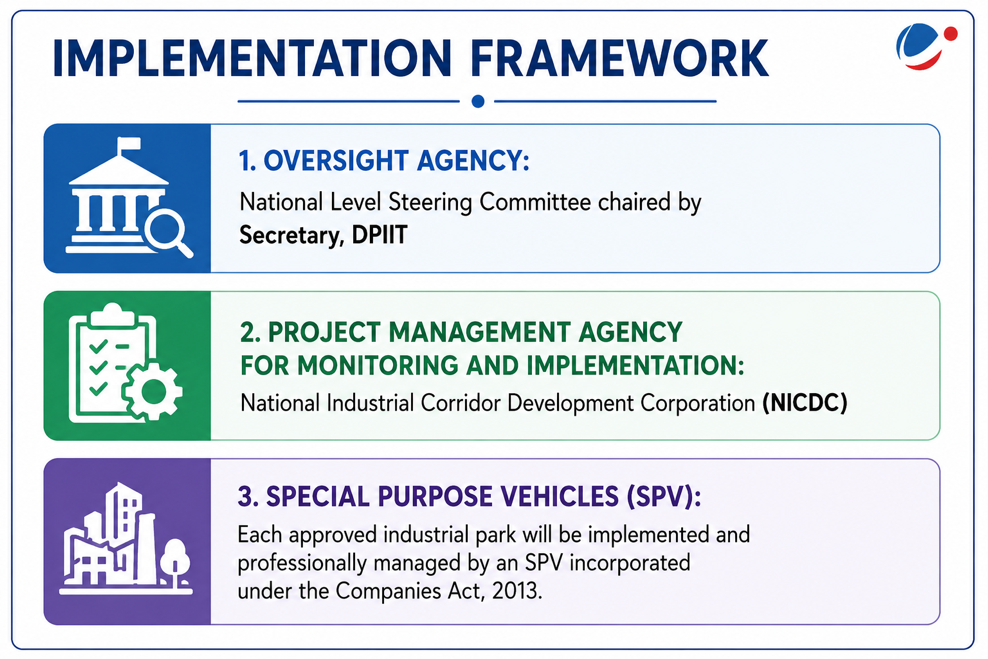
- Objective: Transform the country into a globally competitive manufacturing hub by providing supportive industrial ecosystems that help investors easily ground their investments, thereby deepening domestic supply chains and increasing employment.
- Target: Develop 100 plug-and-play industrial parks in partnership with States, Central Public Sector Undertakings and private sector.
- Plug-and-play industrial parks are ready-to-use manufacturing sites offering pre-built infrastructure. E.g., roads, power, water, and approvals,
- Duration: 6 years (2026-27-2031-32)
- Outlay: Rs 33,660 crore
- Eligibility: Greenfield and eligible brownfield industrial parks
- Minimum land requirements: 100 acres for non-hilly states and 25 acres for hilly states, NE states, Union Territories, and smaller states.
- Also permits larger parks up to 1000 acres.
- Funding Framework: Financial assistance is provided through the National Industrial Corridor Development and Investment Trust (NICDIT), primarily in the form of equity contribution.
- Funds up to ₹ 1 crore per acre in equity mode for each project (except for private developer) for-
- Core infrastructure (internal roads, ICT and administrative systems).
- Value-added infrastructure (ready-built factory sheds, warehousing).
- Social infrastructure (worker housing and support amenities).
- Support for external infrastructure up to 25% of project cost would also be provided.
- Funds up to ₹ 1 crore per acre in equity mode for each project (except for private developer) for-
Article Sources
1 sourceUnion Cabinet approved Emergency Credit Line Guarantee Scheme (ECLGS) 5.0
- ECLGS was initially announced as part of the Atma Nirbhar Bharat Package in 2020 to help businesses including MSMEs to meet their operational liabilities and resume businesses in view of the distress caused by the COVID-19 crisis.
- The scheme provides Member Lending Institutions (MLIs), 100 percent guarantee against any losses suffered by them due to non-repayment of the ECLGS funding by borrowers.
- The scheme is under the operational domain of the Department of Financial Services (DFS), Ministry of Finance.
- National Credit Guarantee Trustee Company Ltd (NCGTC) has been set up as a company to manage and provide guarantees to these loans.
Key Features of the ECLGS 5.0
- Aim: Provide credit guarantee coverage to MLIs by National Credit Guarantee Trustee Company Limited (NCGTC) for the amount in default under the additional credit facility extended to the eligible borrowers to tide over any short-term liquidity mismatches in view of West Asia Crisis.
- Eligible borrowers: MSMEs and non-MSMEs with existing working capital limits and scheduled passenger airlines having outstanding credit facilities, as of March 31, 2026, provided their accounts are standard.
- Guarantee coverage: 100% for MSMEs and 90% for non-MSMEs as well as airline sector.
- Tenor of Loan: 5 years (including moratorium of 1 year) for MSMEs/Non-MSMEs and 7 years (including moratorium of 2 years) for airline sector.
Article Sources
1 sourceNational Stock Exchange of India launched EGRs, to formalise India’s gold market.
- The Bombay Stock Exchange was the first exchange in India to launch EGRs in 2022.
About EGRs
- They are dematerialised securities that represent ownership of physical gold, which is stored in SEBI’s accredited vaults and held electronically through depositories.
- Each EGR is fully backed by physical gold with assured quality and can be traded on exchange, integrating gold into financial system.
- They can be redeemed anytime in exchange of gold, unlike Gold ETF (cash settlement).
- Regulated by: Securities Exchange Board of India (SEBI)
- Asset Class: Securities under the Securities Contracts (Regulation) Act (SCRA), 1956
- Market Participants: Retail Investor, Jewellers, Bullion Traders, etc.
Article Sources
1 source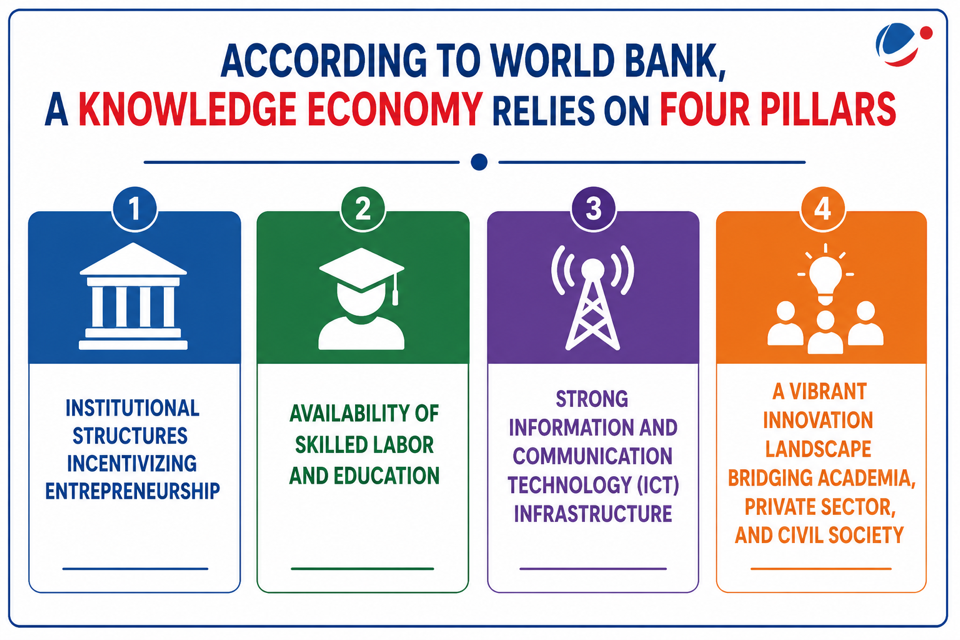
Released by the Ministry of Statistics and Programme Implementation, the proposed framework for measuring India’s knowledge-based economy’s contribution to GDP seeks to measure the contribution through knowledge in capital, labour, innovation, and digital sectors.
About Knowledge-based Economy
- Definition: It is a system of consumption and production that emphasizes the use of human capital like information, skills, technical expertise, and intellectual property over physical inputs and natural resources.
- Types of Knowledge:
- Codified Knowledge: Information that can be easily documented and transmitted digitally (e.g., know-what and know-why).
- Tacit Knowledge: Experience-based skills and capabilities that are harder to codify and transfer (e.g., know-how and know-who).
- Significance of a Knowledge-Based Economy
- Driven by Increasing Returns: Generate increasing returns through innovation spillovers, repeated use, and sustained long-term economic growth.
- Transformation of Value Creation: Commercializes science and innovation through IPRs like patents and copyrights, with knowledge-based activities contributing over 50% of GDP in major OECD economies.
- High-Skill Employment: Creates high-wage jobs and increases demand for skilled “knowledge workers”.
- National Innovation Systems: Relies on dynamic networks linking academia, government, and industry for interactive learning and innovation diffusion.
- Examples: Digital India by MeitY, Traditional Knowledge Digital Library, Ayush, GI Tags, etc.
Article Sources
1 sourceRecently, Oil India Limited discovered a new natural gas reserve in Rajasthan.
- The discovery marks the first-ever confirmed gas presence in the Sanu Formation of the Dandewala field.
About Natural Gas in India
- Composition: Mainly composed of methane (CH₄) with smaller amounts of natural gas liquids and nonhydrocarbon gases, like CO2 and water vapor
- Estimated reserves: ~1,000 billion cubic meters, with largest reserves being in Western Offshore region followed by eastern offshore.
Recently, Mizoram Ginger Mission was launched by the Ministry of Development of North Eastern Region (MDoNER) and Government of Mizoram for cultivation Mizoram’s GI-certified ginger.
About Ginger
- Scientific Name: Zingiber officinale Rosc (Family: Zingiberaceae).
- Status: India is a leading global producer of ginger.
- Major Producing States: Madhya Pradesh, Gujarat, Andhra Pradesh.
- Agro-Climatic Requirements
- Climate: Warm and humid (up to an altitude of 1500m).
- Temperature: 12-35°C.
- Rainfall: Requires moderate rainfall for sowing (around 1500mm annually), and dry weather before harvesting.
- Soil: well-drained friable sandy loam, clay loam, or lateritic loam rich in humus.
- Significances
- Antioxidant and anti-inflammatory properties.
- Highly effective in treating nausea, managing blood sugar (HbA1c) and cholesterol levels, etc.
