


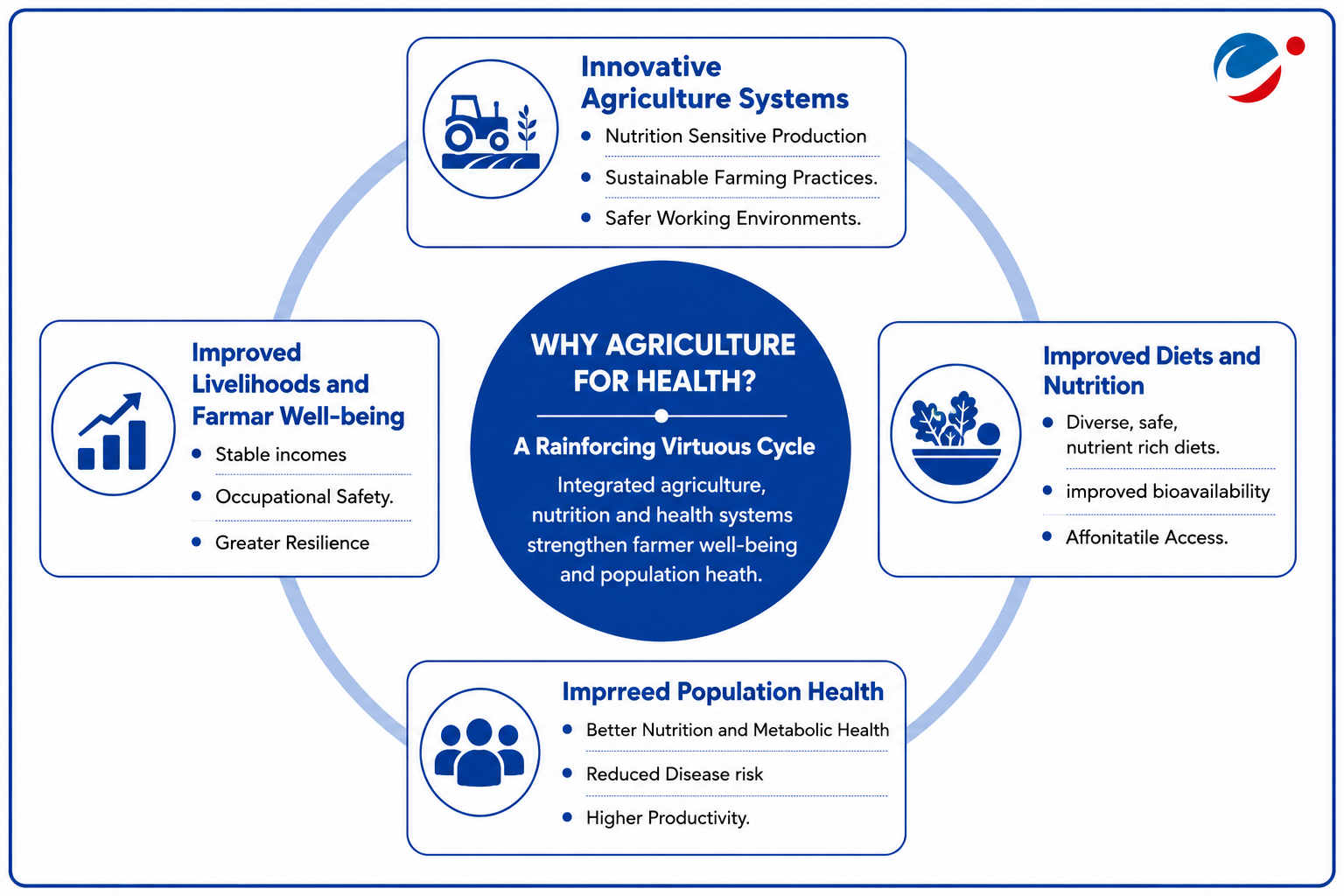
SEHAT – Science Excellence for Health through Agricultural Transformation is a joint initiative of Indian Council of Medical Research (ICMR) and Indian Council of Agricultural Research (ICAR).
Key Highlights of SEHAT
- Vision: Transform agriculture from food production system into powerful driver of nutrition, health, and well-being for India.
- Five Priority Areas of National Significance:
- Development and evaluation of biofortified and nutrient-dense crop varieties: Address malnutrition and improve nutritional status.
- Biofortification increases nutrient density of food crops through conventional plant breeding, and/or improved agronomic practices and/or modern biotechnology without sacrificing key characteristics.
- E.g., enriching with zinc, iron and other nutrients.
- Strengthening Integrated Farming Systems: Promote dietary diversification, enhance farm incomes, and build resilience.
- Addressing Occupational Health Risks: Among agricultural workers through targeted, evidence-based interventions.
- Prevention and management of non-communicable diseases: Advancing agriculture-enabled strategies through promotion of functional foods and nutritionally superior crop varieties.
- One Health preparedness: Integrated surveillance, diagnostics, and research at human–animal–environment interface.
- Development and evaluation of biofortified and nutrient-dense crop varieties: Address malnutrition and improve nutritional status.
- Significance
- Proactive, Preventive, and Holistic approach to Healthcare as against reactive and curative model.
- Address Dual burden of undernutrition and overnutrition rising non-communicable diseases like diabetes, hypertension and cancer, etc.
- “Whole of government” and “Whole of systems” approach integrating science, policy making and implementation.
Article Sources
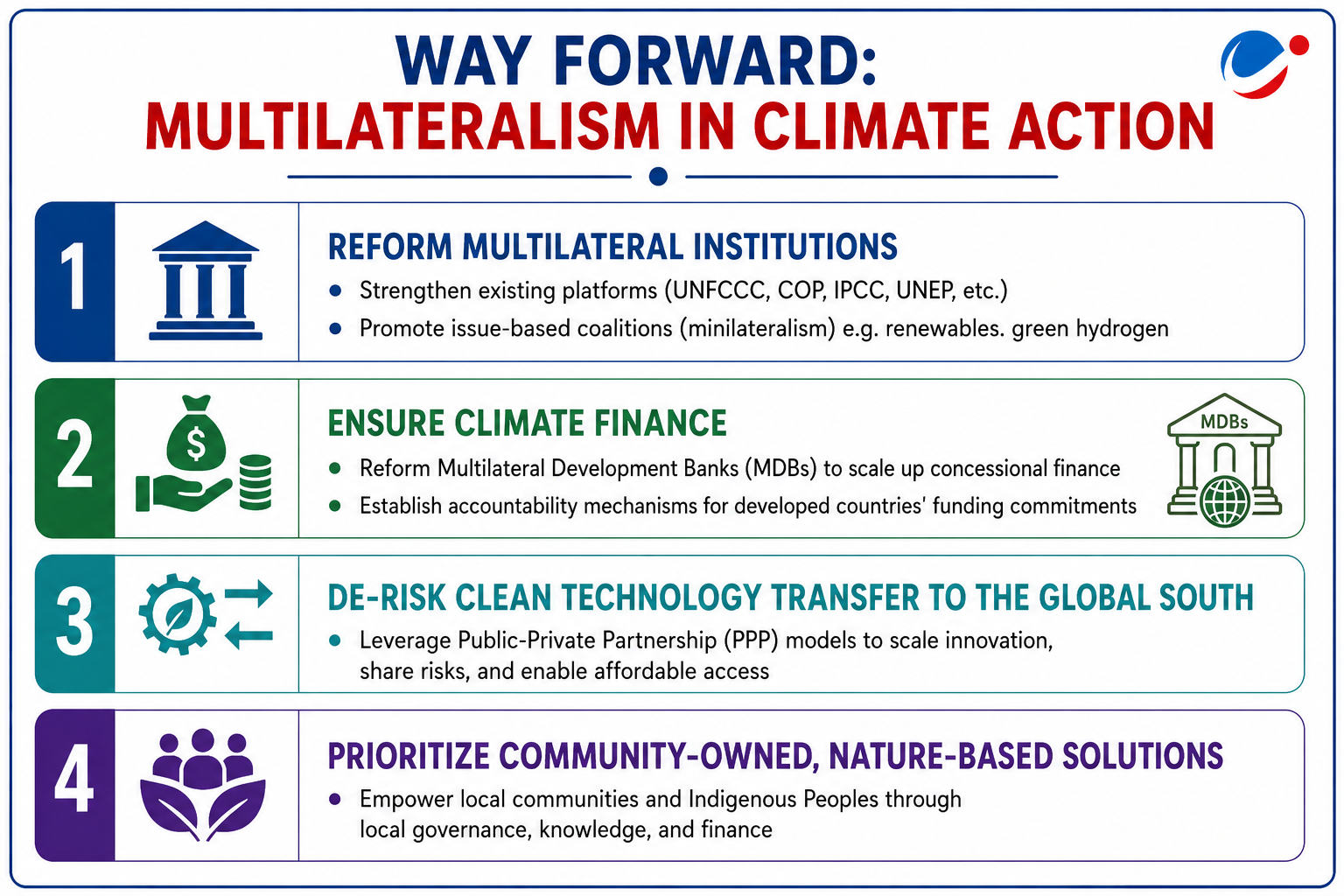
1 sourceThe 17th Petersberg Climate Dialogue (PCD) sought to reaffirm commitment to multilateral climate action amid rising geopolitical tensions.
- The PCD, an informal multilateral annual meeting on climate issues initiated by Germany in 2010, was the first major climate ministerial of 2026 ahead of COP31 of UNFCCC.
Role of Multilateralism in Climate Action
- Climate as a Global Public Good: Multilateralism is a foundational response to climate change, a transboundary threat which transcends national capacities due to its dispersed costs and benefits.
- Collective Governance: Establishes a rule-based order for sharing global responsibilities, preventing unilateralism and ensuring coordinated climate action. E.g. NDCs
- Negotiation Platforms: International frameworks like the UNFCCC, UNCBD, and UNCCD facilitate the development of adaptation and mitigation strategies.
- Upholding Climate Justice: Protects distributive equity by institutionalizing the principle of Common But Differentiated Responsibilities (CBDR), acknowledging varying national capacities and historical emissions.
- Mobilizing Financial Mechanisms: E.g. through institutions like the Global Environment Facility (GEF) and Green Climate Fund (GCF).
Challenges
- Decision-Making Paralysis: E.g. Consensus-based model of UNFCCC
- Financial Constraints: Developed countries have failed to mobilize the promised $100 billion annually.
- Geopolitical Fragmentation: Rising unilateralism undermines the stability and continuity of international climate law. E.g.US withdrawal from key climate bodies.
- Others: Asymmetric Agenda Setting favouring developed nations, Technology Protectionism (restricted tech transfer) etc.
Colombia and Netherlands are hosting First Conference on Transitioning Away from Fossil Fuels in Santa Marta, Colombia.
About the Conference
- Officially announced in 2025 during COP30 (UNFCCC) as sustained political platform to deliver implementation-driven action towards an orderly phase-out of fossil fuels.
- It is not a negotiating body nor constitute part of any formal negotiation.
- It does not intend to replace United Nations Framework Convention on Climate Change (UNFCCC).
Key Highlights of the Conference
- Launched the Science Panel for the Global Energy Transition (SPGET).
- Help develop country- and sector-level milestones aligned with returning global warming to 1.5 degrees Celsius (°C) by end of century.
MARS will now cover coal mines and waste facilities.
- Until now, MARS focused on oil and gas facilities in countries that are part of UNEP’s Oil and Gas Methane Partnership 2.0.
- It has also identified Kanjurmarg landfill, Mumbai among the world’s top 3 methane emitting sites.
About MARS
- It is first public global satellite detection and notification system providing data on very large methane emissions (super-emitters) around the world.
- Nodal Agency: United Nations Environment Programme’s International Methane Emissions Observatory.
- Launched at: COP27 climate summit, Sharm el-Sheikh, Egypt (2022).
- Assists implementation of Global Methane Pledge, which aims to cut global methane emissions by at least 30% from 2020 levels by 2030.
India emerged as a major global carbon market with the launch of its Carbon Credit Trading Scheme according to a new World Bank report.
Key Findings from “State and Trends of Carbon Pricing 2026”
- Global Coverage: Carbon pricing policies cover 29% of global GHG and may reach nearly one-third of global emissions by 2030.
- Revenue Generation: Carbon taxes and Emission trading system (ETS) generated over $107 billion in 2025.
India’s Carbon Market Ecosystem
- Carbon Credit Trading Scheme (CCTS): Launched in 2026 as a GHG emission intensity-based trading system for hard-to-abate sectors. Industries exceeding targets earn tradable Carbon Credit Certificates.
- Global Standing: India’s ETS is among world’s largest after China, EU and South Korea.
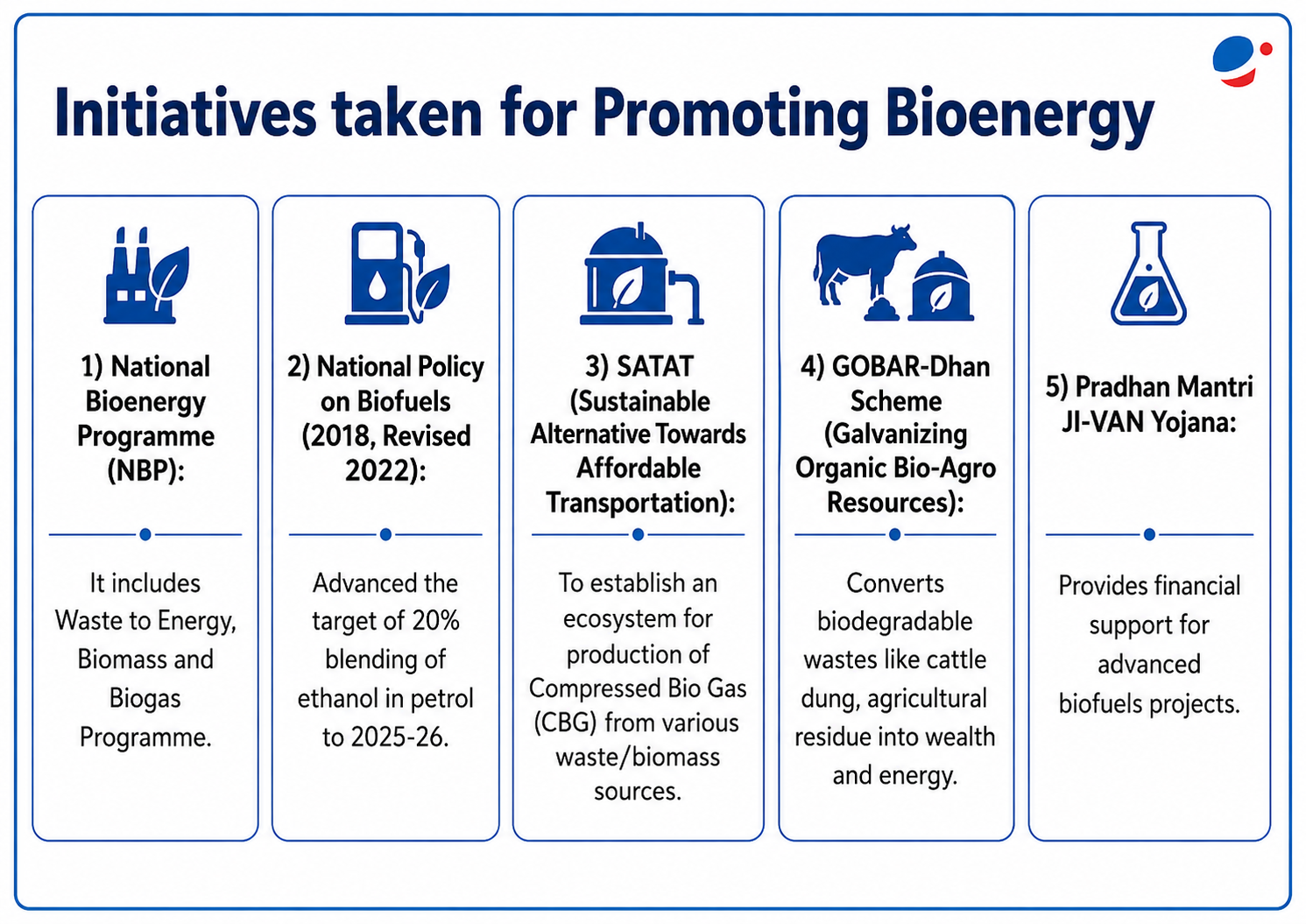
Decentralised bioenergy systems present a solution for the uncertain global energy supply chains and rising fuel prices in India.
About Decentralised Bioenergy Systems
- It refers to the local production and consumption of heat, electricity, or biogas from organic waste and crop residues.
- Key Technologies involved:
- Biomass Gasification: Converts dry agricultural residues (husk, stalks) into combustible producer gas to run small engines or provide industrial heat.
- Biogas & Anaerobic Digesters: Converts wet waste (food scraps, animal manure) into biogas for cooking and electricity.
Significance
- Waste Management: Turns municipal solid waste and farm residues into valuable resources.
- Energy Security: Provides off-grid and micro-grid solutions to remote or underdeveloped regions.
- Economic Empowerment: Drives local job creation and supports small-scale farming and MSME operations.
Recently, the Bureau of Indian Standards (BIS) published two major fuel standards:
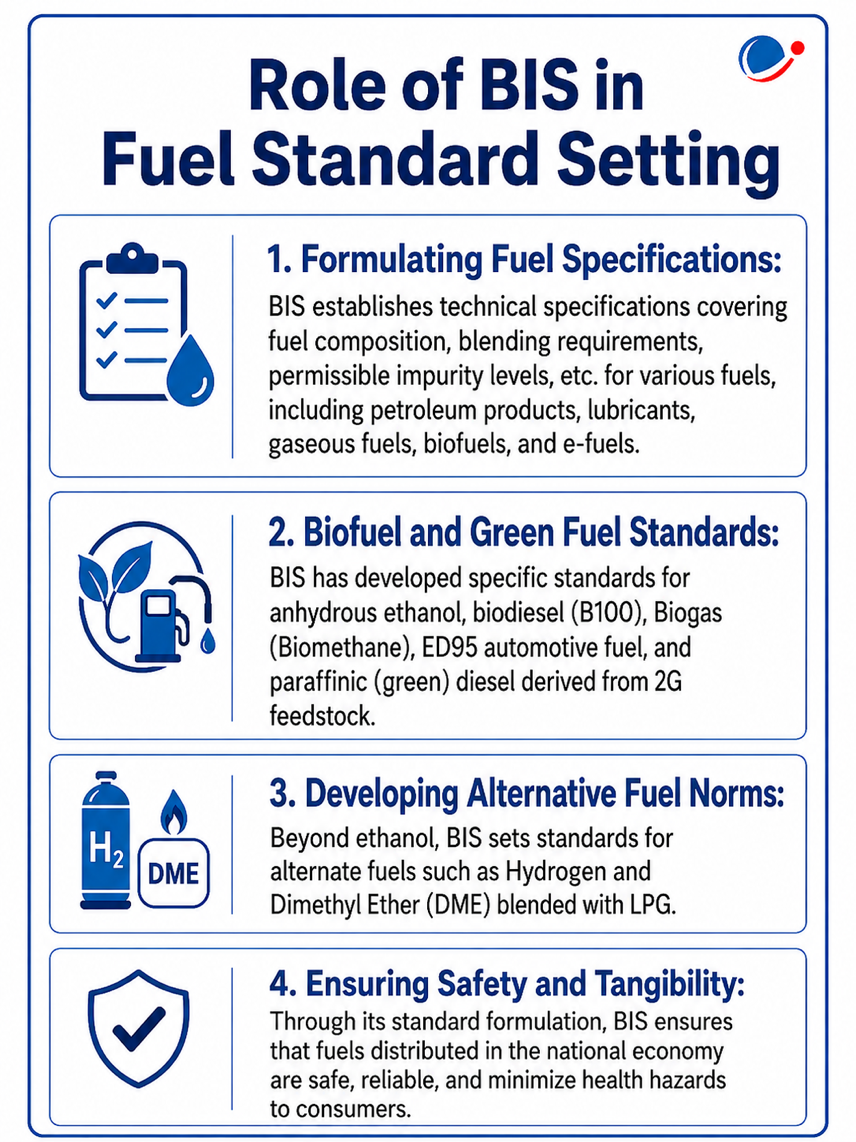
- IS 19850: 2026 (for Ethanol Blended Fuels): This standard outlines the specifications for E22, E25, E27, and E30 fuels, which are admixtures of completely free-of-water (anhydrous) ethanol and motor gasoline.
- E22, E25, E27 and E30 fuels are higher Ethanol-Petrol blends at 22%, 25%, 27% and 30%, respectively.
- Ethanol Blending is a process of mixing ethanol with petrol. E.g. E20 (20% Ethanol in petrol).
- Current status: India has achieved 20% Ethanol Blended Petrol (EBP) target set under the National Policy on Biofuels (2018) and aims to move towards 30% blending by 2030.
- IS 18698: 2026 (for DME Blended LPG): This standard replaces the older 2024 standard for Dimethyl Ether (DME) blended Liquefied Petroleum Gas (LPG).
- DME is a clean-burning synthetic fuel that behaves almost exactly like LPG.
- 2 production pathways:
- Indirect route (syngas to methanol to DME) and
- Direct route (syngas to DME).
- China accounts for nearly 90 % of global DME production capacity.
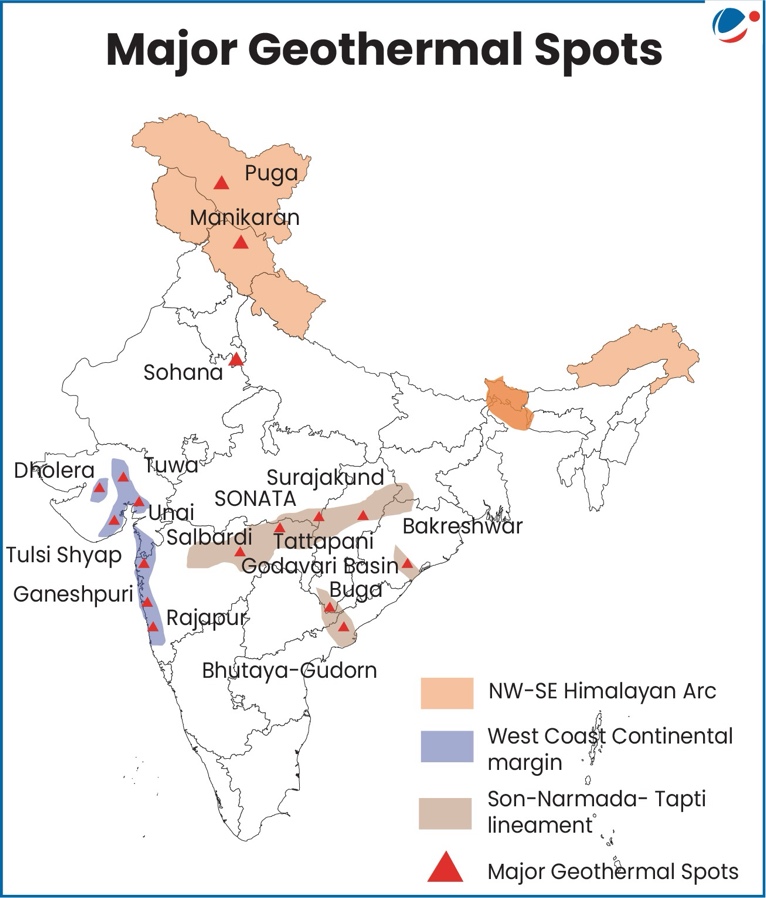
Ladakh to host India’s first geothermal power plant.
- Ladakh’s Lt. Governor approved a five-year extension to MoU with Oil and Natural Gas Corporation (ONGC) to set up this plant at an altitude of 14, 000 feet in Puga Valley.
- Under the revised MoU, ONGC will establish a 1-MWe pilot geothermal power plant and prepare a detailed project report (DPR) for large-scale commercial exploitation of geothermal resources in Ladakh.
About Geothermal Energy
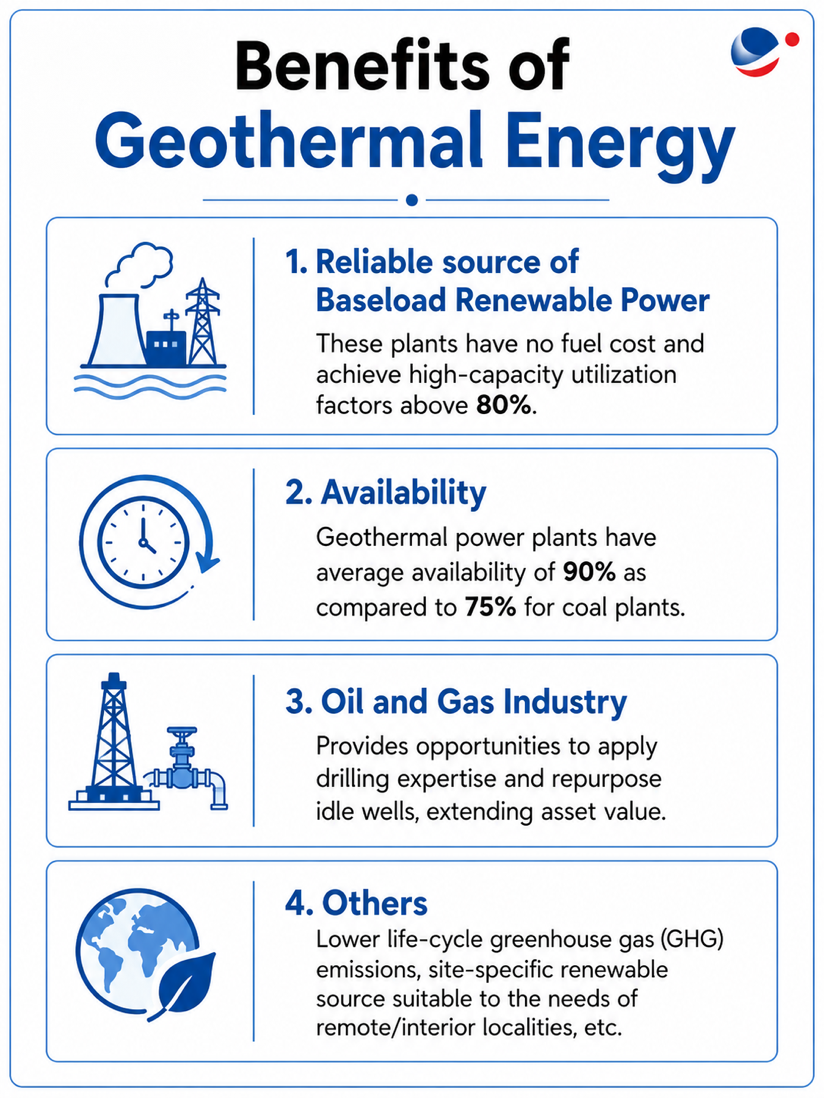
- Meaning: It harnesses heat stored within Earth's crust.
- Geothermal system consists of multiple components including production and reinjection (wells, pumps), transport (pipelines), distribution (heat exchangers) and end-use application.
- Sources
- High-enthalpy resources: Volcanic regions, geysers and hot springs primarily for electricity generation.
- Low- to medium-enthalpy resources: Like hot rocks and shallow ground layers, better suited for direct-use applications (e.g. heating and cooling, agri-food, aquaculture), etc.
- Potential In India
- Geological Survey of India (GSI) identified 381 hot springs with surface temperatures ranging from 35°C to 89°C.
- It has also identified 10 geothermal provinces in India including Himalayan Geothermal Province; Andaman Nicobar Islands, etc.
- A potential of about 10,600 MW of geothermal power has been estimated with Puga and Chumathang areas appearing to be most promising.
- National Policy on Geothermal Energy (2025): Establishing geothermal energy as major pillars of India’s renewable energy landscape, contributing to 2070 Net Zero Goal, and energy security.
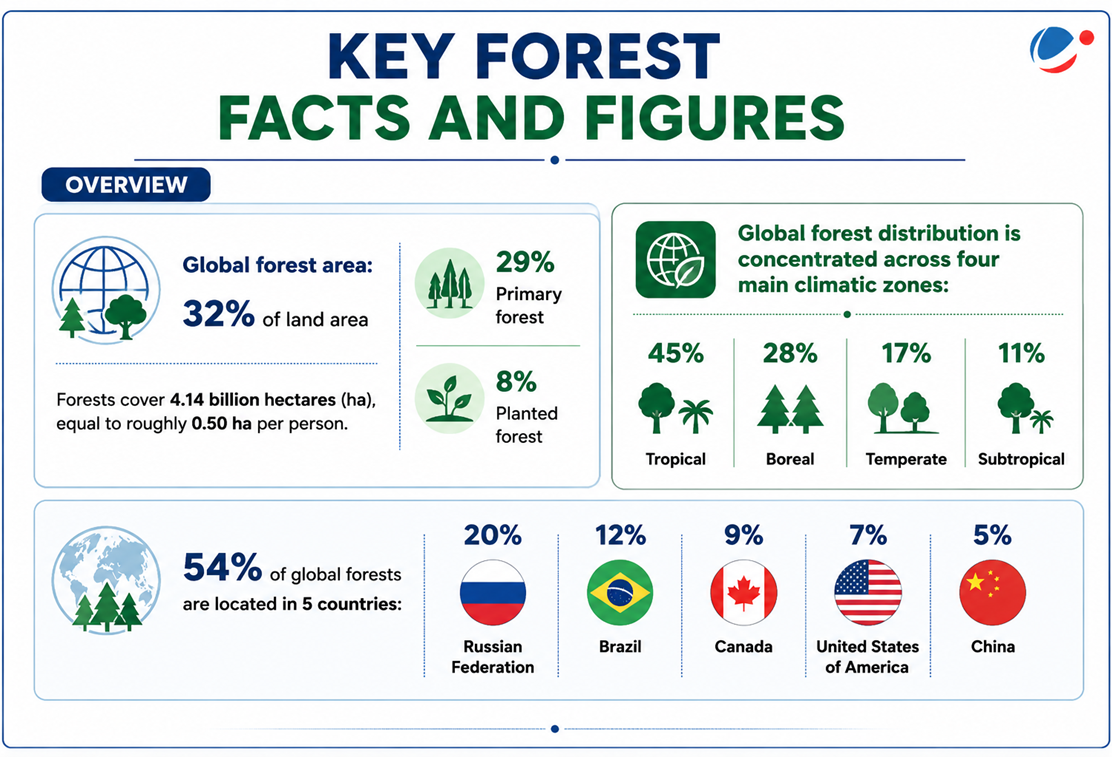
The report is prepared by the UN Department of Economic and Social Affairs and the UN Forum on Forests (UNFF) Secretariat.
- It assessed progress towards the 6 GFG set for 2030 and the associated targets of the United Nations Strategic Plan for Forests (2017–2030), launched during the 21st UNFF session.
- UNFF (established in 2000), an intergovernmental body composed of all UN members and members of specialised agencies, aims to promote the management, conservation, and sustainable development of all types of forests.
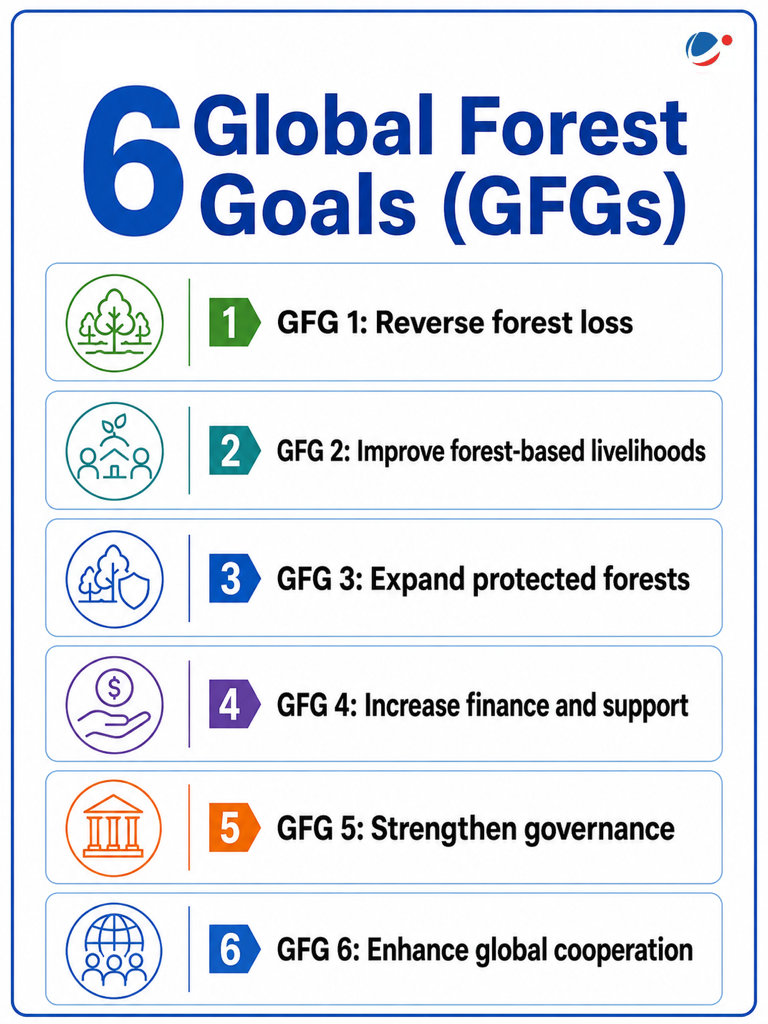
Key Highlights of Report
- Reduction in Forest Area: Shrank by over 40 million hectares between 2015 and 2025.
- Major Drivers: Agricultural expansion and surging demand for fuelwood and charcoal.
- Barriers to Sustainable Forest Management: Weak governance, insecure land tenure, illegal trade, and limited institutional capacity.
- Degradation Intensification: Due to climate-linked pressures such as droughts, wildfires, heatwaves, pests, and diseases.
- Finance Gap: Despite reaching a record US$84 billion in 2023, finance remains far below the estimated US$300 billion needed annually by 2030.
Recommendations: The report emphasizes stronger coordination, higher forest financing, deforestation-free supply chains, and cleaner energy access to reduce dependence on fuelwood and charcoal.
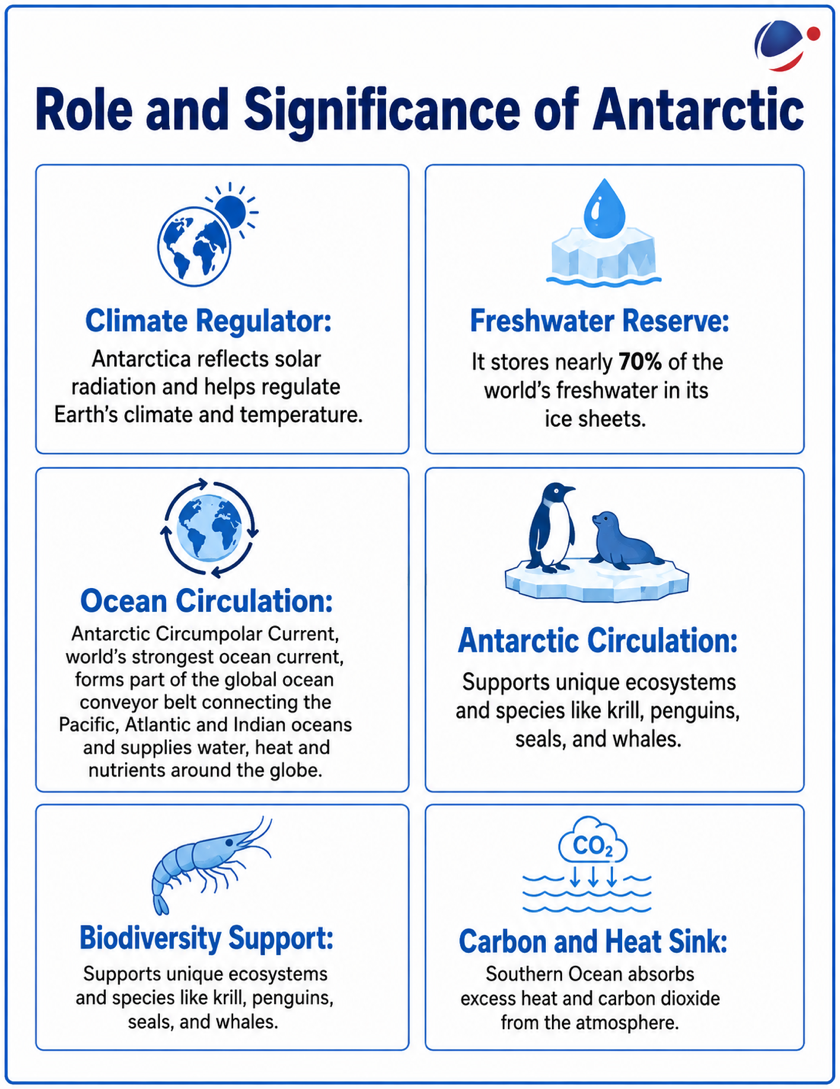
Overall, Antarctica lost approximately 12,800 sq km of grounded ice between 1996 and 2025 and researchers have identified that destabilisation of Southern Ocean surrounding Antarctica as a factor for sudden decline since 2015.
- Destabilisation happened due to a combination of deep ocean heat, powerful winds and a self-reinforcing feedback loop.
- Deep Ocean Heat: Southern Ocean was strongly layered – with cold fresh water sitting on top of warmer, saltier water below – stopping the heat from reaching surface. That barrier weakened by 2015.
- Powerful Winds: Stronger Westerly winds (strengthened due to ozone hole and GHG emissions) acted like a pump, gradually drawing warm, salty deep water closer to the surface.
- Reinforcing Feedback loop: The then rising deep water brings heat and salt to the surface.
- The heat melts sea ice, while the extra salt makes the surface waters denser and easier to mix with warmer waters below. That allows even more heat to rise upwards, making it harder for new sea ice to form, and so on.
Heat dome over Europe scorches UK, France, Spain.
About Heat Dome
- It is a high-pressure atmospheric system that traps warm air near the Earth’s surface for prolonged periods, leading to extreme heat conditions.
- Because hot air expands, it creates a bulging dome that traps heat within it.
- Mechanism: Descending air gets compressed and heated, while high pressure prevents cloud formation and traps hot air near the surface.
- Impacts: Leads to heatwaves, droughts, wildfires, and severe health risks.
As India faces intensifying heatwaves due to climate change, parametric insurance is emerging as a tool for automatic financial relief during extreme heat events.
About Parametric Insurance
- Parametric insurance is a non-traditional model that pays out a pre-agreed, fixed sum when a specific, measurable event (e.g., temperature, rainfall, wind speed) occurs, rather than compensating for actual physical damages.
- Significance: Ensures faster financial relief during disasters like heatwaves, floods and droughts; useful for climate-risk management and vulnerable communities.
Two cheetahs brought from Botswana were released in the Kuno National Park, Madhya Pradesh.
About Cheetah
- World’s fastest Mammal and the only large carnivore to be extinct in India (1952).
- Unlike other big cats (lions, tigers, leopards, and jaguars) cheetahs don’t roar.
- Two Species of Cheetahs:
- African Cheetah (IUCN Status- Vulnerable).
- Asiatic Cheetah (IUCN Status- Critically Endangered).
- Habitat: Asia (only in arid regions of eastern Iran and India (After Reintroduction); Africa (grasslands, scrublands and open forests E.g. Botswana, Namibia and South Africa)
About Project Cheetah (2022)
- Objective: To translocate African cheetahs to India.
- Implementing Agency: National Tiger Conservation Authority (NTCA).
- World’s first intercontinental large wild carnivore translocation initiative.
India’s first satellite-tagged Indian soft-shell turtle has been released in Kaziranga National Park.
About Indian Soft-shell Turtle
- It is also known as the Ganges Softshell turtle.
- Characteristics:
- Found in freshwater habitats
- Distinguished by its prominent, tube-like snout and flattened shell.
- Differentiated from other riverine turtles by its distinct arrowhead-shaped markings on the top of the head.
- Distribution and Range: Found throughout the northern plains of the Indian Subcontinent, in the Indus, Ganga, Narmada, Mahanadi basins and Brahmaputra basin.
- It is also found in countries like Bangladesh, Nepal, and Pakistan
- Conservation Status:
- WPA, 1972: Schedule I
- CITES: Appendix I
- IUCN: Endangered
Article Sources
1 sourceScientists are using ‘DNA maps’ to expose pangolin trafficking hubs.
Pangolins are one of the world’s most trafficked mammals.
About Pangolin
- Characteristics:
- Only mammals completely covered with protective keratin scales.
- Solitary, nocturnal, toothless mammals with long sticky tongues.
- Also called “scaly anteaters” due to their diet of ants, termites, and larvae.
- When threatened, they roll into a tight ball to protect their vulnerable underbellies from predators
- Of the 8 species found globally, 2 species occur in India- Indian Pangolin (IUCN status: Endangered) and Chinese Pangolin (IUCN status: Critically Endangered)
- Both are protected under Schedule I of the Wildlife Protection Act, 1972 and listed under Appendix I CITES.
- Habitat:
- Indian Pangolin: Found across India south of the Himalayas, except most of the North-East.
- Chinese Pangolin: Found in Assam and eastern Himalayas.
Prosopis juliflora, to be used as feedstock for India’s first green methanol production plant, designed to fuel ocean-going ships.
About Prosopis juliflora
- Leguminous tree highly resistant to drought and salinity, recognized as one of the world's most dominant invasive species.
- Native to Mexico, first introduced by British in 1920s to ‘green’ Delhi and by Gujarat forest department in 1961.
- Ecological Impacts:
- It is a Phreatophyte, a deep-rooted plant that absorbs water from the phreatic zone below water table, exacerbating hydrological drought.
- Reduces native plant diversity, posing a serious threat to Phyto diversity.
- IUCN Status: Least Concern.


